
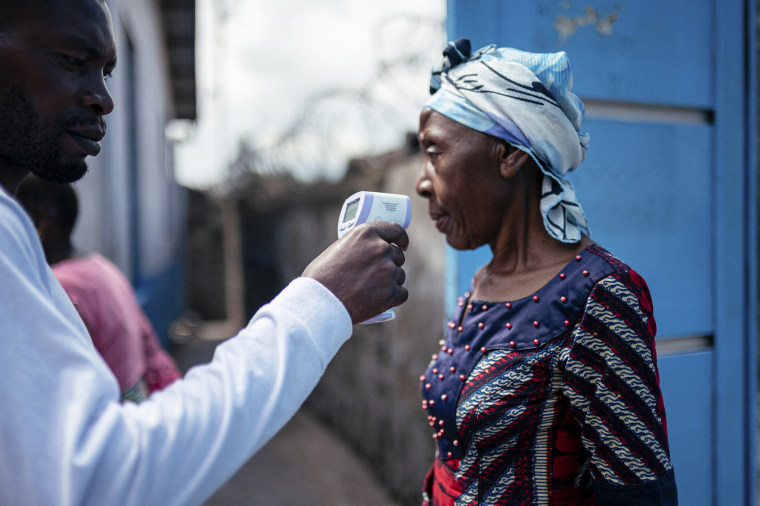
The recent outbreak in Congo is caused by a rare strain of Ebola linked to the Bundibugyo virus. Ebola is transmitted through bodily fluids, making it highly contagious and potentially fatal. The World Health Organization (WHO) reports that it can kill 30% to 50% of those infected, causing symptoms such as fever, rash, and vomiting. Unlike other Ebola strains, Bundibugyo has no approved vaccine or treatment.
This outbreak is of particular concern due to its late detection. While most cases have occurred in Congo’s eastern Ituri province, it has spread some 600 miles to the capital, Kinshasa, and into neighboring Uganda. This distribution indicates that officials are uncertain about the outbreak’s true reach. In reaction, Congo closed its land border with Rwanda, as noted by the U.S. State Department.
According to a WHO statement, uncertainties remain about the exact number of infected individuals and the virus’s geographic spread. The situation is complicated by local conflict involving the Congolese government and the rebel group M23. The city of Goma, captured by M23, has confirmed a case through its local administration.
Jean Kaseya, director-general of the Africa CDC, expressed grave concern over the rising death toll, noting a shortage of medicines and vaccines. WHO’s emergency declaration has activated support for government and agency efforts to curb the virus’s spread. A WHO regional team, alongside the Congolese Health Ministry, has dispatched 35 experts and seven tons of medical supplies to Bunia, the capital of Ituri province.
The U.S. is also providing assistance with surveillance, laboratory diagnostics, infection control, and additional containment efforts, stated the CDC. Nevertheless, during a journalist briefing, Satish Pillai from the CDC’s Ebola response team did not disclose information regarding affected Americans, emphasizing only that assessments are ongoing.
Doctors Without Borders (MSF) has prepared to increase its medical intervention in the area. Trish Newport, MSF’s emergency program manager, highlighted the urgent concern given the rapid escalation of cases and transnational spread.
Jeremy Konyndyk, a former leader of the Covid-19 response under USAID, referred to the outbreak as alarming. He noted that during the 2014-2016 Ebola outbreak, which totaled 28,000 cases, USAID and the CDC led global responses with support from the U.S. military. Now, Konyndyk asserts the infrastructure once used for such responses has suffered cuts, implicating the Department of Government Efficiency, chaired by Elon Musk, for reductions in USAID resources.
While the State Department has not commented on the reductions’ impact on U.S. response capabilities, State remains focused on quickly containing the virus with partners in Congo and Uganda. A spokesperson confirmed efforts to mobilize essential support promptly.