
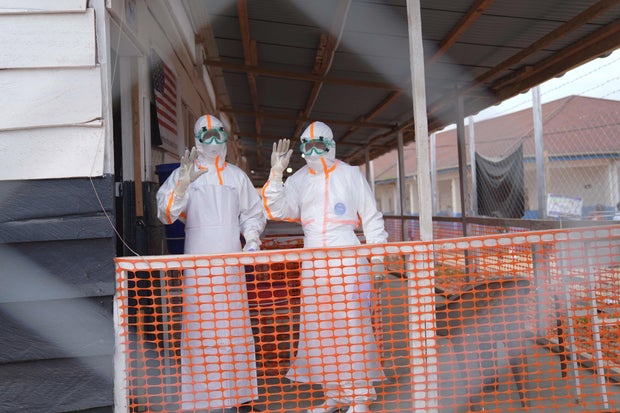
As of August 11, 2026, at least 2,000 people have died in the Democratic Republic of Congo’s Ebola outbreak. This outbreak is the fastest-spreading on record, according to recent government data. Health authorities are facing challenges in providing assistance to remote areas, primarily due to ongoing rebel conflicts, poor road conditions, and work stoppages linked to payment disputes.
The latest reports show that the outbreak has resulted in 4,381 confirmed cases, including 2,011 deaths. This severe toll has been reached nearly three months after the outbreak was declared on May 15. Initially, it took about nine weeks to see 1,000 deaths. In stark contrast, the next 1,000 deaths occurred in approximately three weeks, illustrating the rapid progression of the health crisis beyond the authorities’ control.

This Ebola outbreak is the second-largest in history, surpassed only by the 2014-2016 West Africa outbreak, which reported over 28,000 cases and over 11,000 deaths. The World Health Organization (WHO) has classified this outbreak as a public health emergency of international concern. The crisis has resulted in cases in neighboring Uganda, complicating response efforts across the five impacted provinces.
A worrying development is the strike by many health workers protesting the non-payment of wages since the outbreak declaration. Compounding this is the fact that most new cases are appearing outside the networks being monitored by responders. This outbreak involves the rare Bundibugyo virus, which currently lacks approved vaccines or treatments, although clinical trials have commenced in Ituri, the outbreak’s epicenter.
The WHO pointed out on Monday that the outbreak might have begun in February, much earlier than when authorities detected it in the vulnerable and remote areas of Congo. Initially, several cases were mistaken for malaria and typhoid. Early testing quite often only checked for the more common Ebola strain.
The virus is ahead of us, and we are trying to catch up,said Dr. Mohamed Yakub Janabi, WHO’s regional director for Africa, during a news conference.
The first Ebola virus identified was in 1976 near the Ebola River, in what is now known as Congo. This current outbreak marks the 17th—and largest—that the Central African nation has faced.