
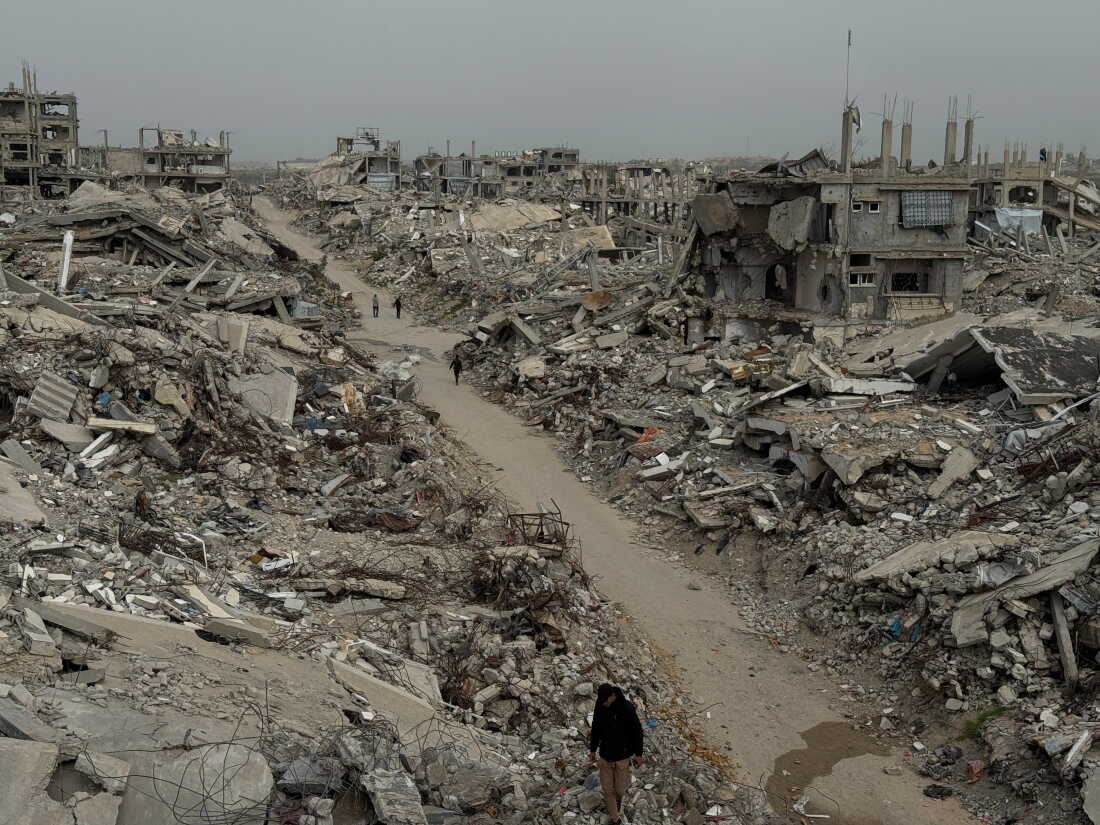
In October 2024, a neighborhood in Beit Lahia, Gaza Strip, suffered immense destruction following Israeli military actions. Among the strikes was a devastating attack on a building that resulted in the death of 132 members of the extended Abu Naser family. An NPR investigation documented this tragic event.
Aftermath of the Strike
An Israeli drone hovers over the debris-filled scene, where homes have become gravesites. Recovery teams face the challenging task of retrieving bodies deeply buried under the rubble. The site of the Abu Naser family massacre remains one of the most severe struck by the Israeli forces during the conflict.
Families Eager for Closure
Ola Abu Naser, a survivor, expressed an ongoing longing to recover loved ones from the rubble. “We’ve been dreaming every day of the moment we could recover the martyrs, honor them, and bury them,” she shared. Amidst the devastation, the family holds on to hope and memory.
Recovery Challenges
According to Gaza’s health ministry, approximately 8,000 bodies remain trapped under debris across the region. NPR documented a three-day operation to recover the Abu Naser family’s bodies. The recovery efforts face significant challenges.
The International Committee of the Red Cross indicated that there is currently only one excavator available for retrieving bodies in Gaza. The need for more machinery is urgent. Pat Griffiths, a spokesman for the Red Cross, noted, “The scale of the need is so high. One functioning excavator is simply not enough.” Efforts to repair additional machinery are underway.
Israeli Restrictions
Israel requires the disarmament of Hamas before allowing major rehabilitation efforts. An Israeli security official explained, “Machinery like that has different sensitivities, including security ones.” The complexities of the situation extend beyond mere logistics.
Recovery Mission in Depth
The use of machinery is essential to lift heavy debris. Once the engine stops, workers begin the painstaking search for human remains. The scent of corpses guides them through the wreckage. Shawqi Abu Naser was one of the first bodies discovered, identified by his jacket.
No DNA Testing Capability
In the absence of DNA testing facilities, survivors must rely on visual identification. Ola Abu Naser described the search as seeking “a needle in a haystack.” The emotional weight of each discovery is profound.
By the end of the first day, the team recovered four bodies. The process continued with the excavator parked atop the rubble overnight.
The Psychological Toll
Ola Abu Naser reflected on the harsh reality of survival. “The ones who died are the survivors. The ones who survived are the dead. Better to be dead than to be in pain, a pain beyond description. They’re at rest. We’re like the walking dead,” she lamented.
On the second day, workers recovered the body of a mother and her baby, as well as Ola’s brother Imad, identified by his hair and glasses. By the end of day two, 20 additional bodies were retrieved.
Continuing Search Efforts
On the final day, the team uncovered 26 more bodies, totaling 50 recovered. However, 20 family members remain lost within the debris. Moeen Abu Naser mourned the absence of his brother’s remains, expressing a deep sense of helplessness.
Wider Impact
Gaza health officials report over 73,000 Palestinian deaths during the conflict. Israel denies genocide allegations, maintaining that the military actions were aimed at defeating Hamas.
The military claimed that it targeted an “enemy spotter” but failed to provide visual evidence. Subsequent bombing further devastated the neighborhood.
Final Farewell
At the end of the mission, family members and workers performed funeral prayers over the retrieved bodies. Survivors laid the remains to rest in new graves, seeking peace for their loved ones.
The recovery work shifts to another nearby collapsed house, highlighting the ongoing need and hope for closure.