
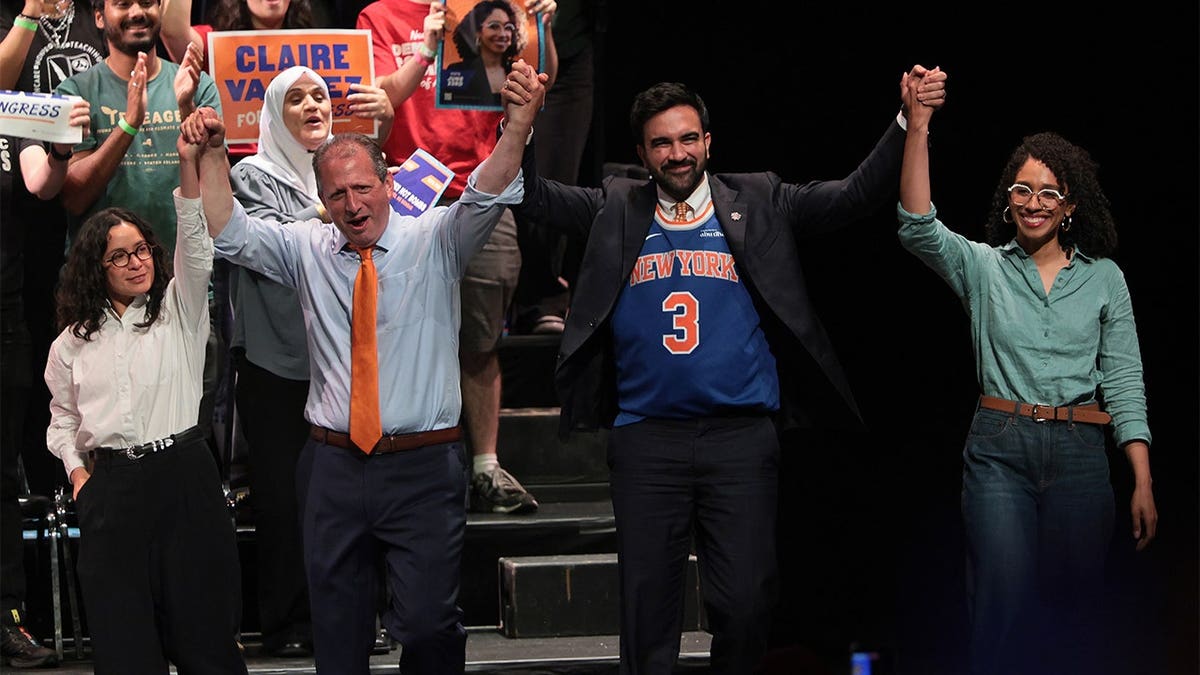
The Democratic Party is experiencing an ideological shift as it moves from deep-blue areas to statewide contests in Michigan, Wisconsin, and Minnesota. These states could see progressive victories reshape the party and threaten essential seats come November.
Following recent wins by far-left and socialist candidates over moderates in deep-blue districts, key Senate primaries in Michigan and Minnesota, along with Wisconsin’s gubernatorial primary, will test if this movement can achieve statewide influence. Progressive leader Sen. Bernie Sanders emphasized recent electoral gains in cities like New York and Seattle and states such as Arizona and Ohio.
The pressure to steer the party more to the left has drawn national attention, especially after socialist-backed candidates won significant races in New York and Colorado. As the progressives rally, the more centrist factions are responding. Former New York Gov. Andrew Cuomo critiqued socialism’s promises, arguing nothing is truly free.
Socialism has not worked anywhere on the globe. Free promises are a fantasy that young people are buying into, but it won’t succeed.
Cuomo, who left office amid scandals, shared these views on Fox Business. His comments followed New York City victories influenced by socialist candidates. The far-left surge has inspired a nationwide challenge against the Democratic establishment.
Internal discord is apparent as Democratic political analyst Van Jones expressed frustration at being pressured into aligning with ‘crazy ideas’. He argued that celebrating violence or opposing law enforcement is not progressive but regressive.
Jamie Metzl, a former member of the Clinton administration, called for Democrats to reject bigoted and anti-American influences within the party. According to him, groups like the Democratic Socialists of America (DSA) pose a significant threat.
In Michigan, where Sen. Gary Peters is retiring, the party is divided. Sanders and Rep. Alexandria Ocasio-Cortez have actively supported far-left candidate Abdul El-Sayed against moderate Rep. Haley Stevens. El-Sayed, if elected, would be the first Muslim senator. He advocates for Medicare for all, abolishing ICE, and is critical of Israel’s actions in Gaza.
The primary race is both intense and costly. Political action committees, like the United Democracy Project, aim to bolster Stevens and counter El-Sayed’s influence due to his polarizing comments.
As primary elections unfold in Wisconsin, DSA-backed Francesca Hong emerges as a notable contender for governor. Her optimism mirrors the sentiments following New York’s progressive wins.
Minnesota presents its own battle with Lt. Gov. Peggy Flanagan and Rep. Angie Craig competing in the Democratic primary to replace outgoing Sen. Tina Smith. These upcoming primaries shape both the future party direction and the immediate congressional battles ahead.
The stakes remain high for Democrats to maintain control in November. As strategist Joe Caiazzo noted, these contests underscore the dual forces vying for dominance within the party.