
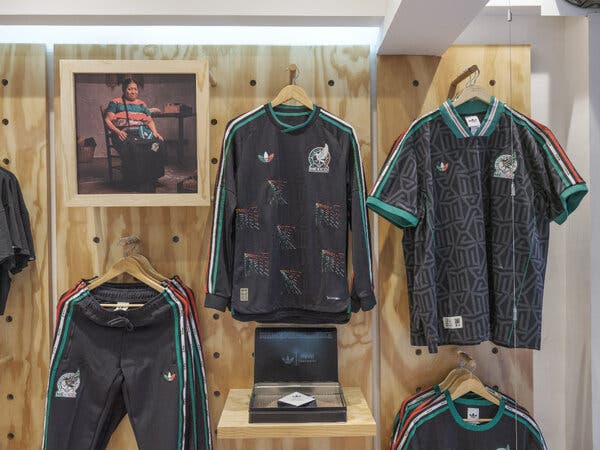
Recent events have stirred emotions in Mexico following the release of viral videos alleging Adidas exploited Indigenous women in the creation of World Cup jerseys. This brings to light accusations and defenses about the involvement of these communities.
Background of the Project
The controversy unfolds from an initially positive initiative. Someone Somewhere, a Mexican apparel company, proposed a collaboration to have the nation’s World Cup jerseys embroidered by Indigenous artists. This idea aimed to celebrate cultural heritage and provide economic relief for marginalized groups. Adidas responded promptly to this proposition.
Two years later, Adidas and Someone Somewhere introduced jerseys hand-embroidered by 150 Nahua women from Naupan, a small town in central Mexico. As part of this campaign, two artisans received the opportunity to travel to Germany, while others appeared at a friendly match in Mexico. Despite jerseys costing over $200, demand remained high.
Accusations of Exploitation
Mexican activists, using social media platforms, began scrutinizing this collaboration. Notable activist Luz Valdez criticized the arrangement, claiming the companies exploited the Nahua women’s labor and capitalized on their images. Valdez noted significant issues, including the directive for artisans to adopt Western sewing techniques instead of their traditional methods.
This highlights a broader discussion on the ethics of using traditional skills in commercial ventures. Nazario López, a cultural researcher, suggested that while such collaborations could provide economic opportunities, they require careful management to respect cultural practices and adequately compensate artisans.
The Larger Conversation
The case prompts a conversation on how international brands collaborate with Indigenous communities. It resonates with other incidents where cultural expressions faced commodification. Companies involved must tread carefully, ensuring fair trade principles guide projects and preserving cultural methods without external distortion.
The Mexican public remains watchful of developments, seeking transparency and fair representation in these partnerships. Meanwhile, Adidas has yet to release a detailed response addressing these concerns. The broader industry takes this as a learning moment on ethical international collaborations.