
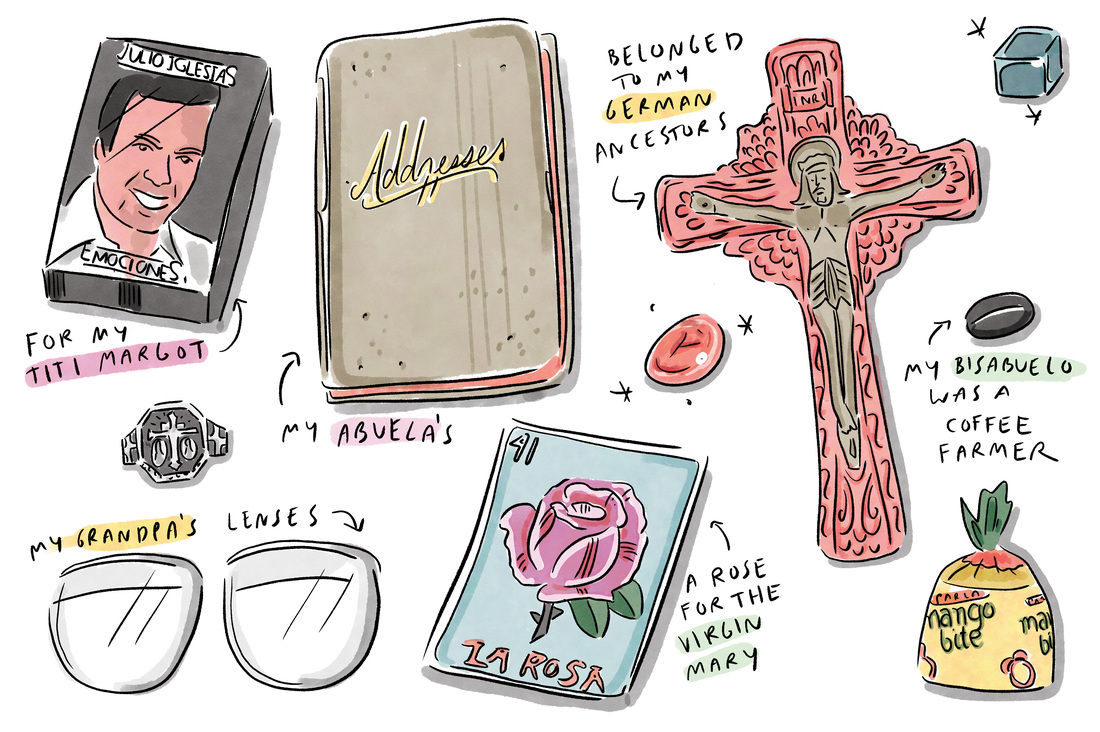
Every morning, NPR Life Kit host Marielle Segarra greets her ancestors. By her bedside, a small display holds mementos from her family: her grandmother’s address book, eyeglass lenses from her grandfather, and a cassette tape of Polish children’s songs received from her great uncle. These items serve as daily reminders of her family’s wisdom and love.
Ancestral altars are common worldwide. In Mexico, ofrendas honor loved ones during Día de los Muertos. Buddhist and African traditions often include permanent altars in homes, allowing daily veneration of ancestors.
According to Ehime Ora, an educator on African spirituality, creating an altar is accessible to everyone. It doesn’t require religious beliefs; it’s a practice for reflecting on your lineage. Camara Meri Rajabari, a psychotherapist, notes that altars can provide a sacred space to remind you that you’re supported and never alone.
Step 1: Explore Your Intentions
Before assembling an altar, consider your reasons for connecting with your ancestors. Chelsey Luger, co-author of “The Seven Circles: Indigenous Teachings for Living Well,” suggests integrating your ancestors’ values into daily life. The Lakota phrase “Mitakuye Oyasin,” meaning “we are all related,” reflects her view of the interconnectedness taught by her ancestral teachings.
Your reason doesn’t have to be spiritual. Ora emphasizes gratitude for your existence as a valid motivation for creating an altar.
Step 2: Choose a Special Spot for Your Altar
Your altar’s location can be personal. Segarra has hers on her bedside table. Ora notes that altars aren’t confined to specific locations; they can be on dressers, tables, or even inside closets. What matters is that it’s a designated place for intentional communication with your ancestors.
Step 3: Display Objects Representing Your Ancestors
Altars often hold items that embody ancestors’ energy and history. Objects such as crystals, photos, and symbols connect with your heritage and imagination. Family heirlooms can enrich this space. If tangible mementos aren’t available, use symbolic items to represent ancestors. Ora suggests finding items that might resonate with a family member’s interests or traits, like a favorite flower.
Luger, who doesn’t have an altar, still surrounds herself with meaningful objects, like her grandmother’s preferred perfume. Segarra includes a Julio Iglesias cassette tape on her altar, a nod to her Titi Margot’s music taste.
Step 4: Start a Ritual
Collins, co-founder of Well for Culture, says rituals acknowledge the sacred aspects of life. Rajabari engages in prayer and meditation at her altar, sharing both mundane matters and personal challenges with her ancestors.
In African religious traditions, food offerings strengthen connections with ancestors. Segarra greets her relatives each morning, sometimes lighting a candle or wearing her grandmothers’ rings. Although she didn’t know most of them personally, her altar honors their existence and brings her peace.
How do you connect with your ancestors? Have you crafted an altar? NPR Life Kit invites you to share your experiences by emailing them with the subject line “Ancestors.”
The audio for this episode was produced by Audrey Nguyen, and the digital story was edited by Malaka Gharib. Connect with us through voicemail at 202-216-9823, email at [email protected], and follow Life Kit on Apple Podcasts, Spotify, or by signing up for our newsletter.