
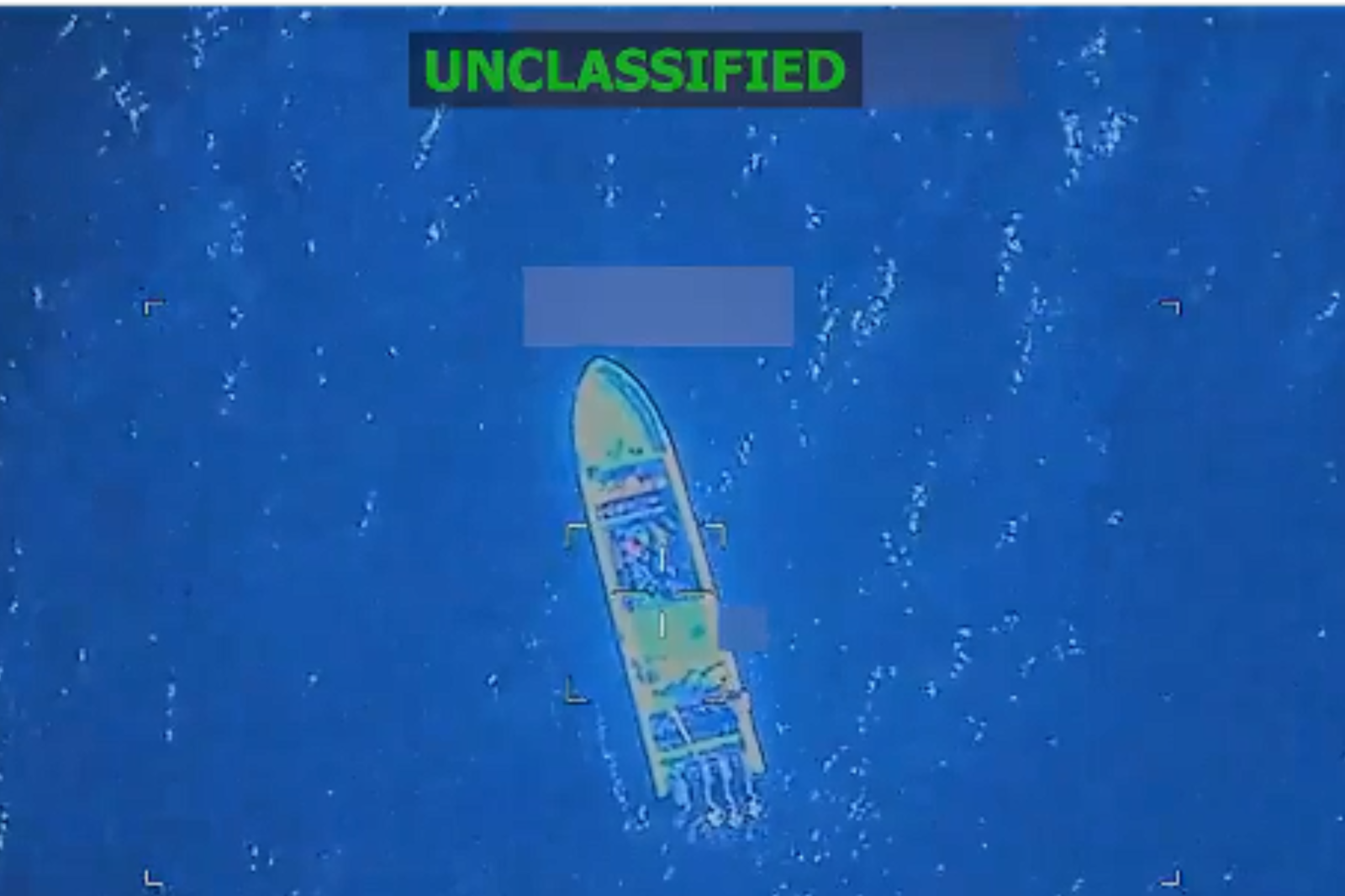
The U.S. military has conducted a third strike on a boat in one week. The U.S. Southern Command (SOUTHCOM) confirmed this recent action, part of an ongoing campaign in the eastern Pacific and Caribbean Sea. The boat was accused of drug smuggling in the Pacific Ocean. Three men, identified by SOUTHCOM as ‘narco-terrorists,’ were killed, increasing the death toll from these strikes to over 200 since they began in early September.
Engaged in ‘Narco-trafficking Operations’
SOUTHCOM described the military action as a ‘lethal kinetic strike on a vessel operated by Designated Terrorist Organizations.’ Intelligence confirmed the vessel was on known drug trafficking routes in the Eastern Pacific and engaged in such operations. This strike is part of the U.S. government’s efforts to curb drug trafficking into the country, actions that have drawn international criticism and scrutiny from humanitarian groups and Congress.
Legal Concerns
The strike occurred one day after a previous U.S. attack killed two people on another alleged drug boat. The U.S. government claims it is in a legal ‘armed conflict’ with drug cartels to halt drug flows into the country. However, humanitarian groups and international experts criticize these strikes as illegal under international law, as the military targets civilians not posing immediate threats. Organizations like the American Civil Liberties Union have condemned these claims from the Trump administration as unsubstantiated. Human Rights Watch and Amnesty International argue these strikes equate to unlawful killings.
Guatemala’s Position
Guatemala’s President, Bernardo Arévalo, has denied any agreement allowing U.S. strikes on its soil. Arévalo stated there is ‘no agreement’ despite a report claiming he consented to joint operations during a call with U.S. Defense Secretary Pete Hegseth. Arévalo did mention that Guatemala has requested U.S. aid to combat cartels amid the ongoing crackdown.
Although the Trump administration insists the campaign is necessary, experts warn the operation has not reduced cocaine flow from South America into the U.S. Reports indicate that drug availability remains unchanged, based on assessments of street prices, overdose rates, drug seizures at the U.S. border, and drug sample purity.