
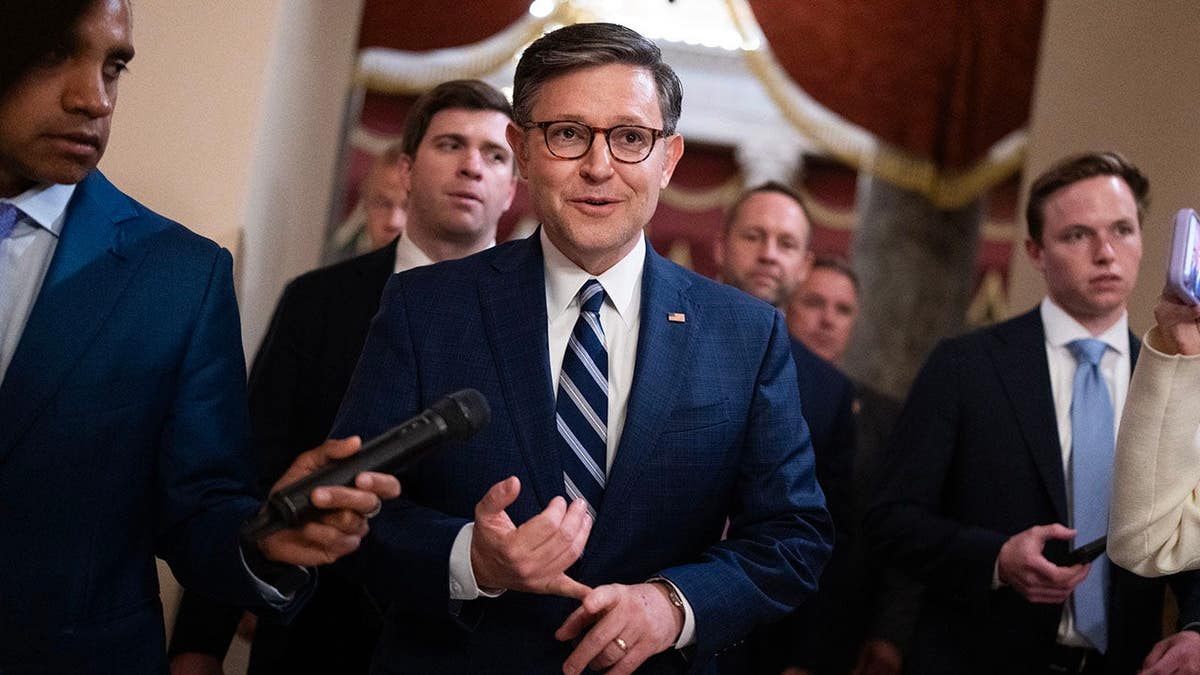
On Tuesday, House conservatives ended a lengthy blockade of the House floor. This move provided Speaker Mike Johnson, R-La., with a significant win after legislative activities were stalled for nearly a month. The House managed to pass a procedural vote with a tally of 215-211. This paved the way for upcoming votes on several bills, including one that funds the State Department, another aiming to make daylight saving time permanent, and a measure geared towards enhancing veterans’ benefits.
Speaker Johnson agreed to pair the State Department funding with the SAVE America Act. This decision swayed several conservative members, who had previously withheld their votes, to support the measure. Their original stance demanded more pressure be placed on the Senate to pass the stalled Act. Notably, Rep. Randy Fine, R-Fla., was the only Republican to oppose the rule, while all Democrats voted against it during a party-line procedural vote.
The conservative factions had blocked major House legislation since late June. Their objective was to compel GOP leaders to hold votes on the Trump-backed SAVE America Act and a comprehensive border security bill. Given the Republicans’ slight majority in the House, Speaker Johnson could not afford to have many GOP defections.
There is growing pressure on Speaker Johnson to resume House operations. The aim is to advance a backlog of legislation before the November midterm elections. GOP leadership is working swiftly to outline plans for another substantial bill. In addition, they aim to finalize government funding bills before the September 30 deadline and consider a potential supplemental package addressing the Iran war’s expenses.
Rep. Anna Paulina Luna, R-Fla., was among the GOP group that effectively stopped the House’s progress to push the Senate to pass the SAVE America Act. She agreed to unlock the floor when Johnson proposed pairing the election measure with the State Department funding bill. Previously, Johnson had tried to add the SAVE America Act to a defense policy bill before the July 4 recess, but Luna had maintained the blockade.
Rep. Luna expressed her concerns over potential Senate actions, stating on social media that any removal of the Act by Sen. John Thune would be his responsibility. Thune, supportive of the SAVE America Act, has insisted there aren’t enough votes in the Senate to pass it due to unified Democratic opposition. This situation leaves House Republicans with limited ability to compel the Senate into action.
Some conservative members have also threatened to oppose measures unless the house schedules a vote on a border security package. Members of the House Freedom Caucus are pushing for the Permanent Trump Secure Border Act, which aims to enshrine numerous executive orders from Trump’s term that target illegal immigration, including ending catch-and-release policies.
Rep. Chip Roy, R-Texas, emphasized the importance of addressing border security and birthright citizenship issues, reflecting his constituents’ concerns. However, some members, like Rep. Keith Self, R-Texas, have criticized Johnson’s legislative priorities, arguing that the focus should remain on election integrity via the SAVE America Act. Despite his reservations, Self voted in favor of the procedural motion.
The tactics employed by some GOP rebels have frustrated many House Republicans, who worry that the strategy may hinder the conference’s legislative progress. Rep. Mario Diaz-Balart, R-Fla., expressed confusion over why discontent with the Senate would result in hindering the House’s conservative agenda.
Nonetheless, some conservatives maintain that achieving the SAVE America Act’s passage is crucial. Trump has continually emphasized that this election integrity measure is his legislative priority. His protest against a bipartisan housing bill last week, which aimed to boost supply and decrease costs, underscores the importance he places on this measure.
Rep. Ralph Norman, R-S.C., echoed a firm stance, insisting that no votes should proceed without incorporating the SAVE America Act. He suggested that the Senate should be prompted to address it daily, including engaging in a talking filibuster. However, he acknowledged skepticism about this approach’s likelihood.