
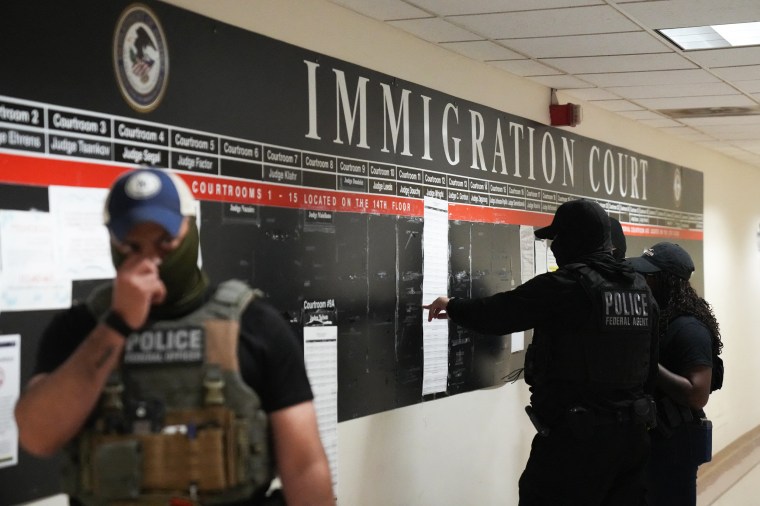
Immigrant rights groups have long criticized the state of detention facilities. Reports describe conditions as cold, overcrowded, and often unsanitary. Many detainees are unaware of their release dates.
Currently, Immigration and Customs Enforcement (ICE) holds nearly 60,000 individuals, a significant increase from around 34,000 during the Biden administration. Detainees now remain in custody for an average of 50 days, compared to 36 days previously.
Challenges Faced by Detainees
Simon Sandoval-Moshenberg, an immigration attorney in Maryland, recounted cases like that of a client released after 11 months. “The issue lies not only in the conditions of detention centers but also in the uncertainty of release,” he explained. Sandoval-Moshenberg believes the rate of self-harm would decrease if detainees had a clear end date, regardless of their case outcomes.
Most detainees are men. Over 20,000 in ICE custody have no criminal record apart from immigration law violations, such as visa overstays or illegal border crossings. During Trump’s second term, nine suicides occurred, affecting men aged 19 to 45. Among them, three had violent criminal backgrounds, while four had non-violent records.
Concerns About Facility Standards
Recent suicides highlight ongoing concerns. One incident occurred at Stewart Detention Center in Georgia. An ICE inspection revealed the facility failed to complete required suicide prevention training for staff and did not consistently monitor suicidal detainees every 15 minutes. In instances, checks extended to 125 minutes.
Nationwide, 19 facilities have not met suicide prevention standards. In response to a recent suicide, ICE reaffirmed its commitment to detainee safety and medical care. “Suicides in DHS custody are tragic but rare,” said an ICE spokesperson. “Staff follow strict protocols to safeguard detainees at risk.” DHS did not comment on specific incidents or the rising number of suicides.
Many detention facilities are operated by private companies under ICE contracts. CoreCivic, managing Stewart Detention Center, did not comment. GEO Group, responsible for another facility, referred inquiries to ICE.
Inspection Decline Amid Rising Detainee Numbers
Although ICE detainee numbers have doubled, inspections have declined. At least four DHS offices conduct inspections, but two have been weakened. Congress members make unannounced visits to facilities. During a recent visit, Rep. Mike Levin faced new policy hurdles, restricting his ability to speak with detainees without prior notice and consent forms.
An annual DHS Office of Inspector General usually conducts four to six unannounced inspections per year. A $20 million funding increase aims to enhance these efforts, stated a spokesperson.
Mental Health Challenges Among Detainees
NBC News obtained records revealing severe mental health struggles among detainees. There are at least 39 emergency calls involving acute psychosis and altered mental states. In Michigan, one detainee refused medications and food, collapsing after eight days. Gabriel Leiva, another detainee, was placed in solitary confinement after a plea to kill him. He attempted suicide in confinement before being rescued by guards.
ICE reports no current detainees at the North Lake Michigan facility by Leiva’s name. Some deaths have occurred shortly after detention, notably Victor Manuel Diaz, arrested in January. Diaz’s family remains suspicious of his reported suicide, prompting a second autopsy.
If you or someone you know is in crisis, call or text 988 or visit 988 Suicide & Crisis Lifeline, or check SpeakingOfSuicide.com/resources.