
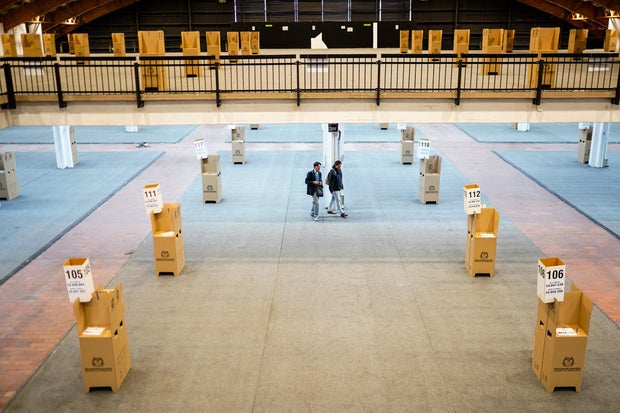
By May 30, 2026, millions in Colombia will vote in a significant presidential election. This election is likely to lead to a runoff on June 21, as no candidate is expected to achieve the required 50% to win outright in the first round.
Candidates and Polls
The election field includes 14 candidates, but three have emerged as front-runners. Leading the polls is Senator Iván Cepeda, representing the ruling Pacto Histórico party on the far left, expected to continue President Gustavo Petro’s policies. On the far right is Abelardo de la Espriella, a lawyer who mirrors the style of President Trump and El Salvador’s President Nayib Bukele. Meanwhile, Senator Paloma Valencia, supported by former President Álvaro Uribe, presents a center-right platform.
An AtlasIntel poll of 4,531 interviews shows Cepeda narrowly ahead with 38.7%, de la Espriella closely trailing at 37.3%, and Valencia significantly behind at 14.3%. Former Medellin Mayor Sergio Fajardo lags in the polls. However, despite his initial lead, Cepeda would face strong competition in a runoff, where polls indicate he could be defeated by any of his main opponents.
Security and Peace Negotiations
Colombia remains a highly polarized nation, with voters desiring change. Many low-income families near coca fields, the raw material for cocaine, have experienced increased danger due to failed peace talks. Human rights groups recorded over 50 massacres this year, with recent skirmishes claiming around 50 lives. Some studies indicate that Petro’s peace policies have empowered armed criminal groups.
The election campaign has been fraught with violence, including candidate assassinations and violent incidents affecting local political leaders, leading voters to prioritize security, closely followed by healthcare. De la Espriella proposes forceful measures similar to Trump’s policies, including dramatic actions like using pyrotechnic campaign events. He suggests demolishing traffickers’ camps and ending negotiations with drug traffickers, advocating for maximum-security prisons modeled after El Salvador. He dismisses human rights concerns over prisoners’ rights.
Cepeda, on the other hand, promotes ongoing dialogues with guerillas and cartels. However, his approach has been labeled ineffective by critics, who accuse him of softness towards criminal activities.
Valencia calls for increased troop deployment and technology use to combat crime, drawing critiques for branding her opponents’ tactics as theatrical. Her strategy is seen as a balance between tough measures on trafficking and softer policies on coca cultivation.
Economic Factors and Voting Security
Beyond security, economic concerns also drive voters. Businesses face uncertainty after absorbing a recent minimum wage hike, pondering if future administrations will adjust it. Voting security remains a significant issue due to reports of voter intimidation in rural areas by armed groups. Drug lords have threatened violence in opposition to right-leaning candidates, further complicating security.
Cepeda has publicly criticized any armed group efforts to influence voters. This stance highlights the tense atmosphere surrounding the election, where safety at polling stations is a major worry for officials and citizens alike.
U.S. Interests in the Election
The outcome of Colombia’s election holds substantial implications for U.S.-Colombia relations. The Trump administration seeks to maintain strong allies in its regional counternarcotics operations. Under Petro, U.S.-Colombia ties weakened, marked by restrictions on Petro, including a visa withdrawal, personal sanctions, and an investigation into his alleged drug trafficking meetings. Diplomatic tensions moderated after President Petro visited the White House.
Historically, Colombia has been a key U.S. ally in fighting drugs and a significant trade partner. Observers view the election as critical for determining Colombia’s future path and its relations with the U.S. Senator Bernie Moreno warns of risks if Colombia takes a wrong turn, emphasizing the consequences for the region if bad actors gain power there.