
Over 41.4 million Colombians are set to vote to decide the successor to President Gustavo Petro, who is not eligible for re-election. The electoral process, spanning from 8 a.m. to 4 p.m. local time, also includes selecting a vice president. This election occurs in a backdrop of political violence, highlighted by the assassination of Miguel Uribe Turbay and various threats against other candidates. Illegal armed groups continue to vie for control over territories critical to drug trafficking and illegal economies.
Key Points of Interest
The leading candidates, according to polls, include Iván Cepeda, a senator from the Historical Pact, the party currently led by President Gustavo Petro. Paloma Valencia, a senator from the opposition party, Centro Democrático, and Abelardo de la Espriella from the citizen movement Defensores de la Patria, are also prominent contenders.
Other candidates in the race are Claudia López, former mayor of Bogotá, and Sergio Fajardo, former mayor of Medellín and governor of Antioquia. The list also includes Roy Leonardo Barreras, former ambassador to the UK, Mauricio Lizcano, former Minister of Information Technology and Communications, and Miguel Uribe Londoño, who replaced his son after a fatal attack last year.
Former governor of Magdalena, Carlos Caicedo, and former chancellor Luis Gilberto Murillo withdrew their candidacies to support Iván Cepeda, although their names remain on the ballots.
Petro Emphasizes the Sanctity of the Vote
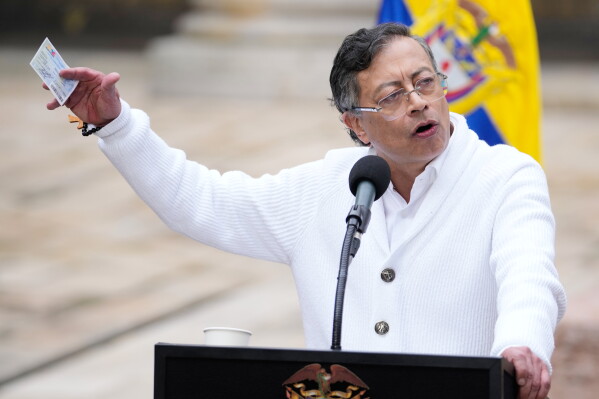
President Petro encouraged citizens to determine Colombia’s direction by voting freely without external pressures. From the Plaza de Bolívar, he underscored that offering money for votes or employers dictating how employees should vote constitutes a crime.
Petro stressed the importance of safeguarding votes through election witnesses to prevent fraud. He also criticized the current voting software, advocating for state ownership to prevent third-party interference.
Bogotá Bars Get Creative Amid Alcohol Ban
An alcohol ban preceding the election prompted bars to offer creative non-alcoholic cocktails named after presidential candidates. A “Pacto Pop” with cranberry juice and tonic represents Iván Cepeda, while a “Tigre Tonic” honors Abelardo de la Espriella. “Paloma Sour” with mandarin and cucumber syrup is dedicated to Paloma Valencia. An “Indie Blanco” caters to undecided voters.
Polling Stations Open
Voting centers opened Sunday for a presidential election overshadowed by the ongoing threat of violence from armed groups. Among the 11 presidential hopefuls, the progressive Iván Cepeda leads alongside conservatives Abelardo de la Espriella and Paloma Valencia, who pledge tough measures against illegal groups and drug traffickers.
Well before opening, voters queued outside Bogotá polling stations. Voting will close at 4 p.m.
A Nation Decides
Voters face the choice of deepening or reversing Petro’s progressive political agenda. He remains a polarizing figure, with a 40% approval rating according to polls, yet faces high disapproval in some sectors. This reflects Colombia’s ongoing division over social, economic, and political issues, as noted by political analyst Sergio Guzmán.