
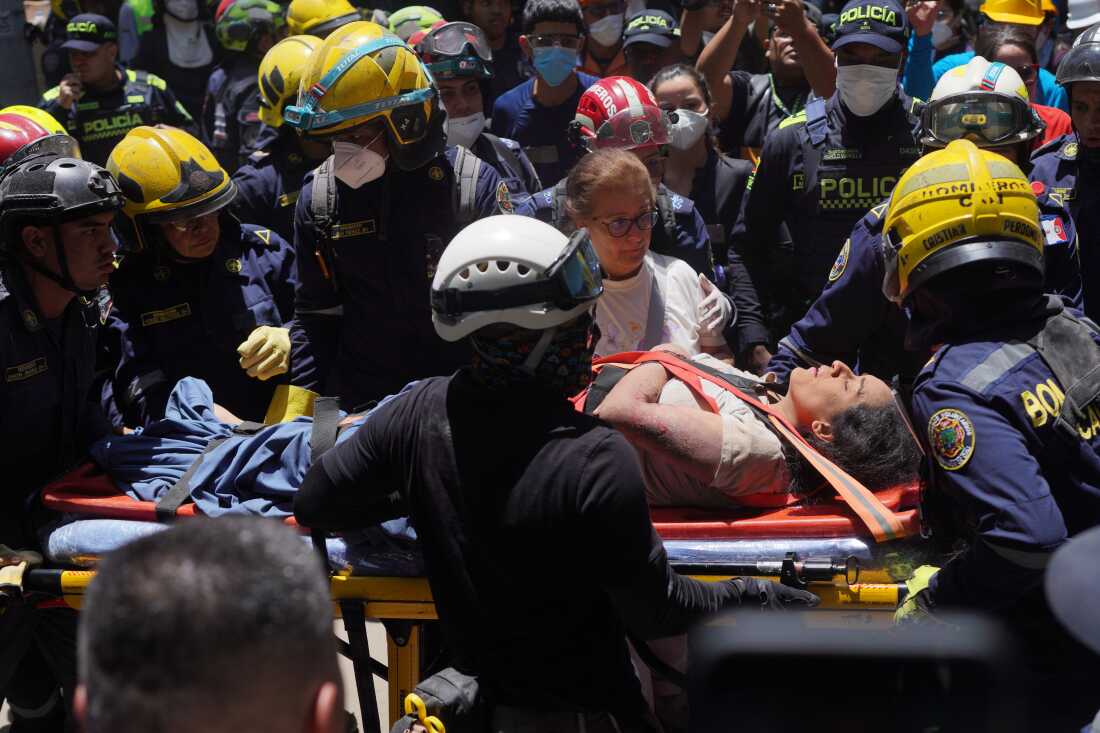
Rescue workers successfully carried Diana Troncoso out of the rubble in Cali, Colombia, following a devastating earthquake. The earthquake, occurring on Tuesday, August 11, 2026, prompted an urgent search for survivors as the situation in Colombia grew more desperate. The rescue efforts came just as a key time threshold approached for locating individuals with signs of life.
The 7.4 magnitude earthquake has put Colombia’s President Abelardo de la Espriella to the test. He has been navigating the challenges of responding to the natural disaster and coordinating with civil society to aid the most vulnerable communities. As of Tuesday, President de la Espriella reported 181 fatalities and 2,595 injuries in the western part of the country. Officially, there are 195 people missing, but some civilian databases suggest the number could be closer to 4,000.
Efforts continued overnight to find survivors in the cities most affected, including Cali, Pereira, Manizales, and Quibdo. Time is critical, as aid agencies believe the first 48 to 72 hours are vital for rescuing people, although the time frame can extend if survivors have access to food and water. Amid the somber task of combing through debris, there have been small victories, like rescuers saving a dust-covered baby from a concrete wall and crowds cheering as a woman was safely placed on a stretcher.
In Cali, patients were evacuated from a clinic due to damage and relocated to a temporary facility in a school gymnasium. This official response has been hard-hit by the ongoing issues of poverty and long-standing civil conflict in the region, impacting affected communities over decades.
This earthquake compounds an already severe humanitarian situation, and there is a need for increased support for the humanitarian response,said Giovanni Rizzo, Colombia director for the Norwegian Refugee Council.
The 2016 peace accord between the rebels and the government, along with continuous armed conflict, seems to enable faster aid distribution. Aid organizations have been able to respond quickly, especially in conflict-affected areas like Choco, the quake’s epicenter.
Maria Jose Torres, the U.N. resident coordinator in Colombia, emphasized the importance of having a presence on the ground, stating, “Our ability to be there, present with the people, I think, has increased exponentially.”
In addition to local efforts, aid from countries and organizations abroad has been forthcoming. The U.S. has pledged more than $15 million in aid. Mexico’s president is ready to deploy hundreds of search and health workers, as well as send medical supplies and equipment. Salvadoran President Nayib Bukele announced his country would send two planes carrying 100 tons of aid soon. He expressed solidarity, writing, Our prayers are with the families of the victims, the wounded, and all the Colombian people.