
China tested a long-range ballistic missile on Monday, launching from a nuclear-powered submarine in the South Pacific. This action has drawn protests and alarm from neighboring countries.
According to Xinhua News Agency, the missile was equipped with a dummy warhead and was launched at 12:01 p.m. It follows China’s previous missile test in the Pacific two years ago, where an intercontinental ballistic missile was fired. The launch, stated by Xinhua and echoed by the Ministry of Defense, was part of routine annual training, compliant with international law, and not targeted toward any specific country.
Such tests are in line with similar U.S. ballistic missile fleet trials, which experts interpret as a demonstration of China’s increasing superpower status. Australia, New Zealand, and Japan have voiced criticism, with New Zealand alerting that the missile was fired into the South Pacific Nuclear-Free Zone. Established by the 1986 Treaty of Rarotonga, this zone prohibits nuclear weapons in the region. Despite ratifying the treaty protocols in 1987, China proceeded with the test shortly after notifying New Zealand authorities.
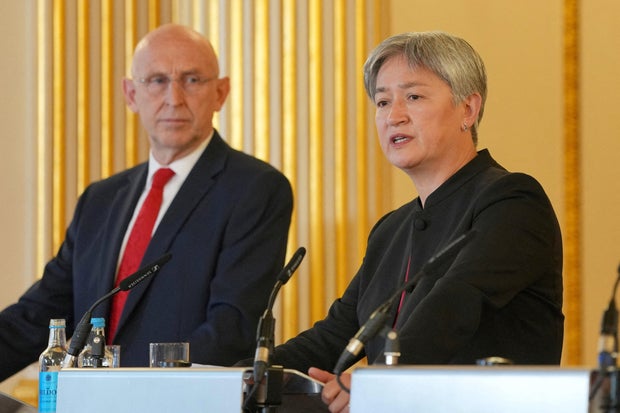
Foreign Minister Winston Peters expressed dissatisfaction with the timing and nature of the test. Concurrently, Australia and Fiji signed a defense treaty aimed at mitigating Chinese influence in the Pacific region. Australian Foreign Minister Penny Wong declared the launch destabilizing.
Japan urged China to reconsider the test, as detailed by a Japanese Embassy briefing in Beijing before the event. Japan emphasized security concerns through a joint government statement, urging China to avoid compromising Japan’s airspace.
China possesses a fleet of six ballistic-missile submarines and 59 nuclear-powered attack submarines, per information from the Nuclear Threat Initiative, a think tank based in Washington.
“It appears that despite our long-standing concerns about this type of activity, China carried out the test within hours of informing us,” – Winston Peters, New Zealand Foreign Minister