
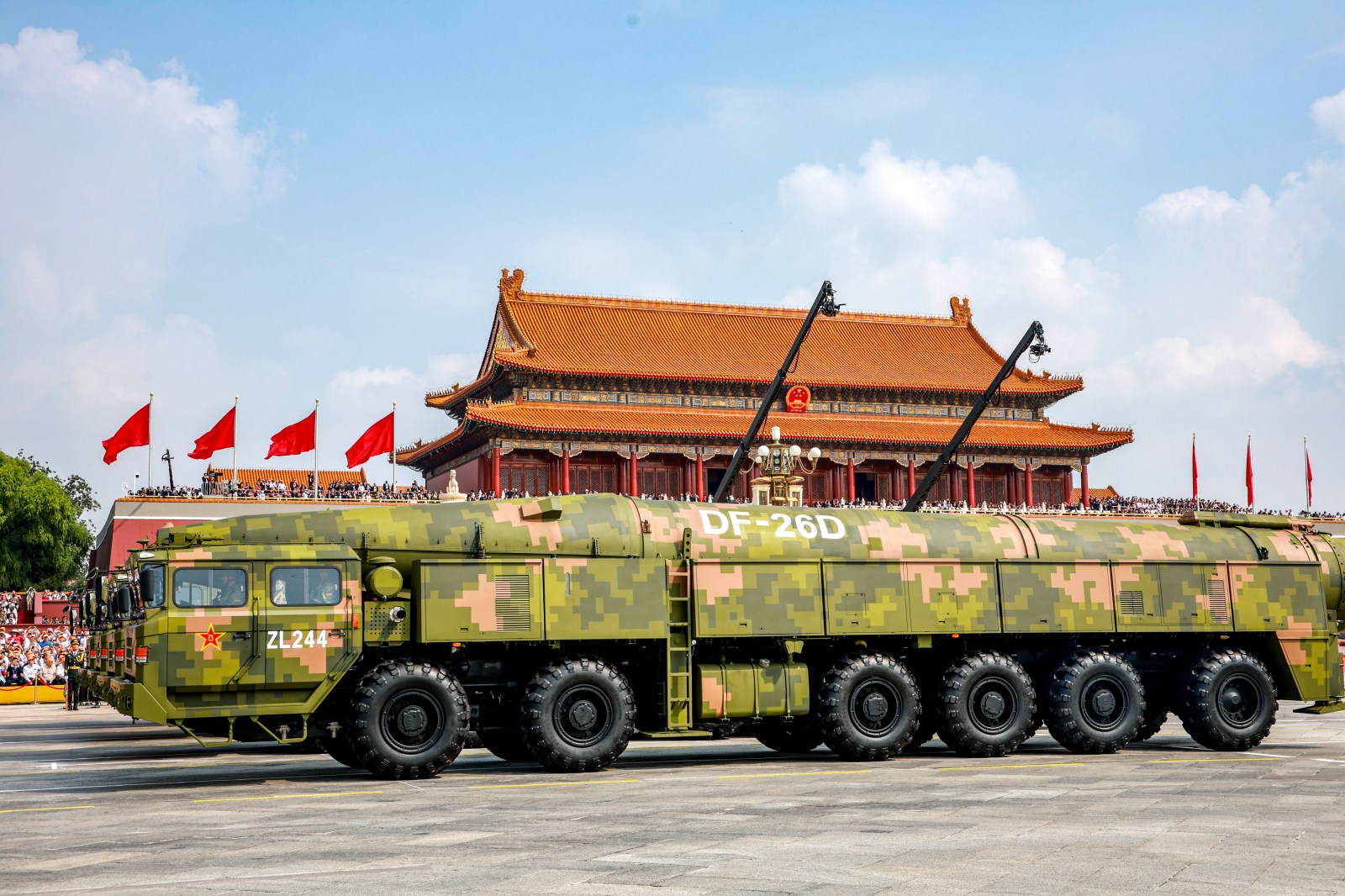
China is working on long-range missiles capable of hitting Australian territory. However, it already has the capability to cause significant economic disruptions in case of a conflict involving the region and the United States. The Lowy Institute report, released on Sunday, highlights these developments.
Military Buildup and Regional Impact
The People’s Liberation Army (PLA) has been rapidly expanding its military capabilities, challenging the United States’ dominance in the Indo-Pacific. This shift is putting pressure on regional nations to align with Beijing’s interests. The report suggests that a possible conflict over Taiwan is a top priority for the PLA. However, China also aims to extend its military reach with missiles, aircraft, and ships capable of reaching Australia.
The PLA’s growth is seen as a significant change affecting Australia’s interests, regardless of whether China can directly strike Australian territory. In response, the Chinese government stated its military efforts are defensive and meant to protect national sovereignty, security, and developmental interests.
Missile Threats
Chinese missiles are capable of hitting Australian targets when launched from the sea or air. Currently, the DF-26 missile is the only land-based weapon that can reach northern Australia from China’s bases in the South China Sea. A newer missile, the DF-27, could potentially hit the entire Australian landmass if fired from China, with a reach of up to 5,000 miles. This weapon may already be in service as per the U.S. Defense Department.
In a potential conflict where Australia backs the U.S., China could target Australian assets such as offshore oil facilities or infrastructure. The report, however, does not consider China’s nuclear arsenal or the expanding stockpile, which includes an intercontinental ballistic missile capable of reaching the U.S.
Naval Threats and Economic Impact
The report warns that Australia’s crucial maritime trade routes and undersea cables are vulnerable to Chinese military actions. An economic impact study estimates that 99 percent of Australia’s international trade in 2024 went through seaports, with oil, gas, and fuel making up the largest import categories.
The Lowy authors suggest China could impede Australian maritime traffic through blockades or force demonstrations. In March 2025, a Chinese naval flotilla conducted live weapon firing near Australia. Such military exercises might become more common, posing increased challenges for Australia.
In response, Australia has increased its defense spending and strengthened ties with the U.S., including procuring nuclear-powered submarines through the AUKUS pact. However, these preparations might heighten regional security concerns.
Strategic Considerations
Australia’s Defense Minister, Richard Marles, calls China’s military growth the most significant since World War II. The U.S. shares concerns over China’s lack of engagement in arms control talks, fearing broader ambitions beyond the Indo-Pacific. American officials believe China might aim to seize Taiwan by force by 2027, though an invasion is not currently anticipated.
The Chinese government criticized the Lowy report’s interpretation of its strategy, labeling it a strategic mistake. The authors did not speculate on China’s intentions, focusing instead on China’s capabilities, stressing that governments should prepare based on what other nations can do.