
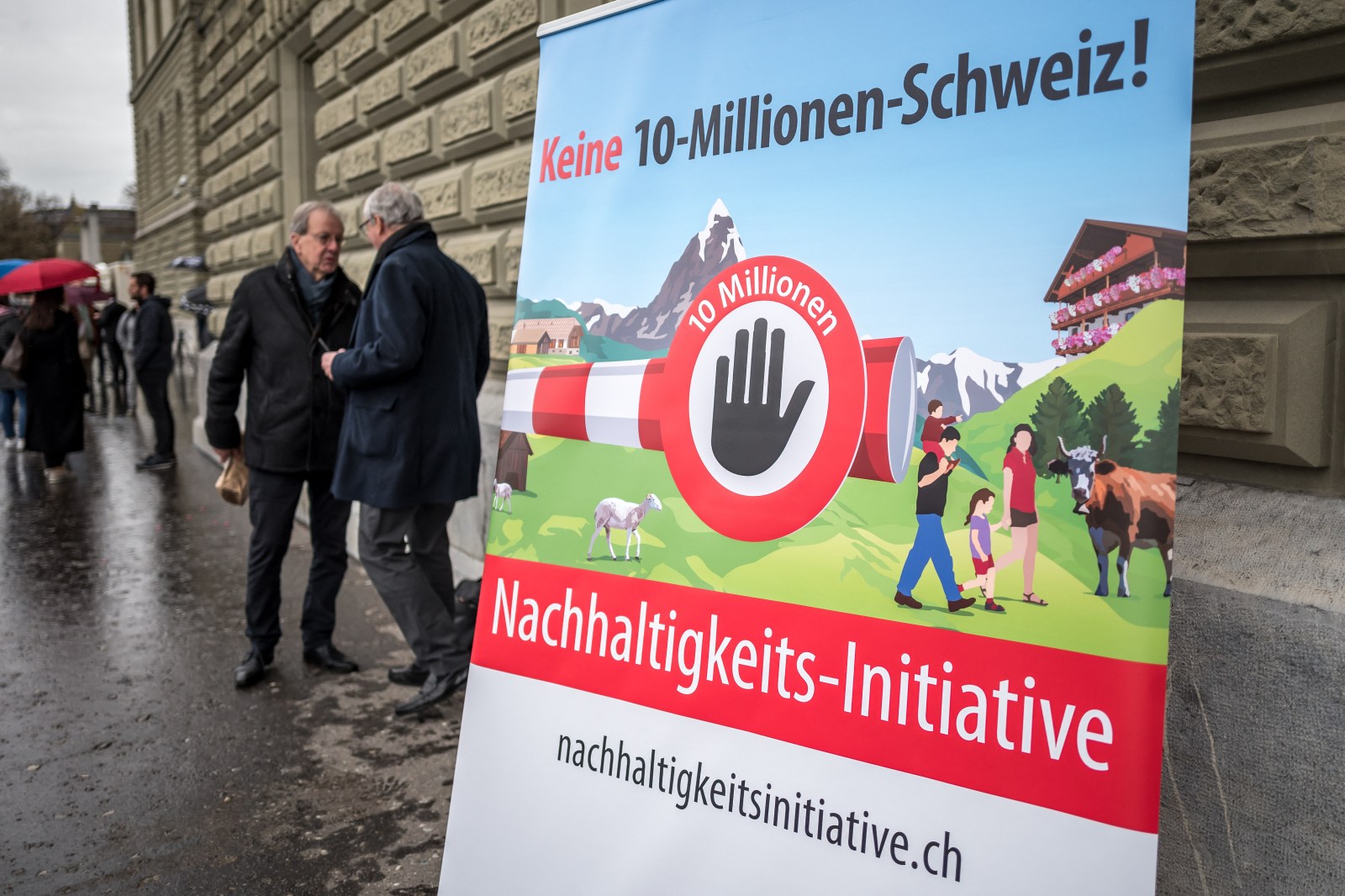
Swiss citizens recently voted against a proposal aiming to limit the country’s population to 10 million. This decision prioritized economic stability and strong European ties over aggressive measures to control population growth and immigration.
The Swiss People’s Party (SVP) backed the rejected initiative. It would have compelled the government to act, which might have included dissolving significant agreements with the European Union if Switzerland’s population exceeded 10 million by 2050. The SVP argued that rapid population growth was putting pressure on housing, infrastructure, and public services. However, nearly 55 percent of voters opposed the measure, according to early results from a nationwide referendum reported by Reuters, with 45 percent in favor.
Cloé Jans, a senior project manager at the Swiss public opinion research firm gfs.bern, told Newsweek the measure was perceived as “too extreme.” Despite shared concerns over growth-related issues like housing costs, voters were not willing to embrace the proposed solution. Campaigners against the measure effectively highlighted the economic and geopolitical risks involved.
The issue resonated with voters but not the solution.
Nearly half of the voters backing the initiative reflected the ongoing significance of the concerns driving the proposal, despite its defeat. Since 2002, Switzerland’s population expanded by nearly 2 million, growing from 7.3 million to over 9 million in 2025, largely due to eased movement with the EU, reports the Federal Statistics Office. The SVP framed the initiative as a means to address growing pressures on housing and services and preserve Swiss cultural traditions.
The 2025 UBS Worry Barometer found immigration a top concern for Swiss citizens (30 percent), following health issues (50 percent) and environmental concerns (31 percent). Jans commented that although there is general unease, the offered solution was considered overly extreme.
Surveys by gfs.bern consistently show Swiss support for strong EU ties and free movement, but also a desire for control over immigration. Jans emphasized this wish for control as unique to Swiss political culture, which values direct democracy as essential to national identity.
Economic and EU Concerns Dominated
The campaign against the measure successfully redirected the debate focus. By stressing the risks to Switzerland’s economy and EU relations, the ‘No’ campaign garnered broad support from the government, political parties, business groups, and unions.
Switzerland’s relationship with the EU, although not a member, depends on bilateral agreements allowing access to the single market and free movement. Opponents claimed a population cap risked these arrangements. Concerns over the potential impact on the labor market, healthcare system, and a rigid population cap became central in the final weeks.
Jans noted that voters are acutely aware of labor shortages in areas like healthcare, where foreign-trained doctors constitute about 43 percent of the workforce, according to the Swiss Medical Association’s 2025 report. Most foreign nationals moving to Switzerland do so for employment, primarily from EU/EFTA countries, reported by the Swiss State Secretariat for Migration’s 2025 data.
Jans highlighted the reluctance to compromise EU relations. She noted that in an unpredictable world, the risk to EU ties was not something many voters were willing to entertain. For many, maintaining an imperfect status quo was preferable to unpredictable changes.