
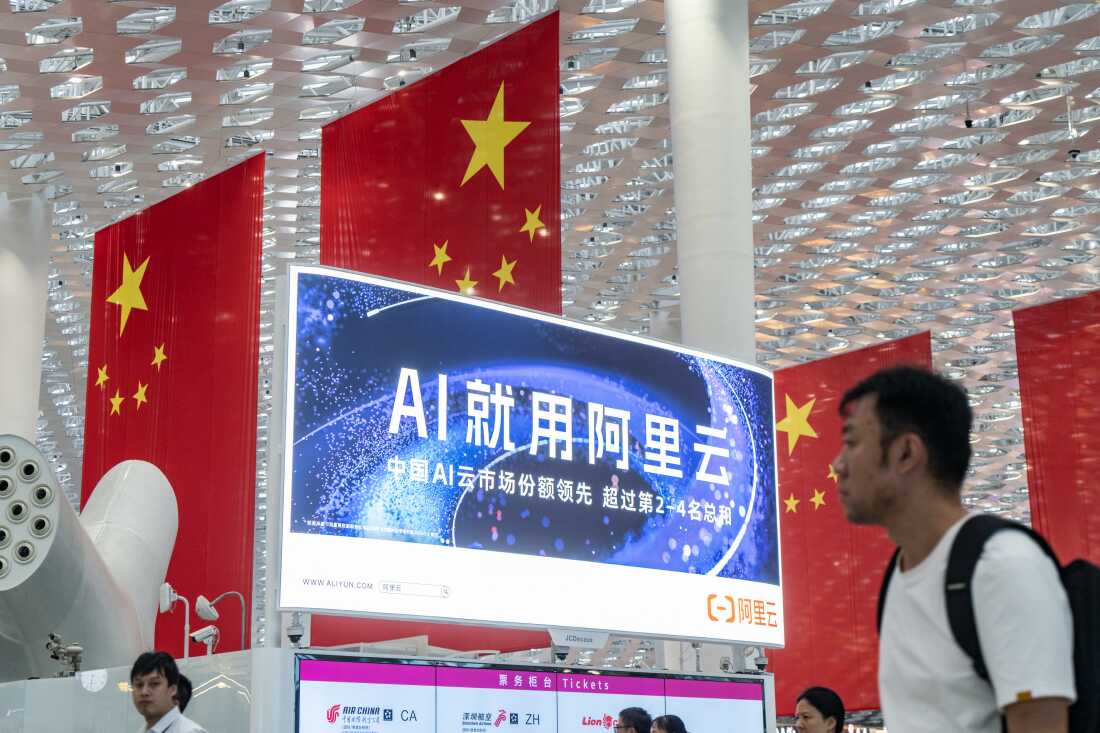
In Shenzhen, China, travelers passing through Shenzhen Bao’an International Airport might notice advertising for Alibaba Cloud. Alibaba Group Holding Ltd. recently reported significant growth in their AI-related products.
Experience and Shock
Elowen Wu, an economics graduate, thought she was proficient in artificial intelligence. However, an internship at an AI startup in Anhui province changed her perspective. “It was a huge shock,” she shared, realizing how advanced AI technology had become. Wu turned to Xiaohongshu, a social media platform, to express her anxiety, questioning if she might be replaced by AI.
Workplace Impact
Similar concerns exist in the U.S., but China’s AI adoption is faster, driven by top leadership. Recent court cases in China reflect the tension between AI advancements and job security. In Guangzhou, a graphics designer known as Wei was dismissed after AI took over his role. The Guangzhou Intermediate People’s Court deemed it an illegal dismissal, offering Wei additional compensation. Judge Chen Shiyuan emphasized that companies must offer alternative positions or training before ending contracts due to AI replacements.
Global Attention
Other countries are monitoring China’s situation. Guang Li from Taylor Wessing in Munich noticed interest from colleagues in Europe regarding AI-related dismissals. Countries like Germany, the Netherlands, France, and the U.K. face similar challenges.
Legal and Economic Environment
China’s laws strongly protect workers but enforcement remains inconsistent, according to Cornell University’s Eli Friedman. Workers face vulnerabilities amid economic slowdowns and cost-cutting measures. Youth unemployment is a growing concern, intensifying job competition.
Continued Learning and Adaptation
As AI development races between China and the U.S., workers like Wu focus on continuous learning to stay current with AI trends. Though not seeking employment immediately, Wu pursues a master’s degree while staying informed about AI developments, believing that understanding AI might reduce fear.
With sectors beyond high tech developing AI solutions, China’s workplace landscape is evolving. Jennifer Pak and Jasmine Ling contributed to this report.