
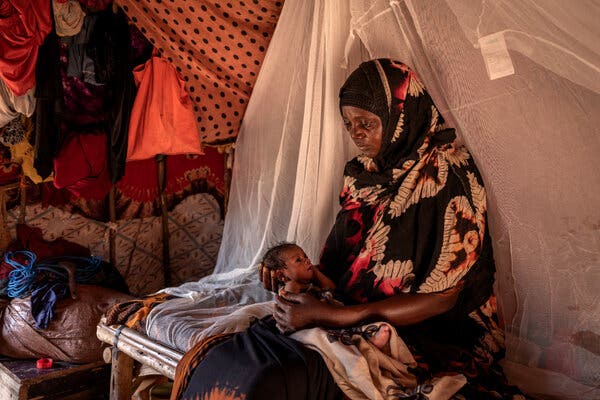
The humanitarian relief system is under severe strain as war in the Middle East escalates costs for essentials like food, fuel, and fertilizer. Muslima Ibrahim Mohamed, a 38-year-old mother, holds her newborn son, Noor Mohamed, as they face this harsh reality.
Reporter Peter S. Goodman visited Somalia to witness the impact firsthand, traveling to camps, schools, health centers, and a hospital for malnourished children. He observed the dire situation affecting displaced populations.
Struggles in Somalia
For nine days, Abdullahi Abdi Abdirahman and his family, including their 3-year-old daughter, trekked across arid southern Somalia. They left behind a life devastated by drought, which had annihilated their livestock and savings. Their destination was Dollow on the Ethiopian border, a hub for international relief efforts attracting over 100,000 people seeking food, water, and healthcare.
Upon arrival, they discovered aid organizations had vacated the area. The dismantling of the U.S. Agency for International Development by President Trump severely impacted aid, stripping Somalia of crucial support. European governments also cut humanitarian funding, forcing relief groups to prioritize resources elsewhere. As a result, aid to Dollow dwindled, leaving many without food grants and medical assistance.
Impact of Middle East Conflict
The situation worsened when conflict erupted between the United States, Israel, and Iran. The closure of the Strait of Hormuz stopped shipments of vital goods like oil and fertilizer from the Persian Gulf, driving up transportation costs. Somalia, reliant on imports for 70 percent of its food, saw staple prices such as rice and wheat flour double.

This combination of factors creates an increasingly urgent crisis in the world’s most vulnerable regions, where the need for humanitarian aid is greater than ever.