
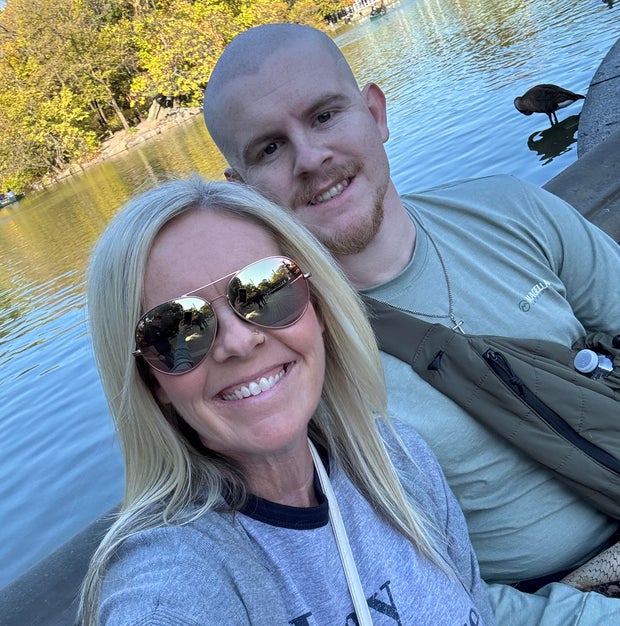
Mason Henderson, a 21-year-old from southeastern Texas, faced a dire situation after chemotherapy failed to slow his rare brain tumor, which had spread to his spinal fluid. Eighteen months after diagnosis, he participated in a clinical trial in New York City, but that too was unsuccessful. His cancer, so rare that it received a name from the World Health Organization only in 2021, left Henderson and his family in uncharted territory. In early 2026, his medical team turned to Lynparza, a drug produced by Merck and AstraZeneca, as a potential treatment.
Insurance challenges compounded the issue, as Lynparza was not the standard of care for his condition and was not covered by his insurance, despite the justification from his doctors. “They have no guidelines for his cancer,” stated his mother, Tabitha Lowe. Rare cancers, those that deviate from common or well-known types, affect about a quarter of all U.S. cancer diagnoses annually. These conditions often lack targeted FDA-approved treatments, although molecular tests by diagnostic firms can suggest viable options.
“Insurance coverage routinely trails behind what genomic testing reveals about a patient’s cancer,” said Olivier Elemento, director of Weill Cornell Medicine’s Englander Institute for Precision Medicine.
Henderson’s neuro-oncologists, Jacob Mandel and Jessica Schulte, decided to prescribe Lynparza. Although evidence was limited, the nature of the tumor made the drug a logical choice. However, after being prescribed on January 16, Liviniti, Henderson’s pharmacy benefit manager, denied coverage by January 30. The cost of Lynparza without insurance stood at approximately $8,700 monthly.
Before this medical ordeal, Henderson was a healthy young adult. At Evadale High School, he participated actively in sports and was chosen as homecoming king in 2022. Post-diagnosis, Mason’s world changed dramatically. His journey began with a seizure in March 2024, leading to a diagnosis of diffuse hemispheric glioma (H3 G34-mutant) after an MRI in Houston. Although a surgery removed 90% of the tumor, brain cancers resist total elimination due to their location. By September 2025, scans showed the tumor had spread to his spinal cord, worsening his prognosis.
His medical team sought a clinical trial under Dr. Schulte’s guidance, but post-trial, the tumor persisted. Schulte noted the family’s persistence and trust in the medical team, emphasizing the complexity of treating Mason as an individual.
Lynparza, approved in 2014 for treating ovarian cancer, works by hindering tumor cell multiplication. After several refusals for coverage, Lowe turned to social media for help. Through Facebook, LinkedIn, and Instagram she conveyed her son’s plight, receiving support from the online community. Despite initial denial, AstraZeneca’s patient assistance program provided the drug after six weeks.
By mid-April, Henderson’s health declined rapidly. On May 4, he passed away in the family living room. Hundreds of people attended his memorial, highlighting the impact he had on his community. In his memory, a scholarship was established at his high school, raising nearly $24,000 through community events and fundraisers.
Reflecting on their experience, his mother expressed frustration with the time spent contending with healthcare bureaucracy instead of cherishing time with her son. “Cancer doesn’t pause while the paperwork’s in progress,” she lamented. The story underscores the complex and sometimes overwhelming reality for families navigating rare cancer diagnoses.
KFF Health News continues to provide in-depth journalism on health-related issues, contributing to public understanding and policy development.