
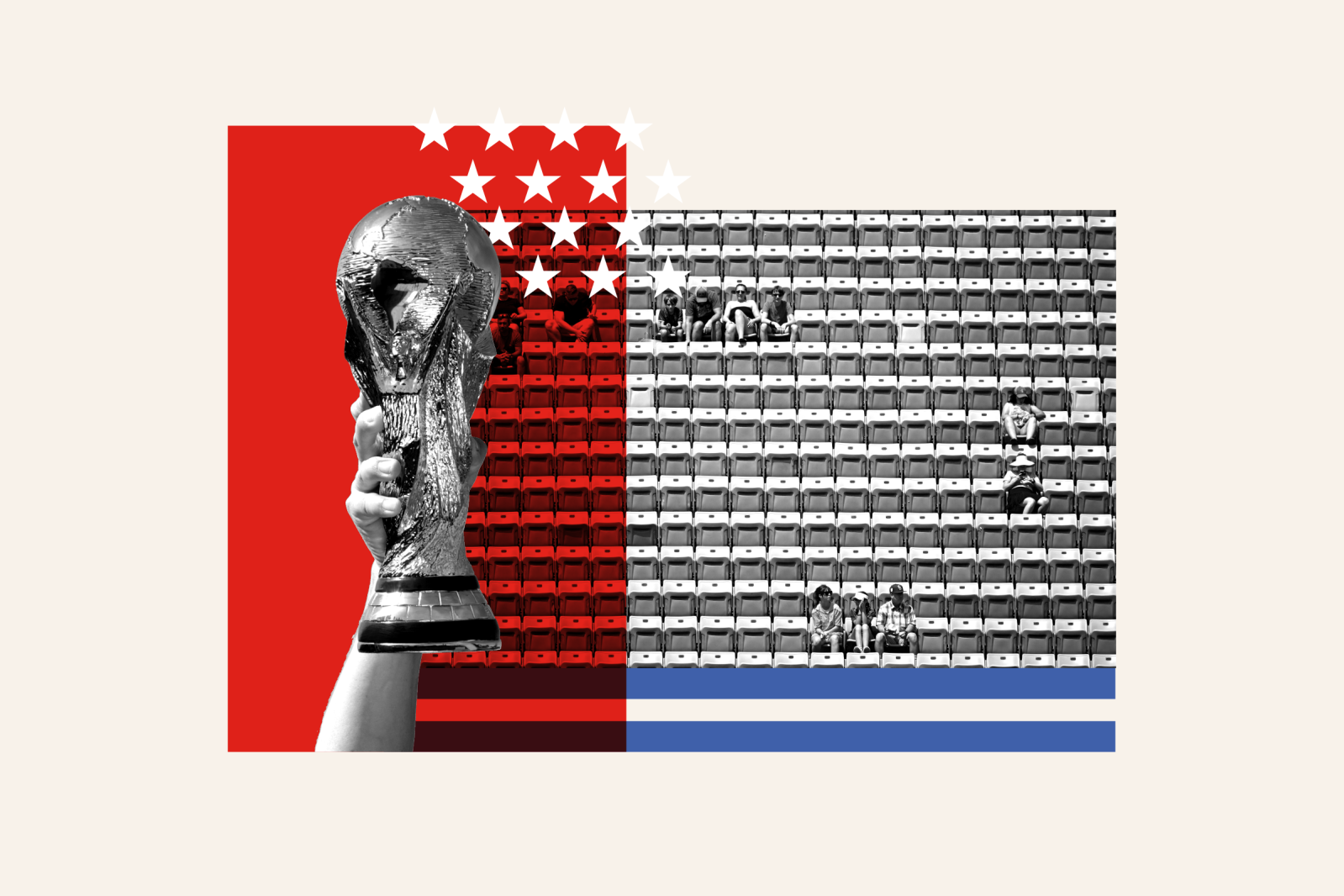
The organizers of the 2026 FIFA World Cup are currently grappling with lower-than-expected demand and concerns about unsold games. This issue of empty seats has been a recurring problem in previous tournaments. FIFA, the global governing body for soccer, insists that current sales are robust and that the demand justifies ticket prices set for this year’s event. However, these high costs have led to legal actions from fans and inquiries by officials in host cities. Some fans seem to be avoiding the event, partly because of these prices, as surveys of hotels in host cities show booking rates falling short of predictions.
Figures from TicketData.com indicate that about 25,000 seats remain available on FIFA’s main ticketing platform. This number has fluctuated recently as FIFA released several batches of last-minute tickets. Data shared with Newsweek last Thursday shows that approximately 17,000 tickets are still available through FIFA’s resale terminal, specifically for matches being hosted by the main nations.
Is This a New Problem?
Seats for numerous games might remain unoccupied when the tournament, hosted in the U.S., Mexico, and Canada, begins. This issue could be exacerbated by the tournament’s expanded format, which features 48 teams and 104 games. Yet, this isn’t a new challenge for FIFA or the World Cup.
South Africa 2010
Overall attendance in 2010 was strong compared to historical standards, with nearly 3.2 million attendees, according to ESPN. This attendance ranked third in World Cup history at the time. Despite this, several group-stage matches had significant blocks of empty seats. Sports journalist Mark Ogden noted the presence of empty seats during South Africa’s match against France on June 22.
Pretty sad that there are empty seats, lots of them, inside the Free State Stadium for the hosts’ final game.—Mark Ogden.
Empty seats were also apparent in a game between Greece and South Korea, prompting FIFA to investigate transportation issues that might have prevented fans from attending. According to Reuters Africa, FIFA attributed the problem to corporate and government ticket holders and international fans who purchased or received seats but did not attend the games.
Brazil 2014
Brazil, known for its soccer heritage, was expected to fill stadiums during the World Cup. However, the event also encountered reports of arenas not reaching full capacity. Some attributed this to local fans being priced out by FIFA and the failure to redistribute tickets returned by sponsors and other groups. A FIFA spokeswoman told ESPN that many empty seats resulted from uncollected tickets that were not listed on the resale platform.
Russia 2018
The issue persisted in the Russia-hosted event. During the June 15 match between Uruguay and Egypt, many seats were noticeably empty, despite it being just the second match of the tournament. FIFA confirmed around 5,000 unfilled seats at Ekaterinburg Arena. A FIFA spokesman mentioned that no-shows and other factors contributed to the discrepancy between distributed tickets and actual attendance.
Qatar 2022
Despite an extensive effort and budget of over $200 billion by Qatar to prepare for the 2022 World Cup, the tournament similarly faced reports of empty seats. A report by The Athletic highlighted empty seats during several matches, including the final between Argentina and France. Some pundits speculated that estimates for stadium capacities provided by organizers were inaccurate.
Is FIFA Struggling to Sell Tickets?
FIFA reported to Newsweek in late May that 2026 ticket sales were strong, with more than 5 million tickets sold. Tickets will continue to be accessible on a first-come, first-served basis on fifa.com/tickets throughout the Last-Minute Sales Phase. Many available tickets are on resale platforms such as FIFA’s own terminal, StubHub, and SeatGeek. Prices on these sites fell until mid-May, suggesting resellers faced difficulties selling tickets.
A Financial Times analysis indicated nearly 180,000 tickets were still listed on the resale portal shortly before the tournament. In late May, the number of tickets available directly from FIFA dropped by approximately 44,000 without explanation. Observers noticed a surge in resale market listings afterward, speculating FIFA may have transferred inventory to lower resale costs and avoid unsold seats. An analysis shared with Newsweek noted that the volume of tickets disappearing from FIFA’s system matched those appearing on resale platforms, suggesting a bulk transfer, yet this hasn’t been confirmed as a FIFA strategy to affect demand or pricing.