
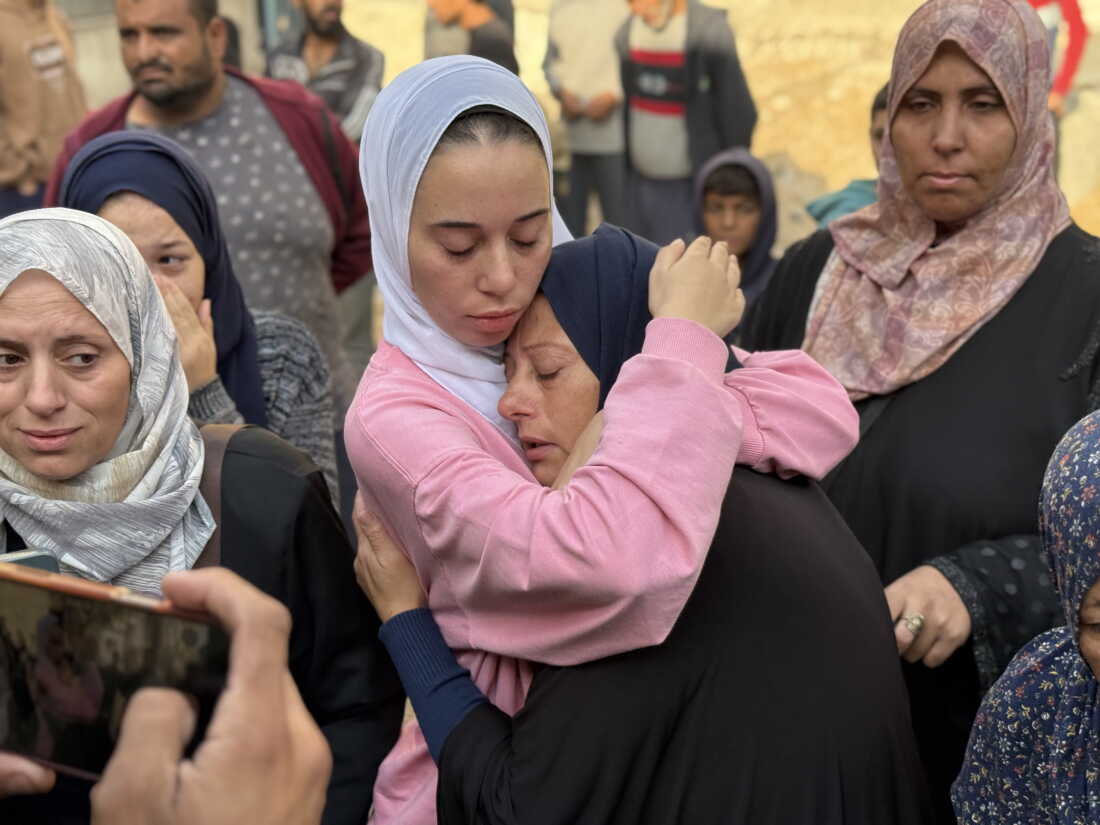
A Palestinian mother mourns her son in Al-Shifa Hospital in Gaza City. He was killed in an Israeli airstrike on Nov. 20, 2025, despite a ceasefire that began in October 2025. The story reflects ongoing violence and loss in a region still struggling with conflict.
In 2025, President Donald Trump brokered a ceasefire in Gaza. The agreement began on Oct. 10, 2025, aiming to end the conflict and secure the release of Israeli hostages by Hamas. However, a year later, the anticipated peacekeeping force and reconstruction efforts remain unrealized. Israeli military presence has increased, now controlling about 70% of Gaza, impacting over 2 million Palestinians living near the coast.
“Despite the ceasefire, Israel continues to target Hamas, resulting in over 1,400 Palestinian deaths this past year, including almost 500 women and children,” according to Gaza’s Health Ministry.
While hostilities have decreased, food supplies have improved in Gaza. The north of the territory previously experienced famine, but food imports have alleviated hunger, marking a shift for the community. Over the last year, Anas Baba, NPR’s Gaza correspondent, has captured moments of both grief and recovery, presenting a vivid portrayal through his photography.
On Oct. 10, 2025, Palestinians revisited the ruins of Gaza City as Israeli forces concluded their ground operations, marking the ceasefire’s start. Families in Khan Younis greeted Palestinian prisoners freed after negotiations on Oct. 13, 2025.
An example of the ongoing challenges occurred on Oct. 23, 2025, when Joud Al-Angar, aged 12, and his cousin suffered injuries from shrapnel. They mistook a piece of munition for coal, intending to help their family prepare a meal. On Nov. 20, 2025, Al-Shifa Hospital morgue shrouded multiple bodies, including children, in the aftermath of airstrikes on homes and tents.
NPR documented the aftermath of an Israeli airstrike on a Gaza City home on Nov. 20, 2025, during the ceasefire. Humanitarian aid has reached areas like Gaza City, but families continue facing hardships. On Nov. 25, 2025, a father and son navigated flooded streets after collecting aid.
Efforts to address trauma among children surfaced on Dec. 10, 2025, when TechMed Gaza introduced VR headsets for psychosocial support in Al-Zuweida, Gaza. Nonetheless, lives remain severely affected. For instance, Bayan, a 10-year-old girl, succumbed to a gunshot wound in her tent.
Many Palestinians reside in makeshift tents barely shielding them from winter’s chill. The UN estimated around 1.5 million depend solely on these shelters after the war destroyed numerous buildings. Families, like Raed el-Ghazawi’s, endure harsh conditions worsened by rain.
The war abruptly changed religious and cultural life. In December 2025, Palestinian Christians decorated a Christmas tree in the Holy Family Church for the first time since hostilities began. Meanwhile, famine hit Gaza City, leading to improved food supplies by Dec. 23, 2025.
On Dec. 31, 2025, a clinic run by Doctors Without Borders provided care days before Israel restricted international aid groups from staffing or delivering aid. Art therapy blossomed among Palestinian female artists at Gaza City’s beach by February 2026.
Recovery continued into 2026. The long effort of rescue workers retrieving corpses from rubble struck Beit Lahia in mid-February. In March, Palestinians gathered for Ramadan’s final prayers. In contrast, children celebrated Eid al-Fitr with joy.
Restrictions linger, as Palestinians in Jabalia rely on UN food aid. By May 2026, young chess enthusiasts in Gaza City enjoyed a tournament, and in Al-Shati refugee camp, a mural displayed soccer star Lamine Yamal.
Israeli airstrikes persisted, targeting Hamas personnel and locations, adding continual grief. From May to July 2026, several accounts of devastation unfolded, including the killing of Izz al-Din al-Haddad, a Hamas leader, and others.
Despite the ceasefire, Palestinians face resilience tests amid trauma. Programs like Swim With Gaza illustrate the unity sought as communities rebuild. On Sept. 1, 2026, the reverberations of conflict remained visible, with children’s toys stained by violence.