
On Monday, British Prime Minister Keir Starmer announced his resignation. This decision comes fewer than two years after he led the Labour Party to a notable general election victory. Starmer initiated plans for an orderly transition to appoint a new prime minister by September. This decision follows public discontent regarding economic issues and slow progress on illegal immigration.
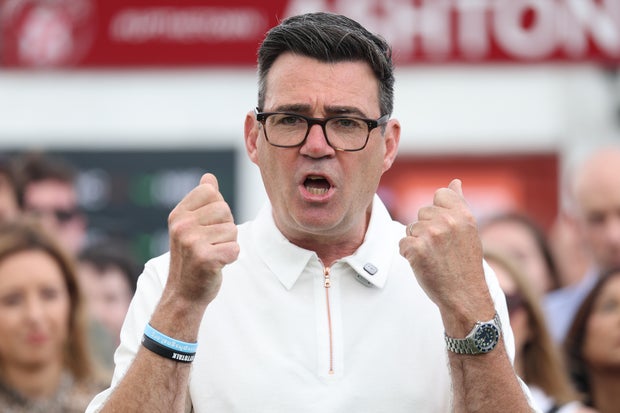
The focus swiftly moved to Andy Burnham, widely considered the favored candidate to succeed Starmer. Although a leadership contest within the Labour Party may occur, senior members are eager to avoid this. Burnham recently resigned as Mayor of Manchester to participate in a local by-election, securing a seat in Makerfield, Greater Manchester, with ease.
British party leaders typically emerge from elected lawmakers. Burnham’s victory in Makerfield reestablished Labour’s presence in areas traditionally dominated by the party but increasingly challenged by right-wing, populist parties. This gain offers Labour strategies hope to attract voters ahead of upcoming national elections, potentially reshaping the House of Commons.
Who is Andy Burnham?
Andy Burnham has consistently positioned himself as a viable alternative to Starmer, while critiquing Labour’s leadership at times. While it’s uncertain how Burnham would differ from Starmer as a national leader, Burnham’s previous critiques and public profile have generated interest.
Burnham’s political career includes time as a cabinet member under Tony Blair and Gordon Brown, later transitioning to Manchester’s mayor in 2017. Dubbed the “King of the North,” Burnham has promoted regional empowerment through devolution and civic pride, contrasting Starmer’s approach by presenting himself as an authentic voice for post-industrial Britain.
Despite garnering support, Burnham’s views on key issues remain unclear. Earlier statements from Burnham opposed Starmer’s strict immigration policies, but recent statements suggest Burnham might further reduce legal migration. Likewise, his stance on rejoining the European Union has shifted.
The Path to Prime Minister
The UK’s prime minister is not directly elected by the populace; rather, the leader of the party with a majority in the House of Commons assumes this role. A governing party can change its leader without holding a general election, depending on internal perceptions of effectiveness.
Burnham’s supporters view his potential to revitalize Labour’s election results positively. A new national election must occur by 2027, offering an opportunity for the government to solidify its majority. However, there’s always the risk of losing majority support in Parliament and the prime ministerial position.
Before Starmer’s announcement, Wes Streeting was considered an underdog candidate to challenge for Labour leadership. However, Streeting’s endorsement of Burnham has bolstered Burnham’s prospects further.