
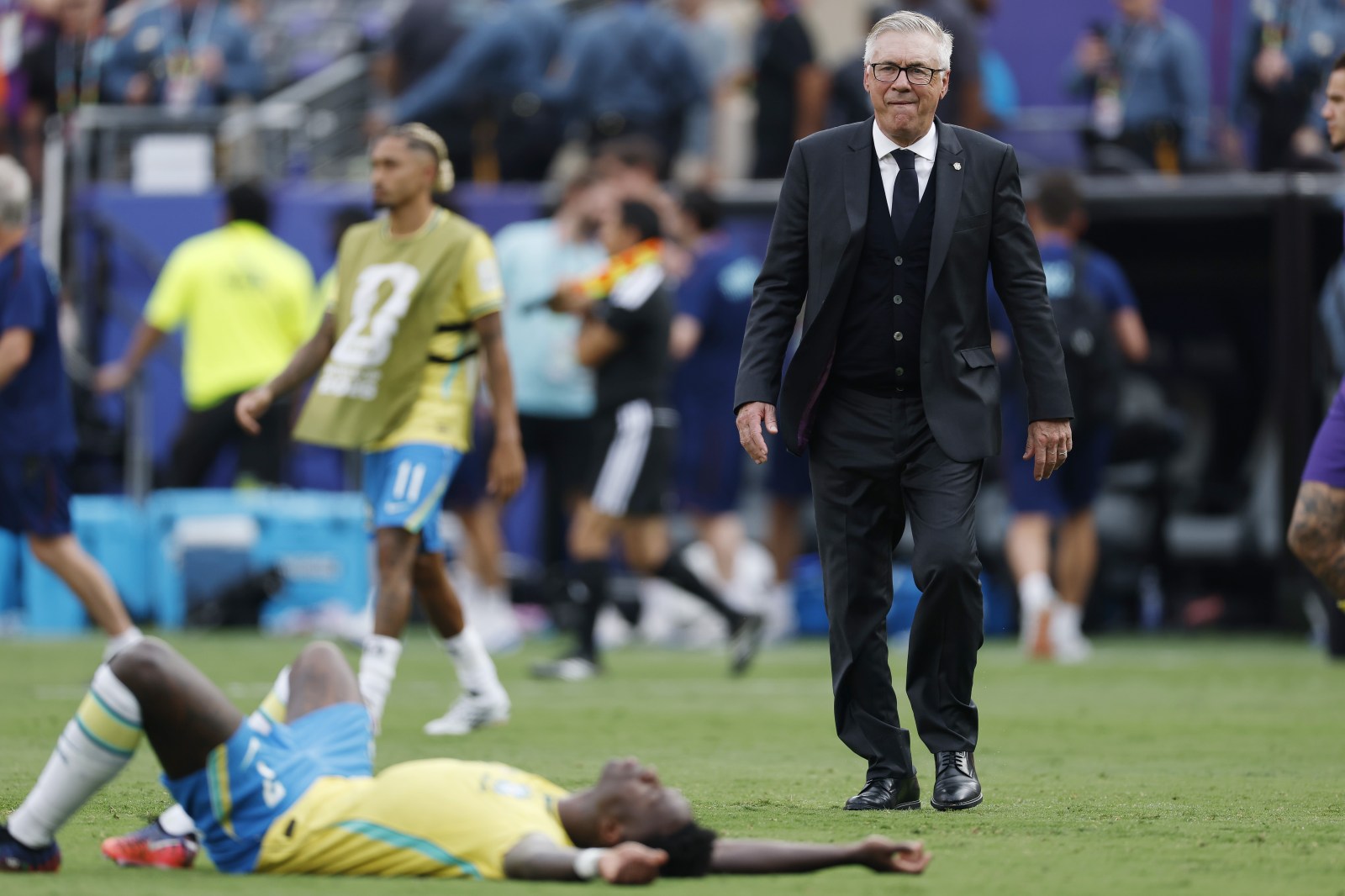
Brazil had a chance to take an early advantage in their Round-of-16 clash with Norway during the 2026 FIFA men’s World Cup. The team won a penalty in the 14th minute but made a surprising decision by having Bruno Guimarães take the shot instead of Vinícius Júnior. Norway’s goalkeeper, Ørjan Nyland, saved Guimarães’ attempt, leaving many questioning Brazil’s choice.
The match remained tense and tightly contested, with Brazil creating several opportunities to score. Despite these chances, Guimarães’ missed penalty became more significant as the match ended in a 2-1 victory for Norway. Nyland delivered an outstanding performance with multiple crucial saves. It remains uncertain if Vinícius Júnior could have scored in the 14th minute.
During the post-match press conference, Brazil’s manager, Carlo Ancelotti, explained the decision not to have Vinícius Júnior take the penalty. He mentioned compiling statistics that suggested Raphinha as the best player, with Neymar, Igor Thiago, and Martinelli following. Guimarães was deemed the most suitable on the field at that moment. Raphinha, recovering from a hamstring injury, was available but didn’t play against Norway.
Neymar entered the match in the 67th minute and scored a penalty during stoppage time. However, this goal came too late to change the outcome. Ancelotti commented on Norway’s strategy, noting their attempt to control the game with possession. Brazil struggled with high pressing, which they opted against for much of the game.
Norway’s star player, Erling Haaland, scored twice in the latter part of the match, helping Norway reach the quarterfinals for the first time in a men’s World Cup. They will face either England or Mexico on July 11. In contrast, Brazil’s elimination marks their earliest exit from the men’s World Cup since 1990. Despite having won more titles than any other nation, Brazil’s 24-year World Cup drought now extends to at least 28 years.