
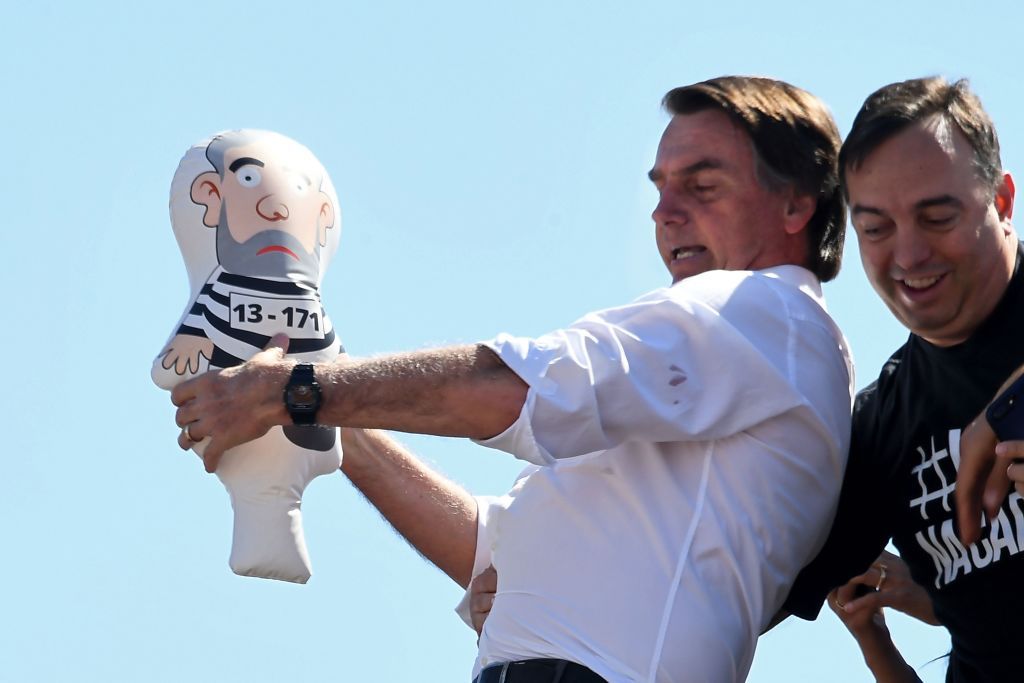
Flávio Bolsonaro’s Presidential Campaign
Flávio Bolsonaro, a 45-year-old senator and son of Brazil’s former president Jair Bolsonaro, is on a mission. He aims to challenge Luiz Inácio Lula da Silva for the presidency, free his father from a 27-year sentence, and return their family to political power. This narrative of both personal vendetta and political ambition presents a compelling storyline.
Influence of International Alliances
The role of external figures adds complexity to this political drama. Notably, Donald Trump, an old ally of Bolsonaro Sr., looms large. Supporters of what is referred to as the ‘Donroe Doctrine’ view Brazil as a strategic asset. They believe a Bolsonaro comeback could strengthen U.S. influence in Latin America, offsetting China’s growing presence.
Political Rivalry in Brazil
The previous election between Lula and Bolsonaro was intense. Bolsonaro accused Lula of corruption, while Lula positioned himself as a defender of democracy. Lula won, securing 50.9% of the votes compared to Bolsonaro’s 49.1%, marking one of Brazil’s closest elections.
Post-defeat, Bolsonaro emulated Trump by refusing to concede and alleging election fraud. His actions led to a conviction for plotting a military coup, resulting in a 27-year sentence. Currently under house arrest, he faces health challenges.
Flávio’s Strategic Approach
Flávio Bolsonaro, unlike his brother Eduardo, who faced legal repercussions, has opted for a different tactic. Rather than external lobbying, Flávio seeks to gain power internally. His presidential campaign commenced with a clear focus on retribution, and early polls show a tight race between him and Lula. A Quaest poll placed them neck and neck at 43% for Lula and 40% for Flávio.
Implications for U.S.-Brazil Relations
Flávio’s candidacy holds significance beyond Brazil. The Trump administration’s ‘Donroe Doctrine’ emphasizes the need to ally with friendly governments to curb non-Hemispheric influences like China. Despite Brazil’s economic ties with China strengthening under Lula, the Trump administration sees potential in a Bolsonaro-led government to revert this trend.
Recent trade discussions saw Lula visiting Washington in an effort to address trade imbalances, reflecting existing tensions. Meanwhile, Flávio engaged in discussions on security and commerce, reinforcing a potential U.S.-Brazil collaboration in exploiting rare-earth resources.
Impact of U.S. Involvement
Trump’s previous support for Bolsonaro Sr. did not prevent his legal downfall. In response, the U.S. administration applied tariffs on Brazilian imports, intensifying bilateral tensions. Such actions have galvanized Lula, portraying interference as a sovereignty issue.
As the election date nears, the friction continues with trade tariffs and diplomatic retaliations, such as visa denials. The potential reimposition of sanctions could influence judicial decisions in Brazil’s courts.
Conclusion
The U.S. strategy towards Brazil is complicated by ideological motives rather than pragmatic diplomacy. Despite Trump’s interest in a Bolsonaro presidency, he risks alienating Brazilian voters through overt intervention. Both Brazilian and U.S. experts agree that a Lula victory would impact the U.S. administration’s plans for regional influence, highlighting Brazil’s crucial role in broader geopolitical alignments.