
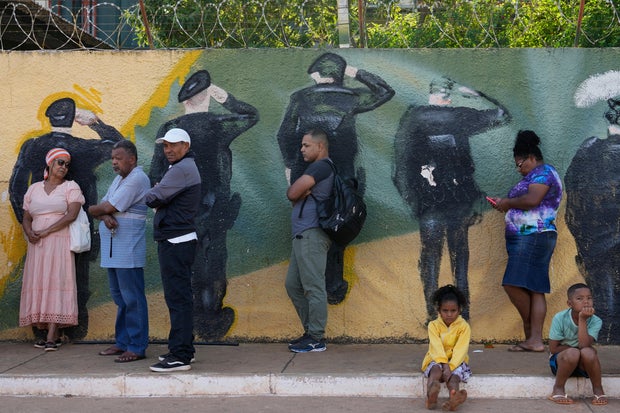
On Sunday, Brazilians are heading to the polls for a decisive presidential runoff between incumbent President Luiz Inácio Lula da Silva and challenger Flávio Bolsonaro. The outcome will shape the United States’ influence in Latin America. Current polls show a tight race between the two candidates, who need over 50% of the vote to assume Brazil’s presidency in January.
Lula, a seasoned politician from the left, and Bolsonaro, a supporter of President Trump and son of former President Jair Bolsonaro, represent opposing political ideologies. In the first round, Bolsonaro led by over 2.2 million votes. Still, approximately 33 million out of nearly 160 million registered voters did not participate then.
Brazilians are divided on critical issues such as relations with the U.S., climate change, and social welfare. A Bolsonaro win would steer Brazil to the political right, following Trump supporters’ recent successes in Chile, Peru, and Colombia. Lula’s victory would align Brazil with Mexico under left-of-center governance.
Lula initially served as Brazil’s leader from 2003 to 2010, but concerns about living costs and security challenge his re-election. Bolsonaro has focused on reducing crime and food prices, while both face allegations of corruption involving family and allies.
Flávio Bolsonaro has acknowledged accepting $12 million from Daniel Vorcaro, a former banker, to produce a film about his father’s life, highlighting issues of corruption and money laundering. Despite this, supporters chanted as he voted in Rio de Janeiro.
Lula supporters appreciate his work for marginalized communities and reducing poverty. In contrast, Bolsonaro’s base is eager for change due to high living costs and perceived government corruption.
Third-party voters and those who abstained in the first round could significantly impact the runoff. Votes like Kelvin Gomes Pimental’s have become pivotal, shifting towards Lula amid concerns over Bolsonaro’s earlier administration.
Transportation problems in Bahia, a Lula stronghold, have complicated voting. Arrests are linked to buses that deterred voters. Lula demanded respect for democracy while international observers noted peaceful voting processes overall.
Relations with the Trump administration are a factor, with past U.S. tariffs and criminal classifications affecting Brazilian politics. Flávio Bolsonaro emphasizes Brazilian potential in rare minerals, denying U.S. assistance in the campaign. Voting is digital, with results expected shortly after polls close at 5 p.m. in Brasilia.