
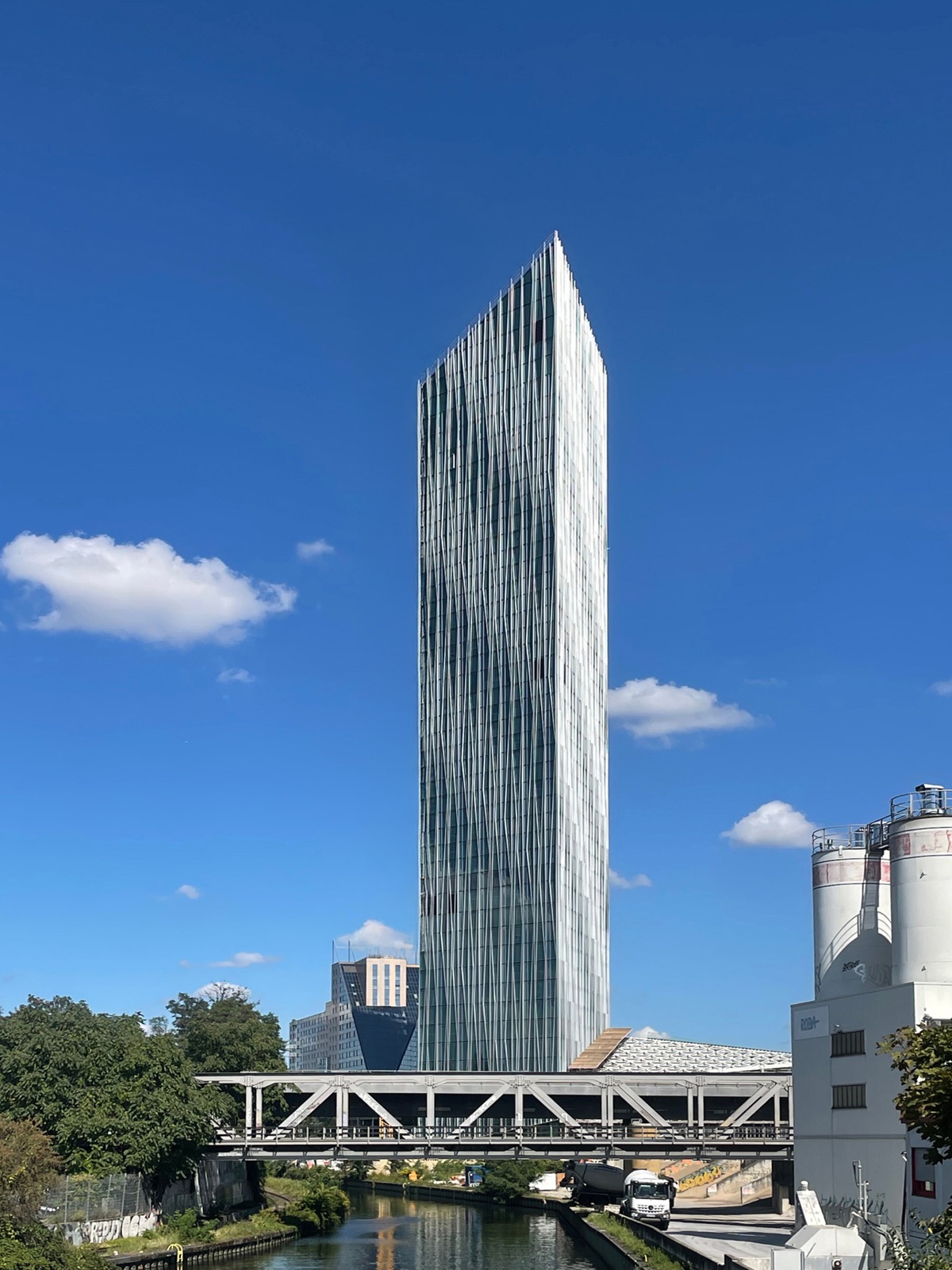
Berlin is set to achieve a significant milestone with the upcoming completion of the Estrel Tower. This 577-foot (176-meter) building will be the German capital’s tallest nontechnical structure, becoming its first true skyscraper. According to the Council on Vertical Urbanism, skyscrapers usually exceed 150 meters (around 492 feet) in height, which will make the Estrel Tower Berlin’s inaugural entry into this category.
The tower, scheduled for public opening at the end of 2026, will offer a range of facilities. It will host a hotel, workspace, gallery, restaurant, and bar in Berlin’s Neukölln district. Designed by the Berlin-based firm Barkow Leibinger, this project marks a departure for a city known for low-rise buildings and strict height restrictions.
This development arises amid debates among architects and preservation advocates about the benefits of adapting existing buildings instead of constructing new ones. Discussions emphasize retaining the carbon embedded in older structures and extending their lifespan through renovation. Gordon Gill, involved in designing Jeddah Tower, the world’s tallest planned skyscraper, highlights opportunities in boosting sustainability within existing structures. Conversely, some architects express concerns that Germany’s historic character might be at risk if demolition takes precedence over preservation.
Sustainability and Urban Future
Frank Barkow, partner at Barkow Leibinger, contends that well-designed tall buildings can contribute to sustainable urban futures. Although such structures initially have a higher carbon footprint, they provide long-term benefits through efficient land use and multifunctional capabilities in a single space. This compactness counters the drawbacks of urban sprawl.
Barkow stated, “While high-rises might initially weigh heavier on carbon, they evolve into more efficient urban solutions over time.”
A Landmark in Berlin’s Skyline
The Estrel Tower is envisioned as a standalone landmark in Berlin, differing from cities like New York or Frankfurt that feature clusters of skyscrapers. Barkow emphasizes its role as a “beacon for the city.” The tower would harmonize with the urban landscape, interacting with the existing Estrel Hotel and creating a new city gateway. The design employs geometric shapes, inspired by the Tangram puzzle concept, to form a cohesive, dynamic whole.
Environmental Design
The tower’s façade will incorporate metal fins for solar shading, advanced glazing, and operable windows. It will utilize low-carbon energy sources, water retention systems, and a green roof. Aiming for LEED Platinum certification, the design prioritizes energy efficiency. The construction involves logistical challenges, such as pouring a three-meter-thick foundation slab. Off-site manufacturing of components streamlines the construction process and addresses Berlin’s limited experience in building at this scale.
Setting a Precedent
Estrel Tower might remain unique or could spark a trend of skyscrapers in Berlin. Barkow suggests it could signal a broader shift. He argues that Berlin can embrace tall buildings while maintaining its historical scale, enriching urban diversity, and fostering mixed-use developments.
Barkow concluded, “Berlin’s future lies in this harmony between height and history.”