
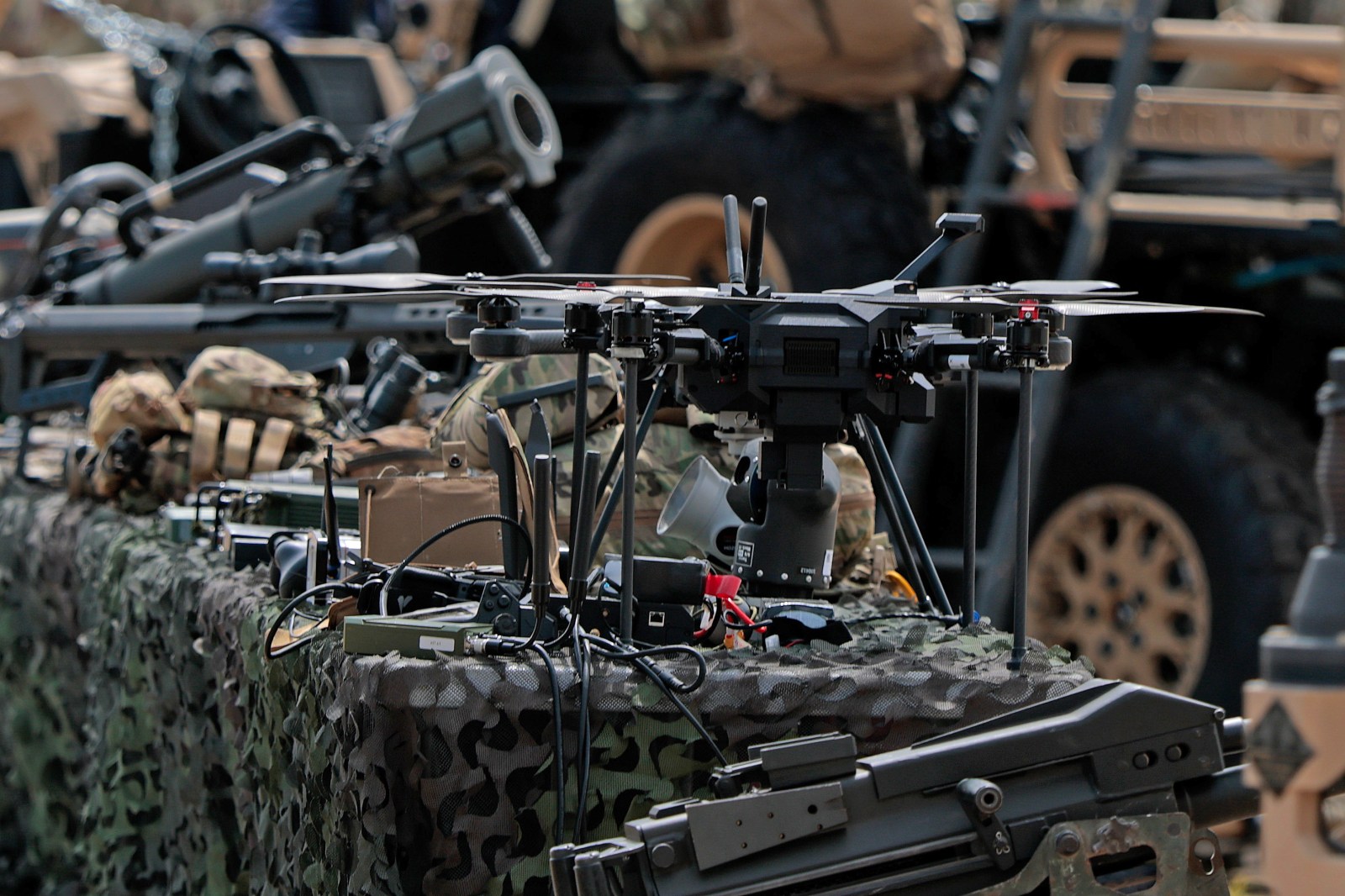
Pete Hegseth envisions a military devoid of what he terms ‘wimps,’ ‘weirdos,’ and ‘radicals.’ At the same time, he wants a force centered around emerging technologies like autonomous weapons and superintelligence. If he follows through with the former, the latter may be harder to achieve.
In his State of the Force address, Hegseth outlined various initiatives to prepare for contemporary warfare. Among these is Project Agincourt, which aims to establish a new four-star Autonomous Warfare Command. Meanwhile, Project Meridian gives industry leaders like Elon Musk and Palmer Luckey 120 days to outline America’s future technological needs.
Hegseth’s goals for streamlined leadership, rapid acquisition, and more autonomous systems are valid. However, his criteria for personnel are problematic. ‘We are no longer the woke department or the weak department,’ Hegseth stated, emphasizing a preference for traditional warrior traits over diversity.
“No fatties. No trannies. No beardos. No weirdos. No wimps. No radicals. Just warriors.”
Individuals cannot be neatly categorized into stereotypes such as ‘jocks’ or ‘nerds.’ For instance, an engineer developing an autonomous system could also excel in physical strength. The military Hegseth imagines requires intellect as much as, if not more than, physical prowess.
America thrives by drawing talent from a diverse populace. Insisting only a particular ‘warrior’ type fits the military endangers the potential to attract unique talents, crucial for innovation. Some parts of the military already acknowledge this reality.
In April, the Department of War started a Cyber Registered Apprenticeship Program. This initiative offers a year-long paid apprenticeship to develop cyber expertise. The Army goes further by allowing direct commissioning of experts in AI, software, and drone tech.
The Navy has launched a national search for engineers and software architects to join the Navy Reserve directly. These efforts reflect a desire to integrate technical experts, not just recruit them as outsiders.
If Hegseth dismisses creative individuals and unconventional thinkers, the military risks losing valuable minds needed for technological advancement. This is contrary to the message sent by Donald Trump’s accord with tech leaders on the responsible development of AI technologies.
Dario Amodei, head of Anthropic, provides a case in point. Despite restrictions on autonomous weapons, Anthropic received a $200 million Pentagon contract for developing AI capabilities. This highlights the need for diverse thinkers in military tech development.
Projects Agincourt and Meridian seem promising for maintaining America’s edge. However, the ‘warrior’ culture must be inclusive enough to incorporate the innovative minds critical to this mission.