
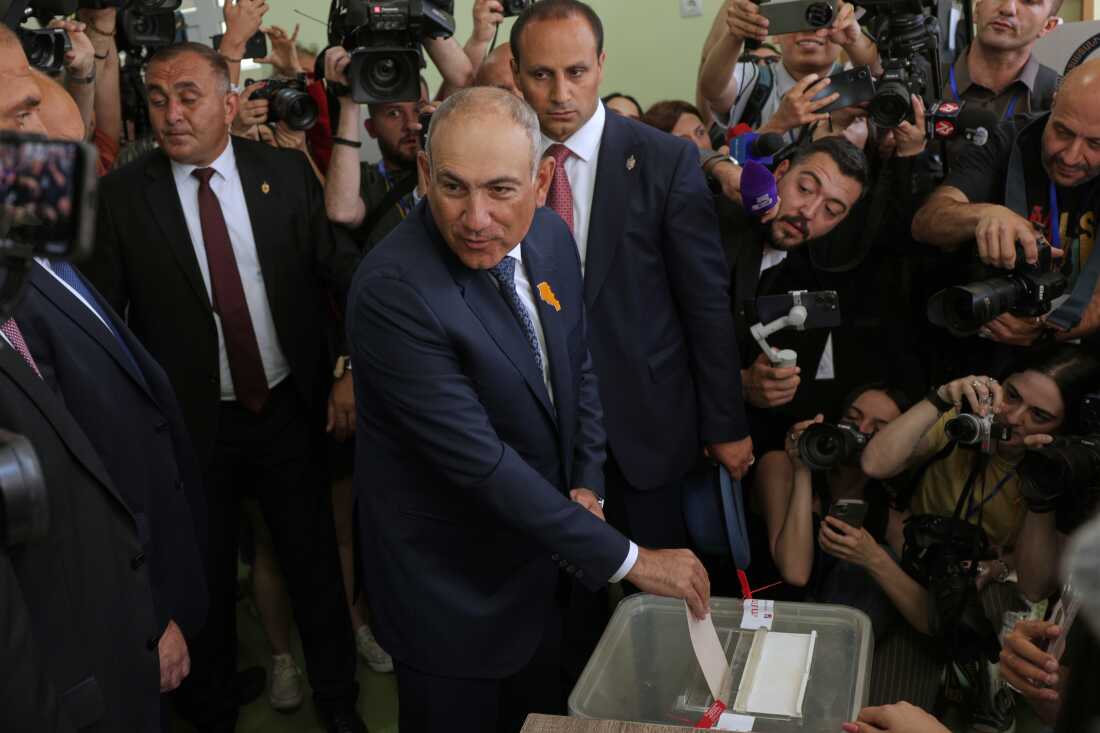
On Sunday, June 7, 2026, Armenians participated in a critical parliamentary election. The incumbent Prime Minister, Nikol Pashinyan, and his Civil Contract party aimed to redefine Armenia’s geopolitical stance by reducing reliance on Russia and strengthening ties with Western countries.
Election Dynamics
Prime Minister Nikol Pashinyan cast his vote, emphasizing Armenia’s commitment to independence and democratic values. He expressed confidence in continuing reforms with the European Union, describing them as Armenia’s primary partner. Despite recent Russian trade restrictions, Pashinyan assured there were no tensions with Moscow. He described mutual institutional respect between Armenia and Russia, according to the Armenpress news agency.
Controversies and Arrests
The election was also marked by controversy. Armenian authorities issued arrest warrants for six members of the opposition Strong Armenia party. They were accused of vote-buying. The Central Election Committee confirmed Strong Armenia’s participation following an appeal attempt to disqualify them over corruption allegations.
Samvel Karapetyan, a prominent Russian Armenian businessman and leader of the Strong Armenia party, was placed under house arrest. Despite allegations of attempting to overthrow the government, Karapetyan claimed the charges were politically motivated. After voting, he confidently stated that the Armenian people would make a decisive choice for a legitimate government.
International Perspectives
The Armenian National Assembly requires a minimum of 101 members elected for five-year terms. To gain seats, parties need at least 4% of the vote, whereas blocs must have 8%. Two blocs and 17 parties were involved in the election. Experts anticipated Pashinyan’s success, reflecting the population’s desire for a peaceful and independent Armenia.
Prime Minister Pashinyan’s efforts to balance foreign relations have attracted Western support. U.S. President Donald Trump endorsed him, praising his leadership, which complicated relations with Russia. Russian President Vladimir Putin responded cautiously, emphasizing the impracticality of dual membership in the European and Eurasian economic unions.
Opposition’s Stance
Opposition groups, like the Strong Armenia party, favored closer ties with Russia. They criticized Pashinyan’s diplomatic approach and peace initiatives with Azerbaijan. Historically contentious, the Karabakh region’s control shifted to Azerbaijan during a 2023 military offense, intensifying political divisions.
The Prosperous Armenia Party and other opposition figures cited worsening conditions and expressed desires for government change.
EU vs. Russian Economic Pressure
Amid these political dynamics, Russia introduced restrictions on Armenian imports, citing agricultural violations. The European Commission labeled these actions as economic coercion, aligning with Armenia amidst trading tensions.
Putin underscored Armenia’s dependency on Russian-controlled energy resources, linking it to broader geopolitical strategies. He warned against attempting to integrate fully with both the EU and the Eurasian Economic Union.