
A recent survey shows that Americans are nearly evenly divided over how the United States should approach its policy toward Iran. The findings come amidst the backdrop of a newly signed memorandum of understanding between President Donald Trump and Iran.
Survey Findings
The Reagan Institute Summer Survey reveals that 39% of respondents support a negotiated settlement that retains Iran’s current government, with verifiable limits on nuclear and missile programs. Meanwhile, 36% prefer replacing Iran’s government with one more favorable to the U.S. An additional 16% favor a weakened regime where the current government remains but is significantly diminished militarily and economically. About 8% of respondents are unsure.
The survey results were gathered from May 26 to June 3 through a mixed-mode methodology, including live telephone interviews, an online panel, and text-to-web responses. It included 1,555 respondents nationwide with a margin of error of plus or minus 2.5 percentage points.
Political Divide
The survey indicates a stark political divide. Republicans overwhelmingly favor regime change, with a 2-to-1 margin over a diplomatic deal. About 50% of Republican respondents favor replacing Iran’s government, while 25% support a negotiated settlement with the current regime under specific limits.
Democrats, in contrast, mostly support diplomacy. A majority of 52% prefer a negotiated settlement, compared to 25% who prefer regime change. Additionally, 14% of Democrats favor maintaining the regime but significantly weakening it militarily and economically.
Addressing the Political Challenge
These findings highlight the political challenge facing President Trump as his administration pursues agreements aimed at easing tensions while addressing Tehran’s nuclear program. The newly signed memorandum establishes a 60-day negotiating period to reach a comprehensive deal, aiming to curb Iran’s nuclear ambitions through diplomacy.
The agreement also includes provisions to restore commercial shipping through the Strait of Hormuz and limited sanctions waivers contingent on ongoing negotiations. The long-term future of Iran’s nuclear program remains a significant issue to be addressed in further talks.
Policy Implications
President Trump describes the memorandum as a strategic move to prevent wider conflict and stabilizes the global economy. He asserts that the agreement offers a path to negotiating additional restrictions on Iran’s nuclear activities while avoiding an ‘economic catastrophe.’
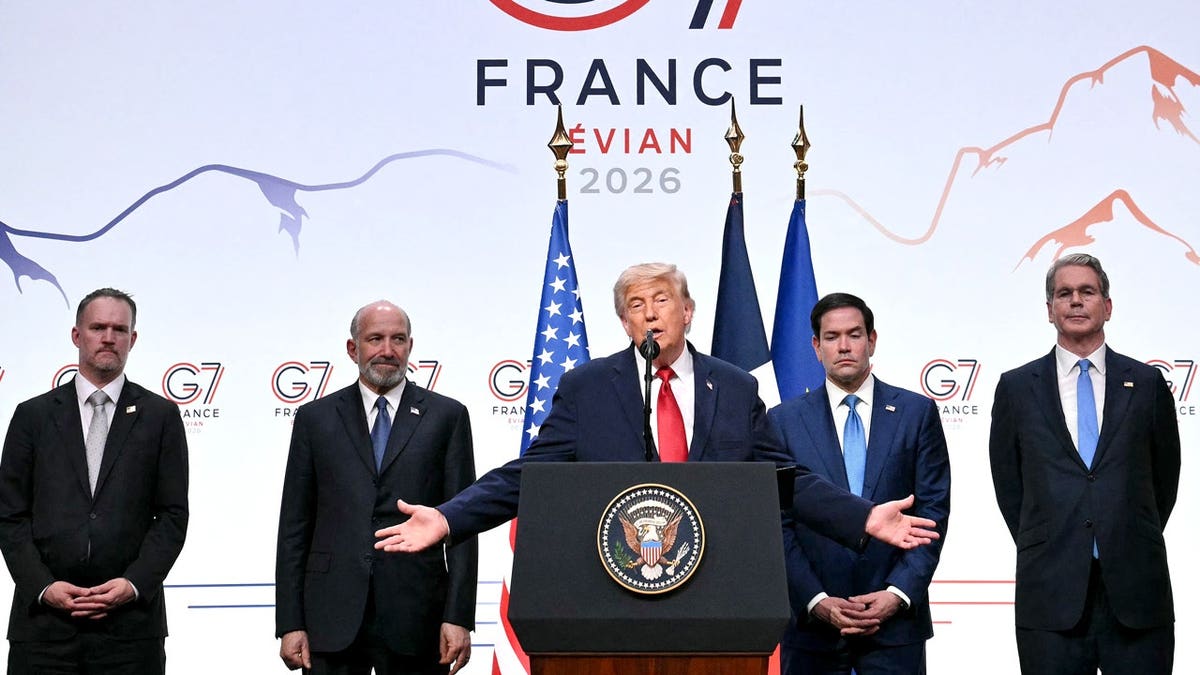
“I didn’t want to see economic catastrophe. If you kept this going, that could have happened,” President Trump remarked at the G7 Summit in France.
The survey results, weighted using demographic benchmarks from the U.S. Census Bureau’s 2023 American Community Survey, further demonstrate the complexity of the administration’s foreign policy strategy regarding Iran.