
The realm of robotics is evolving, showcasing remarkable advancements in AI and humanoid robots. These developments were prominently featured at the Automate Show in Chicago, highlighting the transformative impact AI has on tasks across various sectors such as healthcare, manufacturing, and logistics. Jeff Burnstein, President of the Association for Advancing Automation, pointed out how robotics enhances competitiveness while fostering job creation.
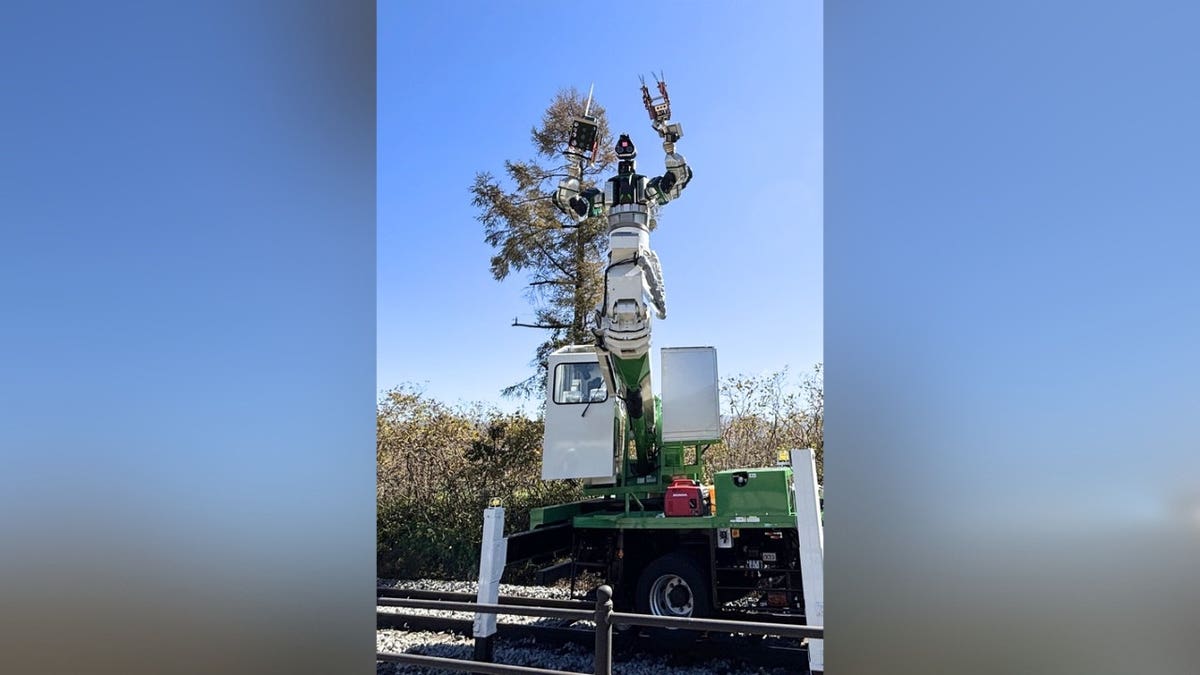
Meanwhile, in Japan, JR East railway company demonstrates an innovative use of robotics with its chainsaw-equipped humanoid robots. This machine performs tasks once deemed hazardous for humans. The towering robot, capable of trimming branches near train tracks, addresses safety and efficiency concerns by allowing humans to control it from safer distances.
How the Chainsaw Robot Operates
The robot, named ZIZAI ZX-3, has become an integral part of railway maintenance along JR East’s Koumi Line. Its design includes dual mechanical arms: one for gripping branches and another for operating the chainsaw. The robot extends from a boom attached to a specialized vehicle, enabling it to manage jobs high above the tracks, where traditional methods would require risky human intervention.
Nippon Signal, the Japanese manufacturer, delivered the ZX-3 for JR East’s full-scale operations. This setup allows the robot to undertake dangerous tasks while an operator controls it remotely. The goal is to advance its capabilities, potentially equipping it with tools for varied maintenance tasks.
Human Control and Safety Considerations
The ZX-3 operates under human supervision, ensuring precision and safety, particularly vital given the proximity to railway tracks. A trained operator remains responsible for the robot’s movements, making strategic decisions to prevent accidents and equipment damage.
With fewer skilled workers available, JR East seeks solutions to alleviate physical demands and increase workplace safety. The robot enhances efficiency by clearing vegetation during daytime hours, although this sometimes necessitates train cancellations.
The Future of Robotics and AI in Maintenance
While currently dependent on human operators, advancements in AI present the possibility of autonomous operations in the future. Artificial intelligence may potentially guide robots in identifying and addressing maintenance issues independently. However, this technology has not yet reached the point where full autonomy is announced.
The emphasis remains on safety and human oversight, especially with powerful tools like chainsaws. As more robots are integrated into such operations, maintaining checks and controls becomes crucial to prevent errors or accidents.
Potential Applications and Skills Development
The introduction of advanced robotics in maintenance tasks has implications for various industries beyond railways. Utility and construction sectors may also benefit from these innovations, reducing risks and improving efficiency.
As robotics becomes more prevalent, the need for skilled operators grows, creating new opportunities for workforce development in operating and maintaining these systems.
The use of robots like the ZIZAI ZX-3 illustrates the potential of robotics to safely execute high-risk tasks, reinforcing the importance of human oversight alongside automation.