
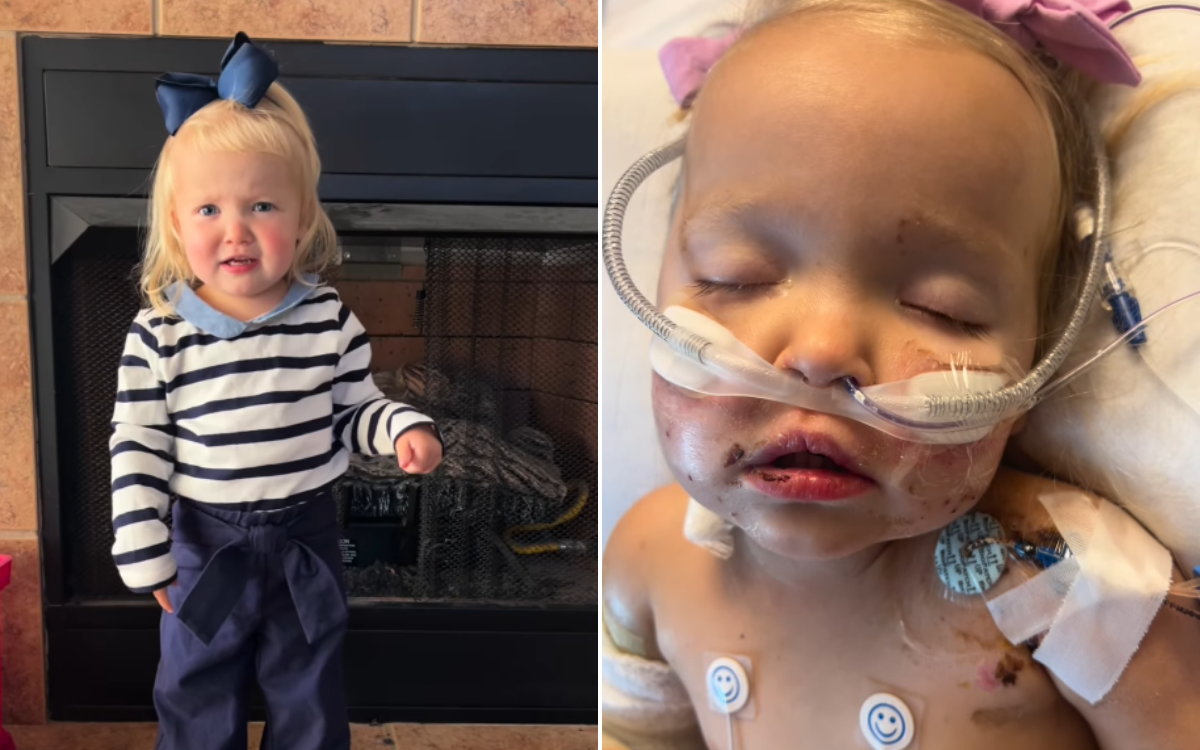
Kory Paige Loden, a mother from Tennessee, faced an unimaginable crisis with her daughter, Mady. At 18 months old, Mady seemed fine one night in October 2023, but the next morning, she was unwell. She became lethargic and lost her appetite, showing symptoms similar to her brother who had the flu. However, her condition rapidly deteriorated.
By evening, Mady’s fever worsened, her feet and lips turned blue, and her skin began to mottle. Alarmed, Kory rushed her to urgent care. The severity of the situation was unclear until an ambulance was called. The ride to the hospital was tense, with medical staff unable to assure Kory of her daughter’s safety.
Medical teams acted swiftly to stabilize Mady, eventually transferring her to a children’s hospital by life flight. Even then, the severity of her condition was not fully understood until Kory and her husband received a call asking for permission to resuscitate Mady if her heart stopped.
Once at the hospital, doctors prepared Kory for the possibility of life support. Mady’s condition was critical, and decisions needed to be made quickly. Kory relied on her faith and the support of family and friends during this overwhelming time.
In the initial 48 hours, Mady required heart surgery and numerous life-saving procedures. Doctors discovered she had an interrupted inferior vena cava, a rare condition that led to complications as she was also born without a spleen. This condition left her vulnerable to encapsulated bacteria, ultimately leading to sepsis.
Sepsis had triggered disseminated intravascular coagulation, causing widespread blood clotting. Despite these challenges, Mady survived the critical first days as doctors determined her sepsis was caused by strep pneumonia, commonly linked to ear infections but deadly without a spleen.
Though Mady survived, she faced significant complications. Her kidneys failed, and her limbs darkened due to lack of blood flow. Doctors tried to restore circulation but ultimately had to amputate one of her legs in December. After nearly two months in the hospital, Mady’s treatment continued post-discharge. Her remaining leg was later amputated due to complications.
Fast forward two-and-a-half years, Mady is thriving. Despite being a bilateral amputee, she remains cheerful and active, adjusting seamlessly to her prosthetics. Kory shares Mady’s story in hopes of helping other parents recognize sepsis early. Mady’s ordeal highlights the importance of swift medical attention.