
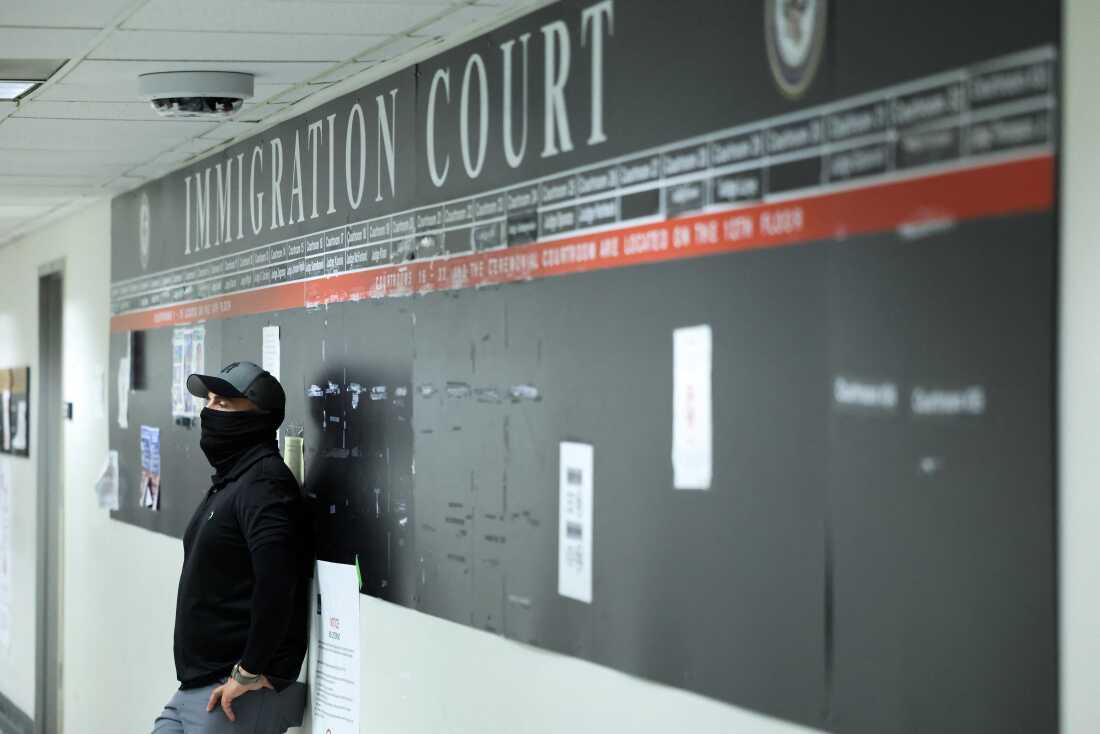
Federal immigration courts within the Justice Department are speeding up hearings, grouping them to issue more deportation orders. This new strategy, informed by immigration lawyers and the American Immigration Lawyers Association (AILA), represents a significant shift.
Immigrants now face ‘mega masters,’ large-scale hearings involving 100 or more individuals, a notable increase from previous numbers. These are often immigrants’ first opportunities to argue for staying in the U.S. However, many of these sessions target those without legal representation. Immigrants arriving late, or not at all, risk receiving removal orders, limiting their already constrained legal rights.
Vanessa Dojaquez-Torres from AILA points out the concern about immigrants being uninformed due to inadequate notifications. The courts may not have enough seating for such large gatherings, increasing the chance of automatic deportation orders.
The Executive Office for Immigration Review (EOIR), which manages these courts, has not commented on the new tactic. This practice began in Chicago, Boston, and Chelmsford and is expected to start soon in Dallas.
New Deportation Goals
President Trump’s administration aims to deport a million people annually, surpassing the 600,000 deportations in 2025. Trump emphasizes that court backlogs pose a challenge to fast deportations.
Challenges in Notification
Judges can issue removal orders if individuals miss their hearings, even unintentionally. Under the current administration, more people fear attending court. They worry about detention, leading to fewer appearances.
Attorneys express concerns that clients, particularly without legal aid, may miss critical updates about rescheduled hearings. Some immigrants may not receive notices either electronically or by mail. Hearing dates scheduled for 2027 through 2029 have been moved up, often without sufficient notice.
A Texas-based attorney explained to NPR that non-attendance allows cases to be resolved as removal in absentia. However, this could also congest court proceedings if people do appear.
Increased Court Pressure
Despite increased pressure, rescheduled cases offer potential benefits to some clients, granting earlier resolution. Yet, most immigrants in court lack legal representation, highlighting the difficulty in taking advantage of these changes.
Staff Expansion to Manage Cases
This strategy to manage cases is not new. EOIR continues its efforts to streamline, previously focusing on specific national groups and youth immigrants.
The DOJ recently recruited its largest class of immigration judges. The appointment of 77 judges and 5 temporary military lawyers marks a significant hiring effort. This year saw the onboarding of 153 judges, the highest number yet. According to Acting Attorney General Todd Blanche, the administration aims to reaffirm the rule of law within the immigration system.
This hiring follows EOIR’s loss of a quarter of its judges last year when over 100 were dismissed. Despite new appointments, more judges were concurrently dismissed, particularly in New York and California.
An NPR analysis previously found judges with backgrounds aiding immigrants faced a higher dismissal rate than those with Homeland Security experience.