
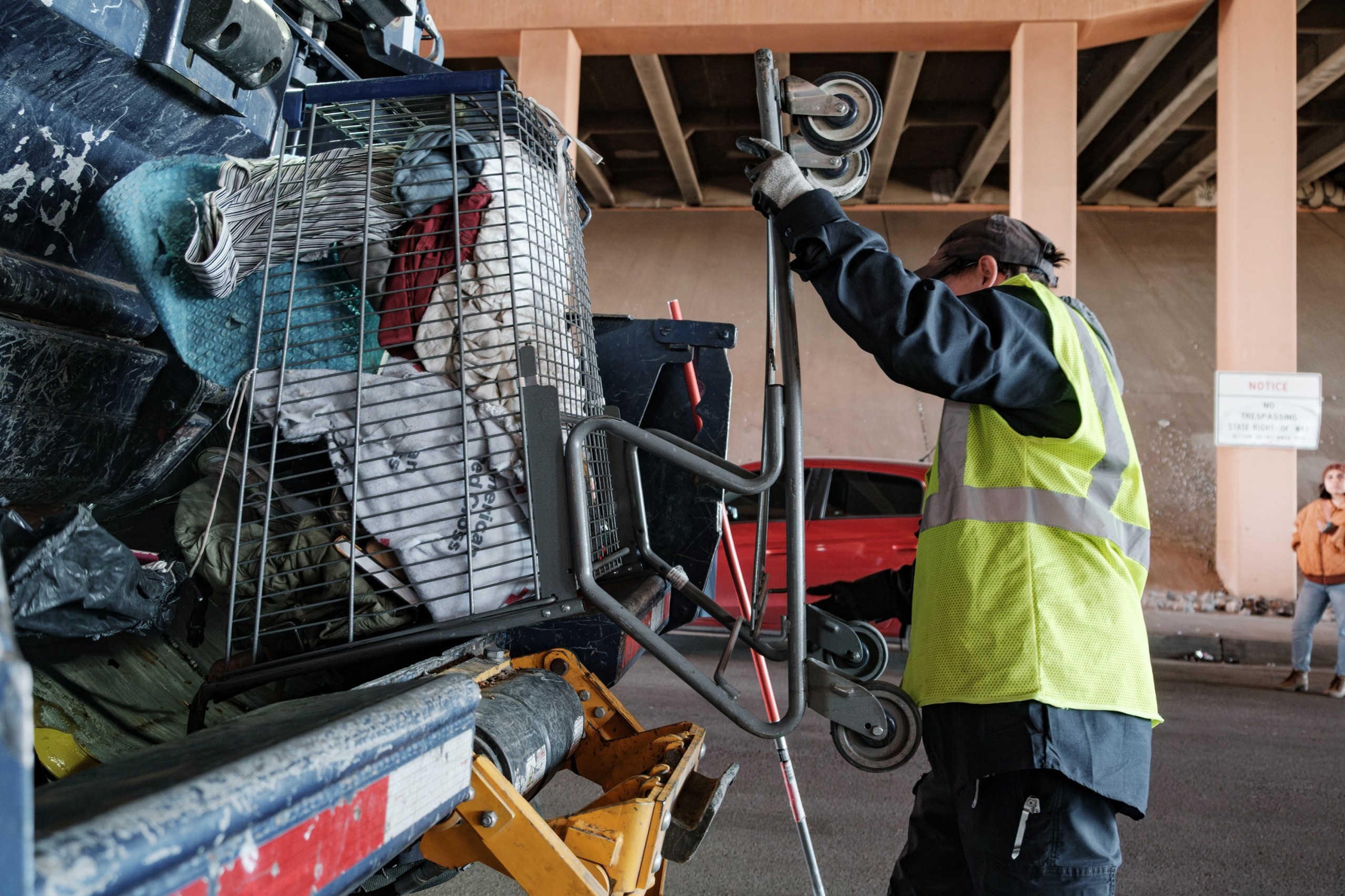
Reports highlight a significant increase in criminal charges connected to homelessness in Albuquerque, New Mexico under Mayor Tim Keller’s administration. Despite criticizing his opponent’s stance on the issue during a reelection campaign, Keller’s city drew criticism from ProPublica for allegedly criminalizing homelessness.
Increase in Charges
In 2025, legal charges relating to homelessness spiked significantly. People faced charges for sidewalk obstruction 1,256 times, nearly six times more than in the preceding eight years combined. Trespassing charges in 2025 topped over 3,000, the highest since 2017. Charges of unlawful camping rose from 113 to 704 within a year, evidence of a trend towards criminalizing homelessness.
More Arrests and Jail Admissions
Citations often lead to warrants and arrests. Homeless individuals comprised almost 49% of all bookings at Bernalillo County’s jail by late 2025. In this period, jail bookings for the homeless or “transient” population surged from 3,670 in 2022 to nearly 12,000 in 2025. The city’s encampment clearing and citations shed light on the complex situation.
Mayor Keller’s Stance
Mayor Keller argues that Albuquerque adheres to legal standards, contrasting its policies with other cities employing harsher measures. A spokesperson highlights that the city issues three citations before arrest, although homeless individuals refute this claim. A ProPublica inquiry revealed Keller’s acknowledgment that jail is no solution, yet enforcement persists due to public pressures.
Legal and Social Implications
The Supreme Court’s endorsement for cities penalizing public camping resulted in over 150 cities, including Albuquerque, intensifying enforcement against street dwellers. National policies under former President Donald Trump promoted funding for cities upholding such bans. Meanwhile, jail housing costs remain significantly higher than providing permanent shelter.
Societal Consequences
Reports from officers depict Albuquerque’s approach as one component of broader crime-fighting strategies. Records for misdemeanor warrants reveal a 72% increase in arrests, further amplifying the issues faced by those experiencing homelessness.
Homelessness and Public Resources
The rise in incarcerations stems significantly from entanglements with law enforcement when citations go unattended due to barriers like lack of communication devices and addresses.
Detailed interviews with affected individuals affirm frequent encounters with law enforcement, leading to multiple citations and eventually warrants. One interviewee, Natalie Rankin, was charged 12 times within a year.
Albuquerque has invested resources into expanding its Gateway system, designed to help those on the streets, yet the homeless count overwhelms available facilities still. Some citizens resist shelter options due to traumatic past experiences or stringent requirements.
Local Advocacy and Legal Action
Lawsuits argue against the city’s enforcement, citing the criminalization of being without a home. Former initiatives call for designated spaces for outdoor sleeping without harassment, yet policing of homeless individuals persists.
The systemic approach to homelessness in Albuquerque reveals a complex issue with enforceable citations leading to a mounting challenge of homelessness and incarceration.
Methodologies from investigative bodies like ProPublica reveal bias in policing, influencing life for individuals like Peter Cubra, a 1995 plaintiff against the city on behalf of inmates. Discussions center around ongoing efforts to better systematic aid, despite significant hurdles. Overall, such practices engender severe socioeconomic stressors for those lacking stable shelter.