
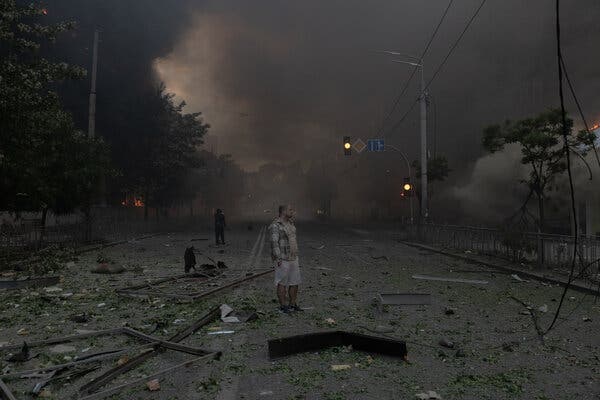
Recent conflicts involving Ukraine and Iran have revealed how drone technology and diplomacy can shape the battlefield and influence global alignments. These developments may serve as a model for future wars.
Military Operations: Unmet Expectations
In Ukraine, trench warfare and heavy artillery use in 2022 contrast with the air and sea attacks by the United States and Israel on Iran. However, similar patterns have emerged in both conflicts.
Despite possessing more powerful militaries, neither Russia nor the United States has managed a decisive victory. Russian President Vladimir Putin anticipated a swift success in his ‘special military operation’ over four years ago. Meanwhile, former President Trump promised a brief campaign against Iran beginning February 28.
‘For both Russia and the United States, there’s a lot of unmet expectations about their military operations,’ said Nicole Grajewski, an expert on Iran and Russia at Sciences Po, Paris. She attributed this to ‘hubris on both sides.’
Negotiations and Prospects for Peace
Recent negotiations have shown progress towards a preliminary peace plan between Iran and the United States, although uncertainty remains due to renewed American strikes on Monday. Regardless of an agreement, both the Ukraine and Iran conflicts offer valuable lessons on modern warfare.
Technology Reshaping Warfare
Asymmetrical tactics have enabled Ukraine and Iran to resist conventional military superiority. This shift in strategy underscores the evolving nature of conflict.