
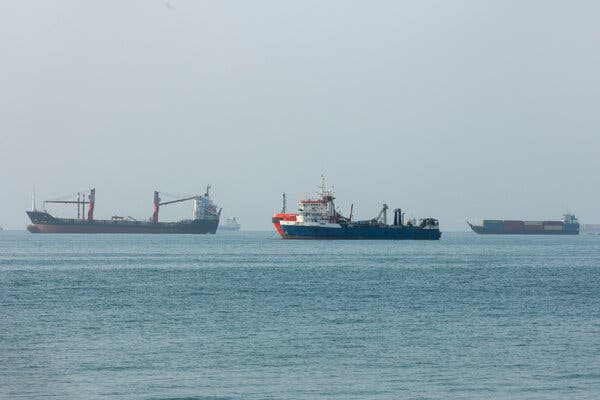
On May 25, 2026, American military forces carried out strikes described by U.S. Central Command as “self-defense strikes” in southern Iran. These efforts aimed to protect U.S. troops from perceived threats by Iranian forces.
Targeted by these strikes were missile launch sites and Iranian boats attempting to deploy mines, according to Captain Tim Hawkins, a Central Command spokesperson. He stated that the U.S. forces are defending themselves while maintaining restraint during the ongoing ceasefire. Specific details about the vessels that came under fire or the exact locations of the strikes were not disclosed.
A senior U.S. military official revealed that Iranian surface-to-air missiles posed a threat to nearly two dozen U.S. Navy warships, which included two aircraft carriers. These warships and accompanying vessels were enforcing a blockade around Iranian ports situated in the Gulf of Oman and Arabian Sea. The U.S. strikes reportedly occurred near Bandar Abbas, a significant Iranian port and navy base.
The interaction between American and Iranian forces followed occasional skirmishes since a ceasefire began around six weeks prior. The timing of the recent strikes coincided with Iranian negotiators’ arrival in Qatar for discussions aimed at ending the conflict. These talks held the potential to reopen the Strait of Hormuz, a vital passage for global energy resources, raising concern over the effect such military actions might have on the fragile negotiations.
Despite ongoing tensions, former President Trump and other military figures, including Defense Secretary Pete Hegseth, have claimed that the 38-day American-Israeli campaign significantly weakened Iran’s combat capabilities. Nonetheless, the reported targeting of U.S. Navy ships by Iranian forces underlines the persistent threats in the region.