
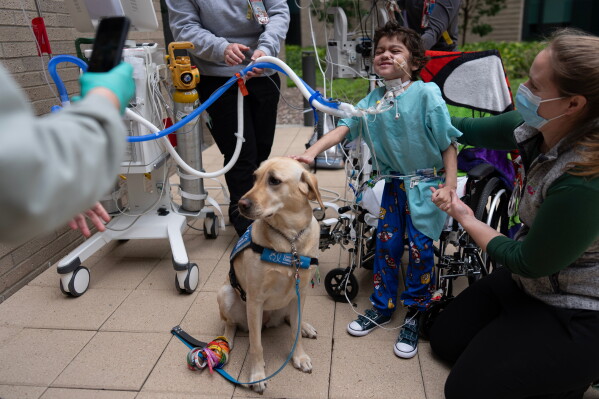
Facility dogs offer significant comfort and joy to young patients in children’s hospitals. Unlike volunteer therapy dogs, these specially trained dogs work full-time and can access sensitive areas to support patients throughout their hospital stay.
Research shows that the use of facility dogs is expanding in children’s hospitals across the nation. Studies indicate that even brief interactions with these dogs can improve a child’s well-being. They help lower stress and pain levels, making children more at ease in unfamiliar medical settings.
At Cincinnati Children’s Hospital, dogs like Hadley play a crucial role. They provide emotional support during tough procedures, encourage physical activity, and bring a sense of normalcy to hospital life. These dogs are celebrated beyond patient rooms as well. Photos of them decorate hallways, they make television appearances, and there are mailboxes where children can send letters and drawings to their furry friends.
Children like five-year-old Calvin Owens benefit greatly from interactions with facility dogs. During a physical therapy session, he played with Hadley on the hospital patio, supported by physical therapist Paige Torbet and child life assistant Schellie Scott.
In another instance, child life assistant Schellie Scott facilitated a painting session with patient Aspen Franklin using Hadley. They used a peanut butter-covered plastic bag to engage the dog, creating a collaborative art piece.
On a different note, facility dog Grover works in the hospital’s Seacrest Studios with Child Life Specialist Maggie O’Grady and patient Kira Hodge, contributing to a closed-circuit TV show for patient rooms.
Such programs not only help patients but also generate a positive atmosphere within the hospital. Facility dogs like Grover and Hadley play in designated areas, providing joy and comfort between their patient visits.