
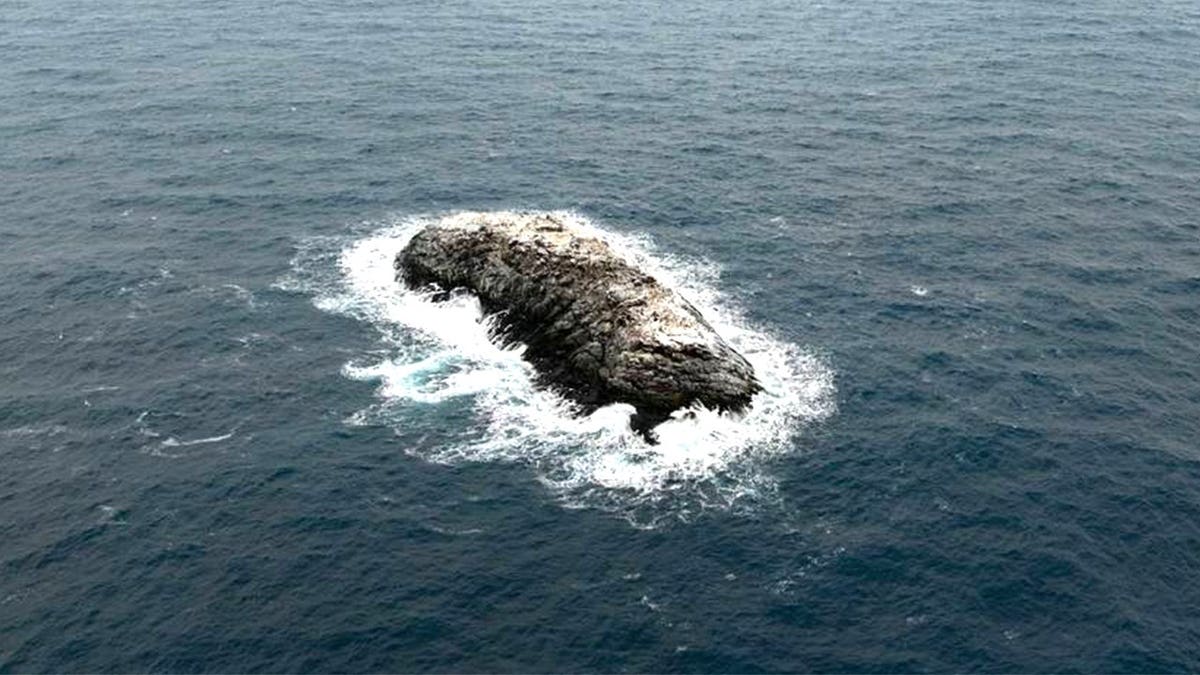
A recent discovery in the northwestern Weddell Sea has revealed that a previously misidentified ‘danger zone’ is in fact an island. Researchers from the Alfred Wegener Institute (AWI) announced the finding in an April press release. They have successfully mapped this newly identified landform.
The island was discovered during an AWI expedition aboard the icebreaker Polarstern. The research team was initially investigating the rapid decline of sea ice in the region. Adverse weather conditions forced them to seek shelter on Joinville Island. It was there that they noticed an unusual formation, initially thought to be a dirty iceberg.
Simon Dreutter, a bathymetry data engineer at AWI, stated, “On our route, the nautical chart showed an area with unexplored dangers to navigation, but it wasn’t clear what it was or where the information came from.”
Upon closer inspection, researchers realized this iceberg was actually a rocky island. Using drone imaging and echo sounding technology, they surveyed the island, documenting its size and elevation. The island measures approximately 426 feet in length and 164 feet in width, rising over 50 feet above the surrounding water.
The presence of many icebergs in the area, which look similar to the newly identified island from the air, may explain why the locale was marked as a danger zone. An AWI representative suggested this labeling might be due to uncharted shoals on the seafloor, where water depths change abruptly.
The discovery highlights the limitations of current nautical charts, which often rely on low-resolution satellite data. As a result, inshore and nearshore regions can be considered gaps or ‘white spots’ on the map. Researchers have yet to officially name the island, and a proposal will be submitted to the Scientific Committee on Antarctic Research (SCAR) for a formal name.
The Weddell Sea remains largely uncharted, with less than a quarter fully mapped. This discovery exemplifies the potential for finding additional landforms and features on Antarctica’s seafloor. As research continues, there is optimism that more hidden geography will be uncovered.