
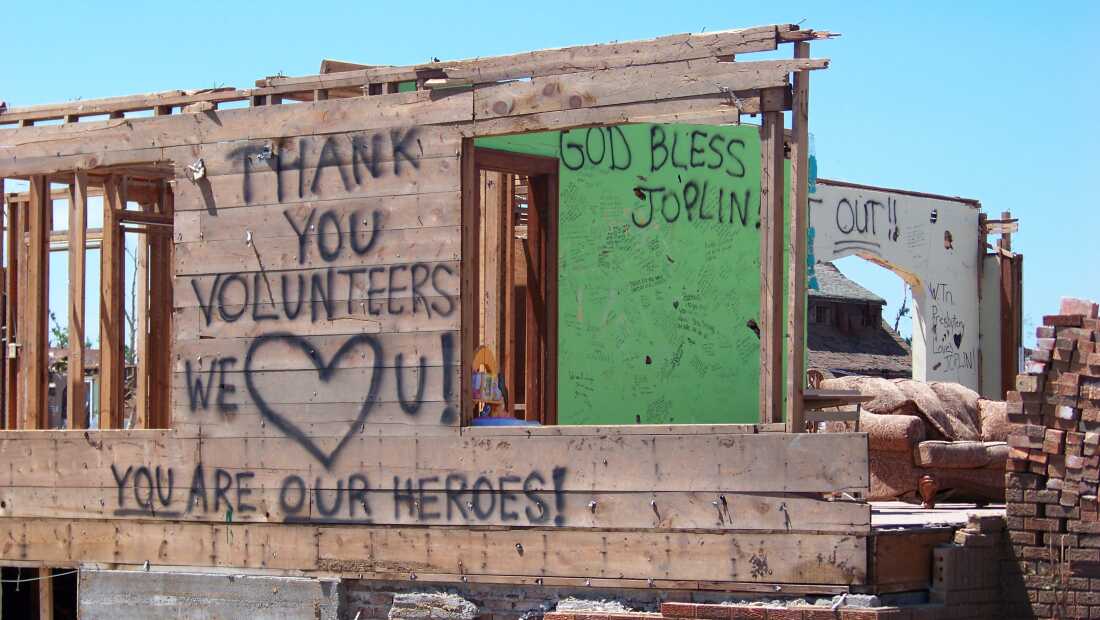
After a devastating tornado struck Joplin, Missouri, on May 22, 2011, thousands of volunteers from across the nation came to offer their assistance. Many wrote messages of hope on damaged homes, while Joplin residents expressed their gratitude to these volunteers.
Nanda Nunnelly had just returned from a weekend trip when the tornado arrived. She described the sky as having a green hue. As the tornado sirens sounded, she took shelter in a closet with her husband and dog. Nunnelly recalled the noise, stating, “It was so loud that it was quiet.” She prayed amid the 200 mph winds, hoping her death would be painless if it happened. Though she survived, her home was destroyed, and a third of Joplin’s population was displaced. The tornado, three-quarters of a mile wide, was among the deadliest in U.S. history, claiming nearly 160 lives.
Despite the tragedy, Joplin became known for the cooperation and kindness that characterized its recovery. Kindness and solidarity still resonate 15 years after the disaster. Nearly 100,000 volunteers from all over helped clean up the debris and rebuild homes. Columbia University researchers noted minimal political conflict regarding the recovery direction six months later. Schools reopened in the fall.
Darren Fullerton of the Red Cross, who managed an emergency shelter, recounted the wave of generosity. Volunteers cooked meals and provided entertainment for children, such as balloon animals, during the tough first weeks. Community efforts prioritized clearing millions of cubic yards of debris, involving various sectors and organizations.
Melodee Colbert-Kean, Joplin’s vice-mayor at the time, emphasized how the recovery brought people together regardless of their background or political affiliation. The phenomenon, defined as “catastrophe compassion,” shows how crises prompt strangers to reach beyond social divides to support each other.
Jamil Zaki, a social psychologist, explains that during disasters, people connect through shared survival experiences, forming “tribes” that encourage powerful bonds. Individuals often become altruistic after suffering, recognizing their suffering in others.
Nunnelly, who was haunted by a face from her past during the storm, reached out to apologize to a girl she had bullied in the eighth grade. Later, she joined efforts to help shelter unhoused individuals during severe weather, driven by an overwhelming need to give back.
Psychologists believe personal struggles can lead to altruistic behavior, especially when one has received help during difficult times. This theory may explain why people often choose roles helping others who face similar challenges.
Jane Cage, who volunteered after the tornado, recounted how community acts of kindness created an enduring bond among survivors. While some research suggests altruistic communities diminish after disasters, sustained efforts can maintain the spirit of solidarity.
One such effort, One Joplin, was established with recovery funds to continue the cooperative spirit, focusing on affordable housing and other needs of Joplin’s working-class populace.
The tornado also prompted deeper social awareness. A minister, Jay St. Clair, transformed his church into a shelter and continued working on community service initiatives.
Jamil Zaki’s research found increased acts of kindness during the COVID-19 pandemic, opposing the belief that people became less empathetic. Data from 150 countries showed heightened generosity from volunteering to helping strangers.