
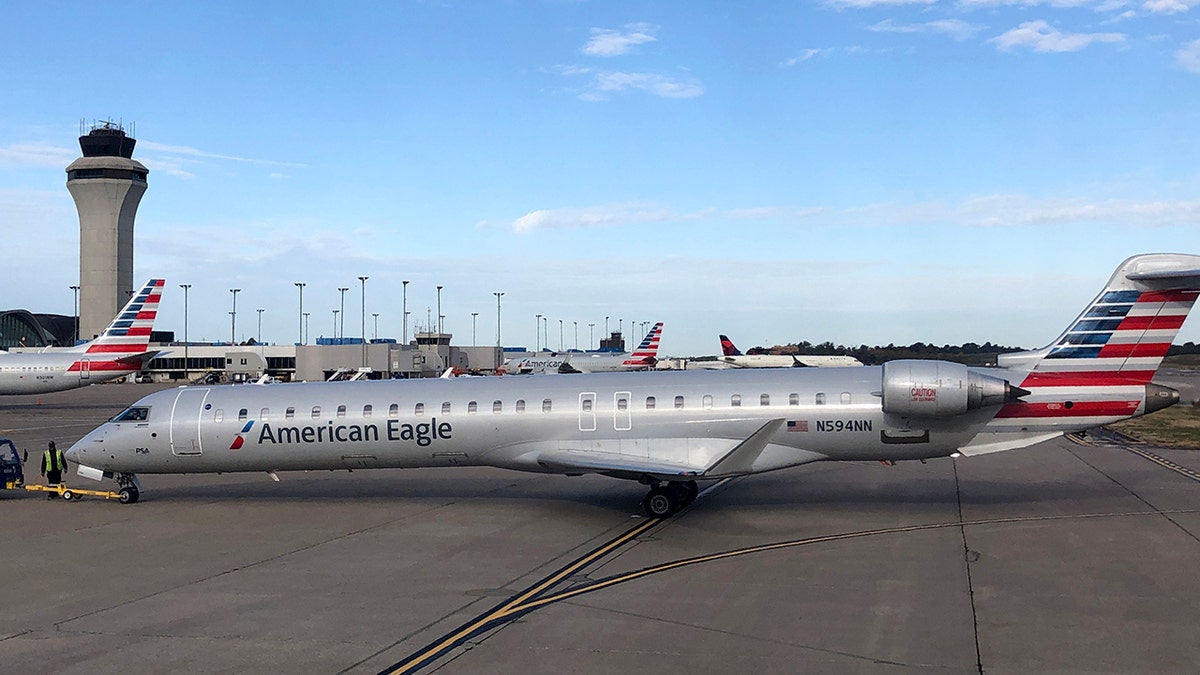
An American Airlines passenger flight was compelled to make an emergency landing shortly after takeoff due to reports of a peculiar odor that alarmed travelers. The flight took off from St. Louis Lambert International Airport on October 17, intending to reach Philadelphia but returned to the departure airport.
Incident and Investigation
Gary Leff, a Texas-based aviation expert and founder of the blog “View from the Wing,” discussed the situation. He speculated that engine oil could have entered the aircraft’s air supply, causing the odor. However, the cause is yet to be confirmed. According to Leff, such occurrences might include smoke, vibration, or loud noises, which could also cause illness among passengers.
FlightAware data revealed that the aircraft was airborne for 34 minutes before landing back at St. Louis Lambert International Airport. Originally scheduled to leave at 6 a.m., the flight experienced a two-hour delay before departure due to a reported engine issue.
Passenger Experience
A couple on the flight, Tessa and Mark Springer from Waterloo, Illinois, recounted their experience to First Alert 4. They explained that they were traveling to Pennsylvania for work when they noted a concerning noise from the rear of the plane before takeoff described as a loud, grinding sound.
Flight personnel announced an engine problem, unable to start it properly. The plane later took off, but soon after, passengers felt a jolt, likened to braking in a car, causing them to lunge forward. This sudden movement led to oxygen masks deploying, heightening their fear.
Mark and Tessa Springer expressed alarm, fearing fatal outcomes. They shared their experience, recalling a brief text to their children addressing the issue and expressing love, revealing the magnitude of fear experienced by passengers.
Post-Landing Reactions
Upon landing, passengers evacuated by descending from the aircraft’s wing, supported by fellow travelers. Mark Springer voiced reluctance to fly again due to the ordeal.
Expert Insights on Flight Safety
Despite the distressing experience, Gary Leff conveyed that lengthy delays attributed to mechanical issues do not inherently reflect flight unsafety. These delays involve diagnosing and addressing problems, completing necessary paperwork, and ensuring safe flight departure.
Leff emphasized that aircraft are equipped with numerous safety systems and emergency procedures. This redundancy ensures that cockpit crews can seamlessly react and manage emergencies efficiently, maintaining passenger safety.
Although such experiences are undesirable, Leff highlighted that even adverse situations do not invariably lead to negative outcomes. The presence of safety systems and emergency protocols serves to promptly address issues, ensuring safe and effective passenger management.