
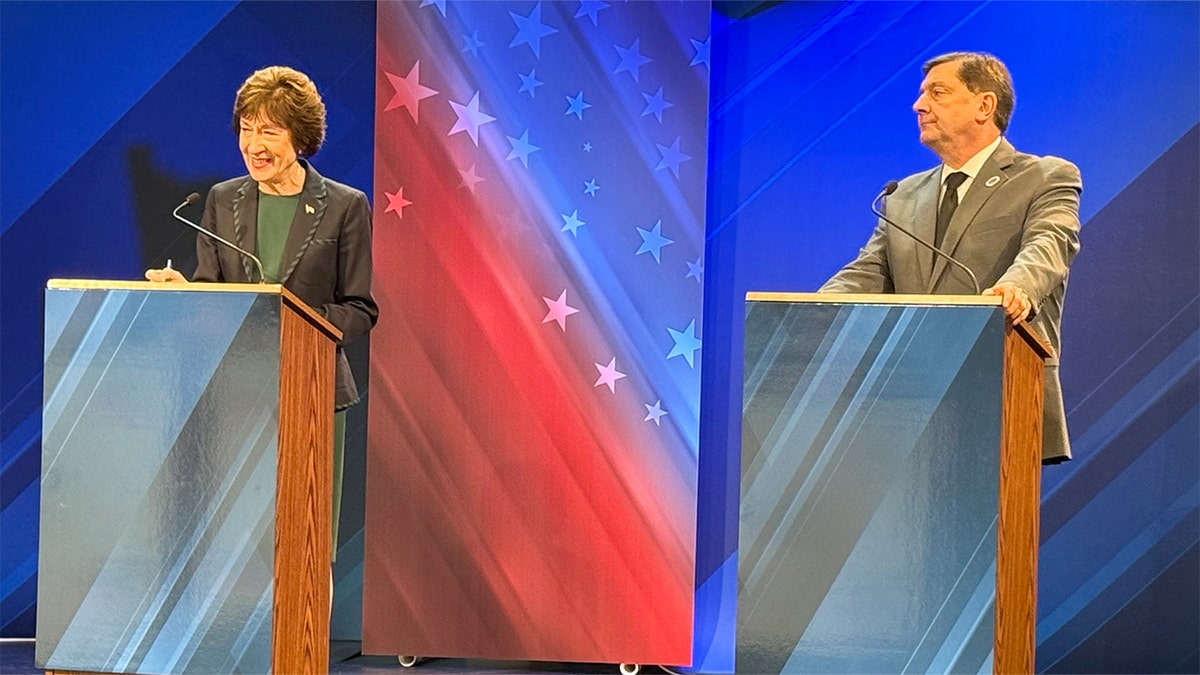
In Bangor, Maine, the final debate between Republican Senator Susan Collins and Democratic challenger Troy Jackson was stirred by a protester. The debate was interrupted when a demonstrator shouted concerns over AI data centers, claiming they harm the climate and contaminate water sources.
Senator Collins suggested the protester supported Jackson, prompting a swift denial from Jackson, who claimed no connection to the individual.
The exchange underscored the tense atmosphere of a closely watched race. Polls show Collins and Jackson in a tight contest, a key opportunity for Democrats aiming to regain Senate control in the midterm elections.
Political analysts, including the Cook Political Report and Inside Elections, rate the race as too close to call. The Fox News Power Rankings similarly categorize it as a toss-up.
During the debate, candidates focused on various issues. Jackson challenged Collins on her perceived attitude toward working-class citizens, asking whether she looks down on him or the working class generally.
Collins refuted the claim, emphasizing her humble beginnings in Caribou, Maine, where she worked picking potatoes.
Jackson criticized Collins’ alleged alignment with former President Donald Trump, suggesting she consistently supports him. Collins countered by asserting her bipartisan record, highlighting the major difference between her voting approach and Jackson’s allegedly partisan stance.
The debate covered topics like the Iran War, immigration, fuel prices, Supreme Court reform, and climate change. Both candidates sought to present themselves as the best choice for Maine voters.
Jackson secured the Democratic nomination after winner Graham Platner withdrew due to personal allegations. Jackson’s previous gubernatorial bid was unsuccessful, and he campaigned alongside Platner during the primary.
Collins, seeking re-election in a state Trump lost in the 2024 election, has overcome Democratic challenges before. She notably won against Democratic Sara Gideon by nearly nine points in the past election cycle.