
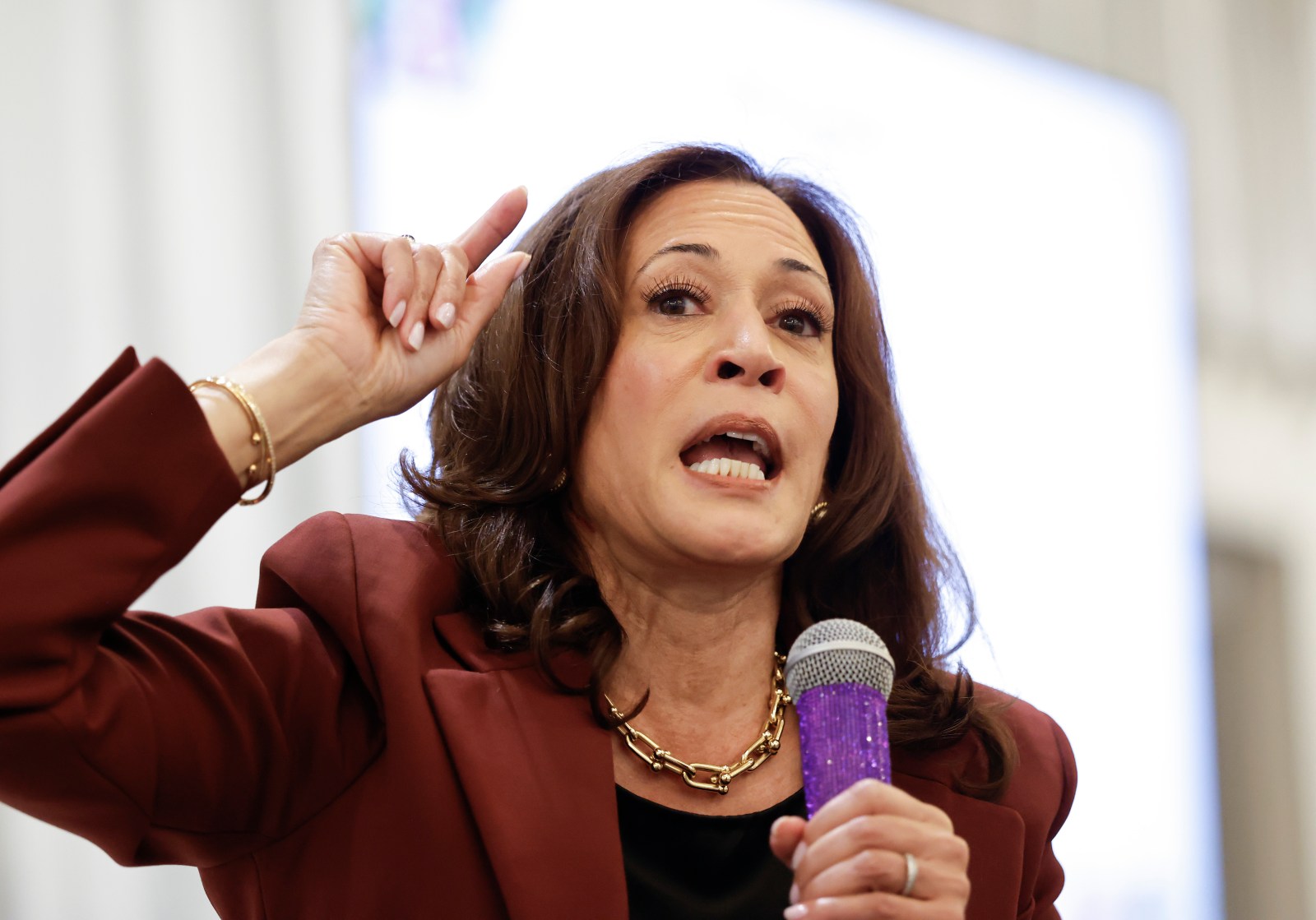
Harris’s Strong Polling Position
Former Vice President Kamala Harris has established a significant lead of 15 points over California Governor Gavin Newsom in a recent poll regarding potential Democratic candidates for the 2028 presidential election. Despite not announcing her intentions for another White House run, Harris garnered 30 percent support from respondents considering the Democratic presidential nomination, compared to Newsom’s 15 percent.
Other notable figures in the poll include former Transportation Secretary Pete Buttigieg and New York Representative Alexandria Ocasio-Cortez, both tied at 9 percent, while Georgia Senator Jon Ossoff trails with 8 percent. The poll, conducted by Focaldata from October 2 to October 5, surveyed 2,553 U.S. adults. It assessed general party preference rather than individual candidates for specific races.
These results come ahead of the November midterm elections, intensifying speculation about the future leadership of the Democratic Party after GOP President Donald Trump’s second term. Earlier polls consistently showed Harris leading other potential candidates. A Harvard CAPS/Harris survey in late September placed Harris at 38 percent against Newsom’s 17 percent. Similarly, an Echelon Insights poll saw Harris at 24 percent to Newsom’s 14 percent. These results reaffirm Harris’s early polling dominance, though both she and Newsom have yet to formally announce their 2028 intentions.
Harris’s Potential 2028 Run
Since her defeat in the 2024 presidential election to Trump, Harris has remained open about her political future. In July, she remarked that she has not decided about another presidential campaign. Her actions have continued to attract attention as she connects with Democratic donors and supports candidates in the lead-up to the midterms.
An October 6 report from the Washington Post described Harris facing diverse pressures within the Democratic Party. Some members see her experience and strong support base as assets, while others question if a new candidate should emerge after the 2024 defeat. Her strong early polling standing comes with the caveat that voters expressing preferences so far in advance of an election may not be committed when the voting begins.
Newsom’s Stance and Future Possibilities
Newsom has made his position clear regarding a potential race with Harris. In a September interview with CNN, he stated he would not run for president if Harris chooses to enter the race, expressing that he wouldn’t want to compete against her due to overlapping political support.
Newsom mentioned he contemplated running in 2024 but decided he was not prepared. Nonetheless, he remains active nationally, supporting Democratic candidates and criticizing the Trump administration. His growing profile keeps him in the discussion for the 2028 election, especially if Harris does not run.
Ocasio-Cortez Keeps Options Open
New York Representative Alexandria Ocasio-Cortez has also kept her presidential prospects open for 2028. During an August appearance on ABC’s “This Week,” she focused on the upcoming midterm elections but did not dismiss presidential or Senate ambitions. Her emphasis remains on broader political change rather than seeking specific offices.
Ocasio-Cortez has gained national attention through various campaigns, including supporting Michigan Senate candidate Abdul El-Sayed. Her 9 percent in the poll aligns her with Buttigieg but places her behind Harris and Newsom.
Republican Poll Results
The Financial Times/Focaldata survey also highlighted Vice President JD Vance leading the Republican potential candidates for 2028, with 38 percent support. Following him are Secretary of State Marco Rubio with 24 percent, Florida Governor Ron DeSantis at 9 percent, and Donald Trump Jr. at 7 percent. These findings correlate with earlier polling data, which also showed Vance with robust support. Similar to the Democratic situation, these early numbers offer an insight into voter tendencies without determining the final candidates.
Midterm Elections Context
The release of presidential poll results coincided with Democratic candidates holding an eight-point lead over Republicans in the generic congressional ballot before the November midterms. With the 2026 elections imminent, these data provide a snapshot of the political setting where potential presidential candidates are starting to establish their national presence.
The key decision for Harris is whether she will convert her early polling strength into a presidential campaign. For Newsom, her decision has significant implications, particularly given his promise not to contest her for the nomination.