
President Donald Trump enjoys campaigning for Republican candidates and rejoicing in their electoral victories. In Latin America, his influence is growing as right-wing candidates have emerged victorious in seven presidential elections across the region. These wins showcase Trump’s strategic interventions.
US Influence in Latin American Elections
Some elections, like Honduras, saw Trump threatening to withdraw US aid if his preferred candidate lost. In Argentina, Trump enticed voters with a $20 billion currency swap to support President Javier Milei by expanding his legislative support. Trump’s satisfaction was evident when he remarked on his success in getting candidates elected.
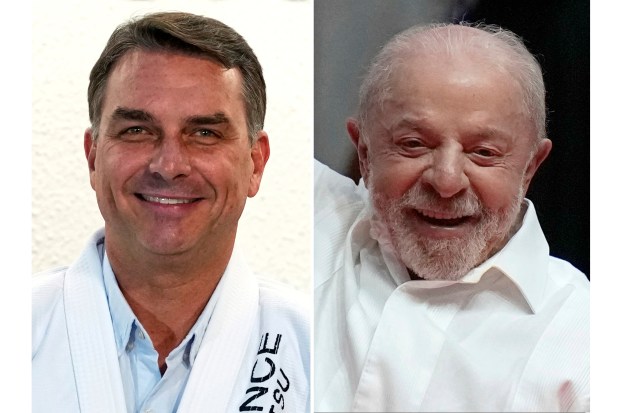
This photo set features Flavio Bolsonaro in São Paulo on September 29, 2026, and Luiz Inácio Lula da Silva in Rio de Janeiro on September 23, 2026. Recently, Trump’s political strategy achieved another milestone in Brazil, where millions voted in the presidential election. Flávio Bolsonaro, son of ex-President Jair Bolsonaro, secured 47.03% of the votes, while incumbent President Lula da Silva garnered 45.16%. Due to no candidate surpassing the 50% vote threshold, a runoff election is set for October 25.
Bolsonaro’s Edge and Lula’s Challenge
Bolsonaro appears favored to win, as several candidates from the right may consolidate their support behind him. In contrast, Lula, seeking a fourth term, faces challenges in attracting moderate and undecided voters.
The US-Brazil relationship has been strained in recent years. Under President Joe Biden, tensions with Jair Bolsonaro’s administration arose over issues like Amazon deforestation, divisive rhetoric, and expanding trade with China. Biden even sent the CIA director to discourage Bolsonaro from attempting electoral manipulation. Bolsonaro’s conviction and 27-year prison sentence for a coup attempt reflect the rocky diplomatic landscape.
Challenges in US-Latin American Relations
Trump’s dealings with Lula, a significant left-wing figure known for challenging Brazil’s former military dictatorship, have also been contentious. The bilateral relationship faces friction due to differing national priorities and leadership styles.
The Trump administration emphasizes US dominance in the Western Hemisphere, an approach Lula views as antiquated arrogance. Lula’s foreign policy centers on forming alliances with major global powers, reducing dependency on any one country, and strengthening the Global South’s influence.
Conflicting interpretations of international policy have resulted in diplomatic clashes. Trump’s economic maneuvers, such as imposing 40% tariffs on Brazilian goods to challenge Bolsonaro’s persecution, temporarily strained ties. These tariffs inadvertently strengthened Brazil’s trade relationships with China.
Implications of US-Brazil Relations
The Trump administration’s actions during Brazil’s election period, including designating Brazilian criminal groups as terrorist organizations and imposing additional tariffs, were perceived as attempts to manipulate the electoral landscape. A planned State Department visit to discuss election integrity was also blocked by Brazil.
A visa revocation for Brazil’s ambassador to the US in response to barriers for Trump’s ambassador adds to the tense diplomatic narrative. While Trump hasn’t explicitly endorsed Flávio Bolsonaro, his preference for a right-wing leader is evident.
If elected, Bolsonaro promises policies aligned with Trump’s views, including joining an anti-cartel coalition and pivoting Brazil’s foreign policy towards the West. However, Brazil’s leadership, regardless of the election outcome, holds significant sway and may resist US directives, potentially leading to Trump’s disappointment.
Daniel DePetris, a fellow at Defense Priorities and Tribune foreign affairs columnist, offers insights into this complex diplomatic landscape. Share your thoughts by submitting a letter to the editor.