
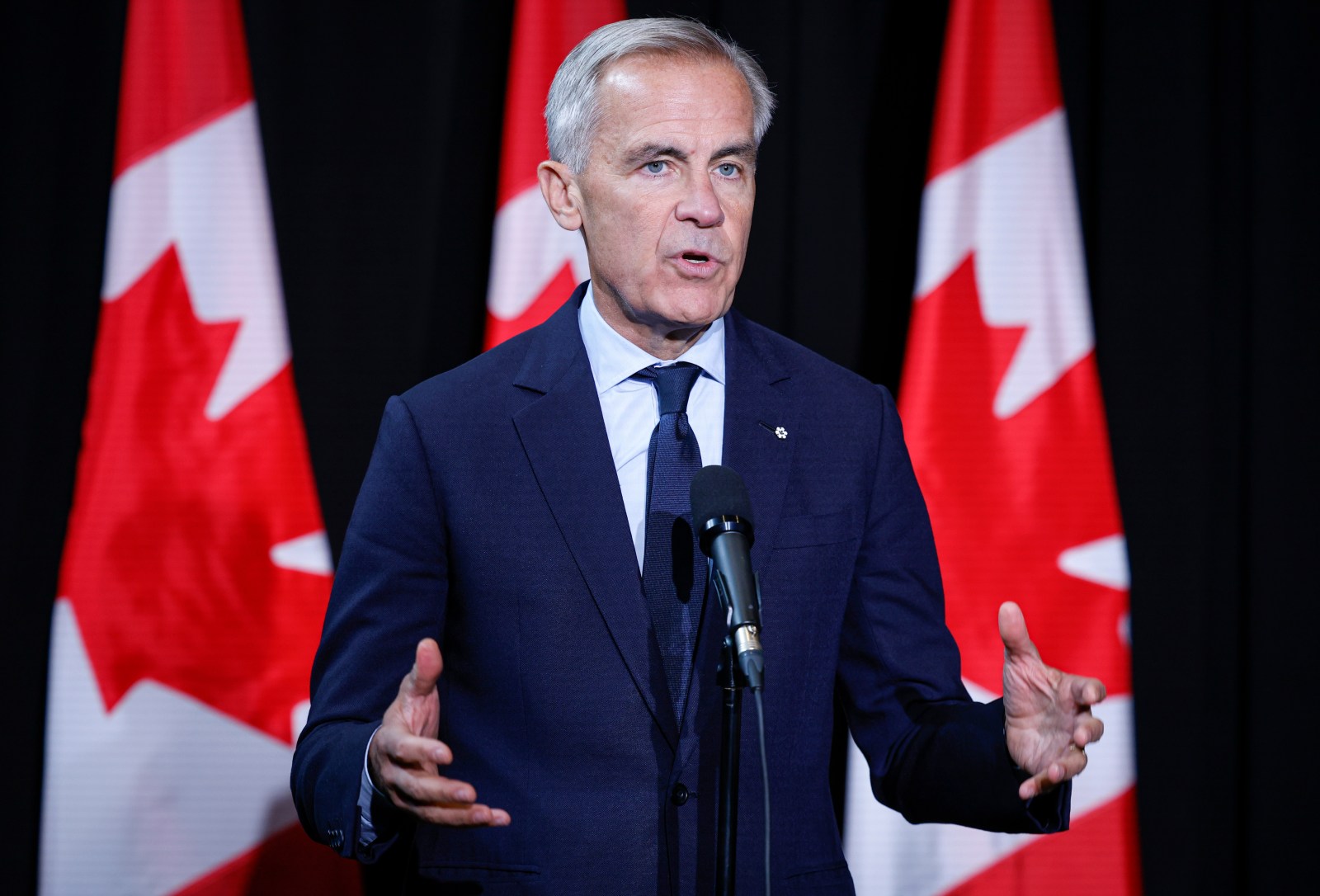
Canadian Prime Minister Mark Carney is exploring a unique partnership with the European Union (EU) to lessen Canada’s economic reliance on the United States. Tensions with President Donald Trump and an ongoing trade war have fueled this interest. Carney has discussed Canada possibly becoming an ‘associate member’ of the EU, a speculated status as reported by the Wall Street Journal via Reuters. Both Carney’s office and the EU have been approached for comments.
Currently, relations between Washington and Ottawa are strained. The two countries are engaged in a trade war involving substantial cross-border tariffs. Trump has even mentioned the possibility of Canada joining the U.S. as a ’51st state,’ an idea that Ottawa strongly opposes.
Aligning more closely with Europe would represent a significant shift in Canada’s foreign and economic policy, which has heavily depended on the U.S. The U.S. absorbed approximately 72 percent of Canadian exports in 2025, according to Forbes. Besides trade, Canada and the EU are discussing cooperation in sectors like energy, artificial intelligence, defense, and critical minerals. These talks include freer movement of goods, services, and personnel as well as joint ventures in data centers, cloud infrastructure, satellite networks, undersea communications cables, and new routes for exporting Canadian energy to Europe.
Timeline of Trump vs. Carney
January 2025: Trump Returns to the White House
Relations soured between Washington and Ottawa after Trump’s return to office in January 2025. Disputes over tariffs and trade strained their bilateral relationship.
April 28, 2025: Carney Wins Election After Anti-Trump Campaign
Carney’s Liberal Party won the April 2025 election on a platform opposing Trump’s tariffs and the suggestion of Canada becoming the ’51st state.’ He emphasized Canada’s threatened sovereignty and promised less economic dependence on the U.S.
May 6, 2025: Trump and Carney Meet at White House
During an Oval Office meeting, Trump revisited the idea of Canada joining the U.S., which Carney firmly rejected. Carney emphasized that ‘Canada was not for sale,’ highlighting growing divides.
Summer 2025 to Summer 2026: Trade War Escalates
The trade conflict continued through 2025 and 2026, with tariffs imposed on goods worth billions. The dispute expanded to public criticisms, pushing Canada to seek broader economic ties beyond the U.S.
September 1, 2026: Carney Tells U.S. Officials to ‘Stop Doing Memes’
As tensions grew, Carney criticized U.S. officials for mocking Canada on social media, suggesting that serious trade talks required more respectful communication.
What Happens Next
Carney plans to promote the partnership proposal during his European tour this week. His itinerary includes a speech in the European Parliament and meetings with lawmakers to strengthen Canada’s ties with the EU. Despite this, challenges persist. Reuters highlights the EU’s historical reluctance to adopt flexible membership arrangements, further complicated by the incomplete ratification of the Canada-EU Comprehensive Economic and Trade Agreement by all member states. Any new framework would demand extensive negotiations and political approval across Europe.
For further information, contact Newsweek editors Steve Mollman and Anthony Murray.