
Archaeologists might have uncovered a lost city related to Jesus Christ’s ministry. After ten years of digs, the project’s academic director, Mordechai Aviam, is “100%” certain of this discovery. Since 2016, the El-Araj Excavation Project has been exploring a site near the Sea of Galilee.
Bethsaida, close to Jesus’ work in Capernaum, was historically the home of apostles such as Peter, Andrew, and Philip. The city was the backdrop for several miracles, including the healing of a blind man. The Gospels state that Jesus’ feeding of the 5,000 happened on the outskirts of Bethsaida.
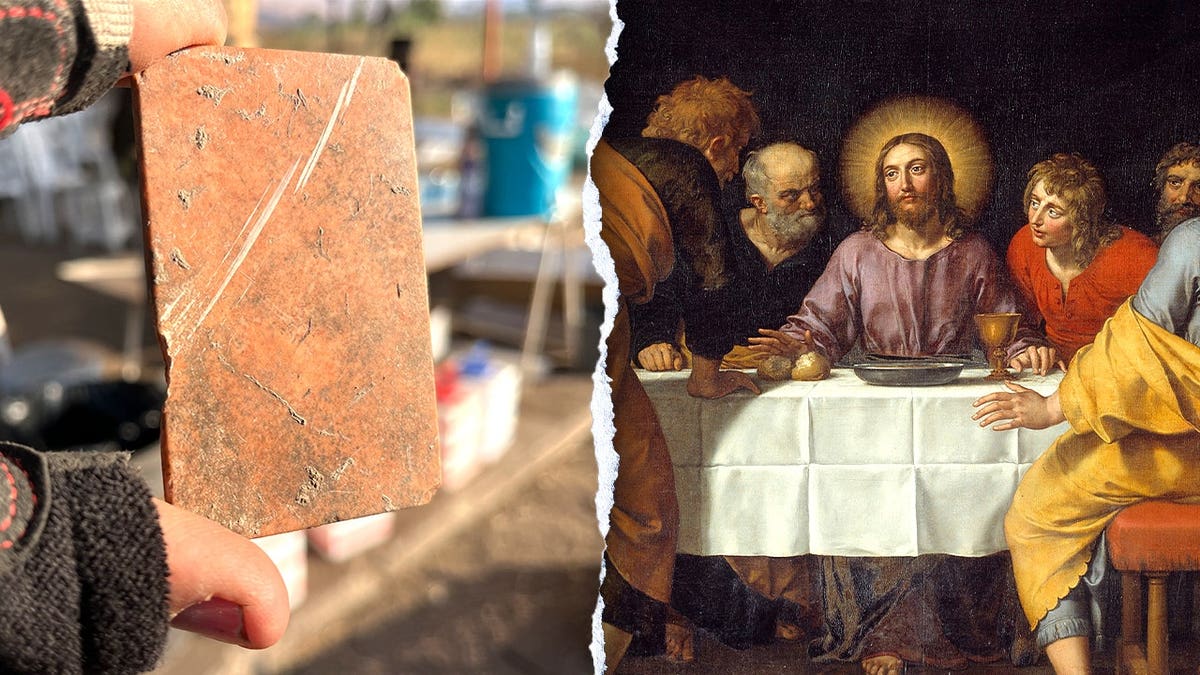
Evidence increasingly supports the identification of El-Araj as Bethsaida; this has been indicated through archaeological finds along the Sea of Galilee. An artifact from Bethsaida can be seen in the images shared by Steven Notley and Leemage/Corbis.
Researchers have unearthed evidence of an ancient Jewish fishing settlement and a Roman-era city. Excavations have revealed Roman period remains and pottery. Steven Notley, who serves as the academic director, mentioned that the recent digs opened new areas and unveiled more Roman artifacts.
Over 200 coins have been found and are being analyzed to estimate the settlement’s age. Notley, Pillar College’s dean of religious studies, noted that last year’s wildfire, initially deemed tragic, helped researchers understand the size of the ancient settlement. He stated, “It actually cleared the underbrush and allowed us to do an extended survey to determine the size of the settlement. It’s at least 15 acres.”
The team also discovered Jewish stone vessels, a Roman bathhouse, and a Byzantine basilica, containing an inscription related to the Apostle Peter.
Notley highlighted that researchers would expect to find evidence of two elements when searching for Bethsaida: a Jewish fishing village and its evolution into a Roman city. Excavations have uncovered evidence of both.
“The two things that we should be finding are a Jewish fishing village, which we’ve found ample evidence of, and evidence of a polis of urbanization,” Notley stated.
After a decade of work, Notley expressed total confidence that El-Araj is Bethsaida. He noted, “The accumulation of evidence continually strengthens our case.” Artifacts like oil lamps have been uncovered at El-Araj.
Excavators found an inscription in the basilica referring to “the Chief of the Apostles and the Keeper of the Keys of Heaven,” or the Apostle Peter. Despite uncovering Roman-period homes beneath the church, traditionally believed to have been built over Peter and Andrew’s home, certainty about the site being Peter’s home is elusive. Yet, for Christians, the ties to Jesus are significant.
Notley stated, “Of course, for Christians, there are stories from the Gospels about Jesus in Bethsaida. It’s an important site in his life, in his ministry.”
Notley’s team has spent a decade uncovering El-Araj, believed to be Bethsaida, where Jesus performed miracles. He expressed eagerness for continued exploration, stating, “I’m looking forward to what lies ahead.”