
Kim Stanley Robinson’s book, The Ministry for the Future, opens with a chilling scenario: a devastating heat wave in India causing grid failure and claiming 20 million lives. This fictional catastrophe prompts global unity against climate change. Real-life scientists have warned for decades of increasingly severe weather events due to climate change. What was once science fiction is now increasingly discussed as a probable reality.
The planetary conditions conducive to massive disruptions have been escalating, raising alarms among experts. Daniel Swain, a climate scientist, cautions against dismissing warnings as exaggerated or alarmist. The analogy of ‘The Boy Who Cried Wolf’ is relevant; sometimes the threat is real and imminent.
Early Discoveries and Historical Context
As far back as the 1850s, Eunice Newton Foote discovered through experiments that carbon dioxide traps heat, leading to climate change. Her findings emphasized the dangers of burning fossil fuels. Fast-forward to today, Earth faces significant warming from rampant greenhouse gas emissions, resulting in more frequent, severe weather events.
The United States has historically released substantial greenhouse gases, contributing significantly to climate change. Despite widespread recognition of this, there is little motivation for substantial government-led initiatives to mitigate effects.
Examples of Extreme Weather Events
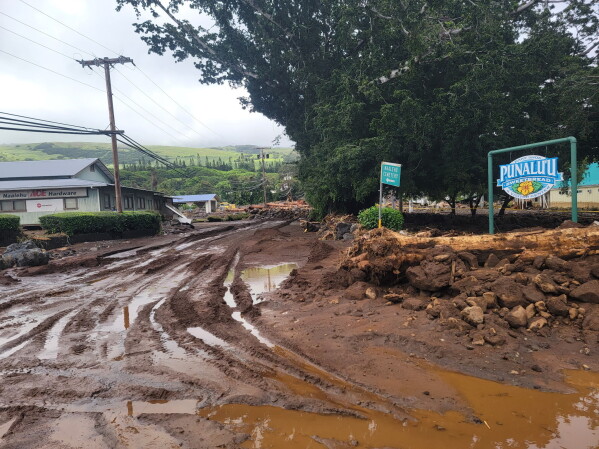
A recent series of extreme weather events illustrates the momentum towards an age of extremes. Australia’s ‘Black Summer’ fires in 2019-2020, Pakistan’s flooding in 2022, and recent hurricanes and wildfires are stark warnings.
Sarah Perkins-Kirkpatrick from Australian National University acknowledges that even reaching net-zero emissions won’t halt extreme weather events immediately. The persistent buildup of carbon dioxide means long-term damage will take centuries to reverse.
Societal Preparedness and Response
No country is adequately prepared for a major climate disaster. As climate risks evolve, including the growing threat of wildfires as emphasized by Robinson, it’s essential to understand that risks of catastrophe persist.
However, there’s a natural tendency to avoid confronting worst-case scenarios. Climate change is often perceived as overwhelming, leading to inaction by both individuals and governments.
Importance of Climate Communication
Precision in climate communication is crucial. Although predicting exact timing of disasters is challenging, improving models shorten intervals between extreme events.
Sonia Seneviratne equates climate risks to smoking and lung cancer. Just as doctors warn of increased cancer risk from smoking, scientists highlight increased risk of extreme events with every fractional degree of temperature rise.
Learning from Earthquake Preparedness
Earthquake preparedness in California serves as a potential model for climate adaptation. Proactive retrofitting initiatives initiated by Lucy Jones demonstrate that belief in risks and feasible solutions encourages people to act.
Cinematic Reflections and Real-World Implications
Movies like The Day After Tomorrow and Don’t Look Up portray climate catastrophes dramatically but don’t capture the nuanced reality portrayed by science, where catastrophe is inevitable but manageable with decisive action.
Extreme weather events are likely to worsen, not if, but when. Historical data shows a rapid increase in greenhouse gases over the past 50 years, heating up Earth and disrupting ecosystems.
The climate tipping points, like the bleaching of corals and threats to the Amazon rainforest’s carbon-storing capacity, underline the fragile state of our environment.
With an impending strong El Niño, heightened risks of surpassing previous temperature records loom. The Earth continues along a perilous trajectory.
Professor Tim Lenton emphasizes addressing potential severe shocks to better prepare for future climate challenges.
Peter Prengaman, the Associated Press’ global director for climate news, contributes significantly to climate discourse. AP remains committed to quality environmental coverage, with support from multiple private foundations.