
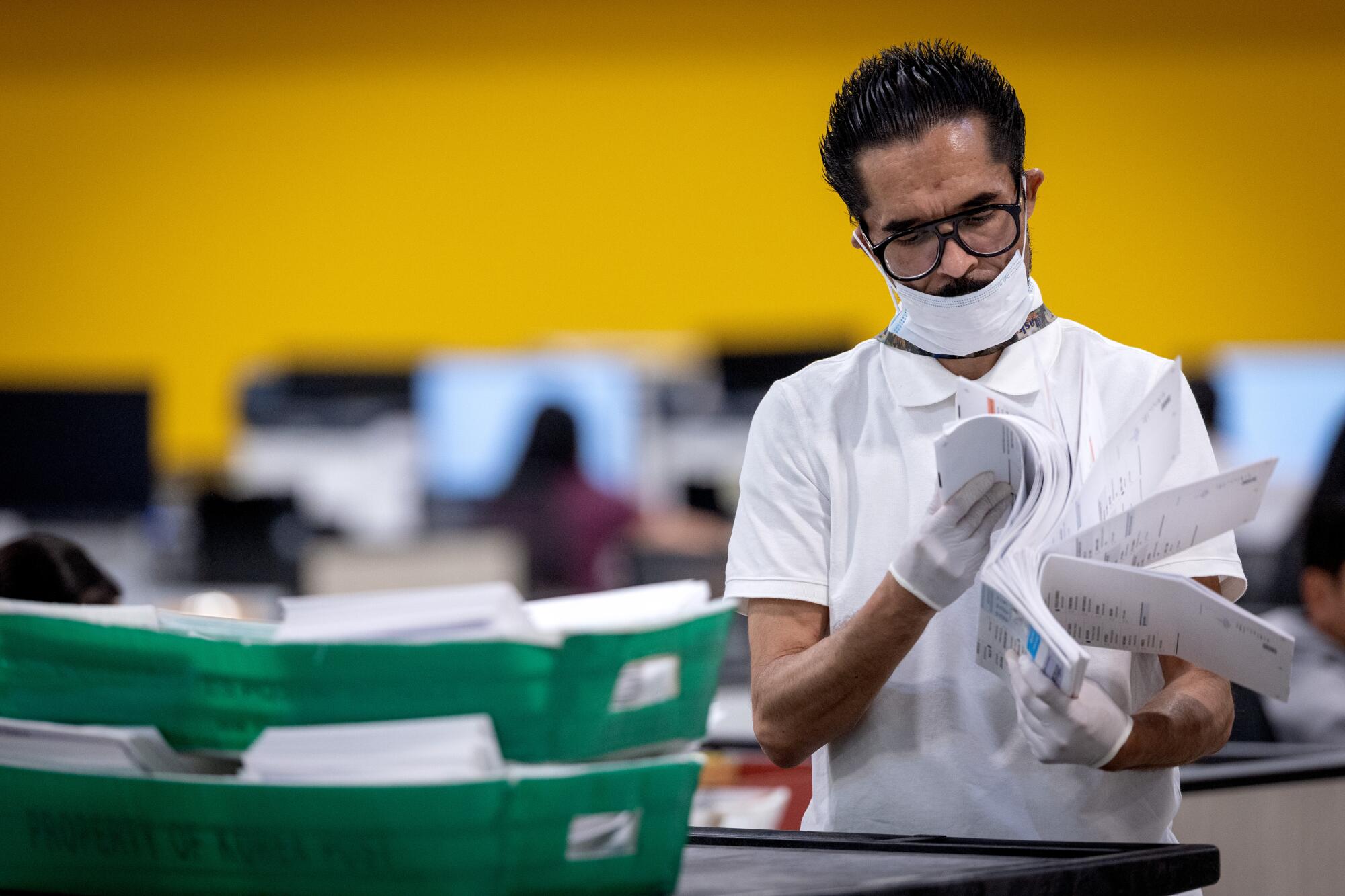
Big-city mayors are equipping poll workers with panic buttons as a precaution against election skeptics questioning their work. County and state officials are preparing responses to possible immigration raids near voting centers. Lawyers for Democratic states and civic groups are drafting legal challenges to any attempt at ballot seizures. Democratic aides in Washington are preparing Congress members to counter unfounded voter fraud claims in competitive districts.
Across California and the nation, civic organizations, voting rights advocates, and Democratic leaders are gearing up for potential actions by the Trump administration aimed at disrupting or undermining the November midterm elections. President Trump, known for questioning the integrity of elections, has repeatedly claimed without evidence that the U.S. election system is corrupt and vulnerable to interference. He has expressed willingness to take drastic measures to ensure ‘honest elections’ and has attempted to change voting rules unilaterally.
Trump has hinted at further unprecedented steps to assert control over the elections, including emergency declarations and military deployments. In February, he suggested that Republicans seize control of voting in Democratic states. Despite years of searching, election experts assert there is no substantial evidence of widespread voter fraud in U.S. elections.
Efforts to resist any interference by Trump are carried out discreetly to protect the strategies from the Trump administration and avoid unnecessary voter fear. These actions aim to counter Trump’s perceived ‘interference playbook’ that involves misleading voters, disrupting the vote, and refusing to accept unfavorable election outcomes.
The preparations involve scenarios like deploying troops or immigration agents to polling sites for intimidation, claiming fraud in ballot counts, or directing the U.S. Postal Service to disrupt mail ballot delivery.
These efforts highlight a deterioration of trust between election supervisors and a federal administration that has undermined their work. Concerns grow as Trump’s approval ratings drop and Democrats hope to regain control of Congress, but Trump suggests election integrity issues will be blamed if Republicans lose.
In California, a significant percentage of voters see federal interference as a major concern. Democratic leaders, such as Sen. Adam Schiff, express optimism about the midterms but worry about the president’s interference.
Legal preparations are underway among Democratic state attorneys general and civic organization lawyers, considering all options after Trump’s supporters attacked the Capitol in 2021. Political preparations involve elected officials using their platforms and legislative powers to resist interference, while grassroots campaigns recruit voters to protect local elections.
President Trump has continually sought to undermine trust in American elections, recently deeming the voting system ‘broken’ and advocating for the SAVE America Act, a strict voter ID measure.
Despite no response to hypothetical election questions, the White House stressed accountability for any voting law breaches, blaming liberal Democrats for obstructing election reforms. It claims voter support for changes and warns of a country at risk without them.
Concerns Over Interference
Concerns stem from Trump’s history as an election denier and his administration’s many attempts to gain control over state voting processes. This includes suing blue states for voter rolls and seizing ballots, attempting to limit mail voting, and imposing stricter voter ID requirements.
Congressional Coordination
A Senate task force regularly meets to prepare for various interference scenarios. They study local election laws to guide responses to federal interference and design coordinated messaging for potential crises.
Legal preparations focus on limiting federal actions and any administration moves to exploit existing legal loopholes. Schiff expresses particular concern about unwarranted military deployment, referencing historical events like the Reichstag fire as possible parallels.
Sen. Alex Padilla is working on an election observer program for contested races, warning colleagues of obligatory votes on any election-related emergencies declared by Trump.
House staffers have developed strategies to handle potential efforts to disrupt the swearing-in of new Congress members, scrutinizing past court decisions on Trump’s emergency powers.
State and Local Preparations
California Attorney General Rob Bonta and similar offices nationwide are preparing for Trump’s potential legal violations related to elections. Dean Logan from Los Angeles County ensures secure election operations, while cities prepare to counter voter and worker harassment.
These preparations reflect a keen awareness of national rhetoric and local tensions, as cities play a pivotal role in hosting vote centers and engaging voters.