
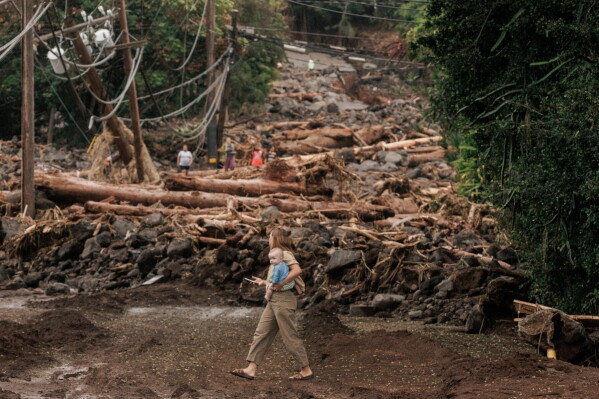
The U.S. hurricane season is in full swing, with names like Amanda and Boris marking the storms in the Pacific. But why do we assign names to tropical cyclones each year? Naming storms is a relatively recent practice that serves a purpose beyond mere distinction. These names help tell stories and communicate vital information efficiently.
The Importance of Naming
The World Meteorological Organization (WMO) handles the naming of tropical storms worldwide. A name is the fastest way to convey warnings and enhance public awareness and readiness. It also reduces confusion when multiple cyclones occur simultaneously. Furthermore, names aid in research and historical records.
Storms are given names based on predetermined alphabetical lists created by five tropical cyclone regional bodies. These lists may be cyclical, repeating every few years starting with the letter “A,” while others start anew each year. Names with certain letters, like Q, U, X, Y, and Z, are avoided in the Atlantic region due to scarcity.
Up until 1979, U.S. hurricanes were named solely after women. This changed to alternate between male and female names. For instance, in the Eastern North Pacific, Amanda was followed by Boris. In the Caribbean Sea, Gulf of Mexico, and North Atlantic, Arthur was succeeded by Bertha.
Military Operations: Naming Evolution
Military operations employ names for secrecy and differentiation. British Prime Minister Winston Churchill famously influenced this nomenclature during World War II to suit strategic goals. His stance was that operation names should not boast or sound frivolous. He sought names that were dignified and wouldn’t disparage the operations.
Today, naming practices have evolved with the U.S. military using two-word names and the UK assigning single words. The 1991 Gulf War was called “Operation Desert Storm” by the U.S. but was known as “Operation Granby” in the UK. Such differences highlight varied naming conventions.
Names can shape perceptions and signal purpose. A name like “Operation Just Cause” aims for legitimacy, while historical names like “Operation Killer” posed public relations challenges.
Recent Trends in Naming Practices
Modern operations often employ dynamic names, as seen in “Operation Epic Fury” chosen by President Trump for the U.S. conflict with Iran. Criticism arises when names seem exaggerated or culturally insensitive, impacting perceptions.
The U.S. war against terrorism initially titled “Operation Infinite Justice” was changed to “Operation Enduring Freedom” to avoid cultural offense, highlighting the weight of naming.
Storm Naming: Practical Challenges
On rare occasions, the Atlantic region exhausts all names and resorts to the Greek alphabet, prompting supplemental lists. Devastating storms may have their names retired to maintain clarity, as seen with Sandy and Katrina.
Names, ideally, should be easy to pronounce and memorable. Difficulty in pronunciation is avoided to ensure effective communication during emergencies.
The Evolving Practice of Naming
The naming of diseases has shifted away from using personal or geographic labels, driven by WHO guidelines. Simplified naming removes biases associated with previous names like “swine flu” or “Spanish flu.”
Research into the impacts of naming remains limited. Experts call for studies to understand how best to communicate names as climate change leads to more frequent extreme weather events.
In some regions, crowdsourcing methods allow the public to suggest storm names, adding an element of participation in the naming process. This practice could see more adoption as communication methods evolve.