
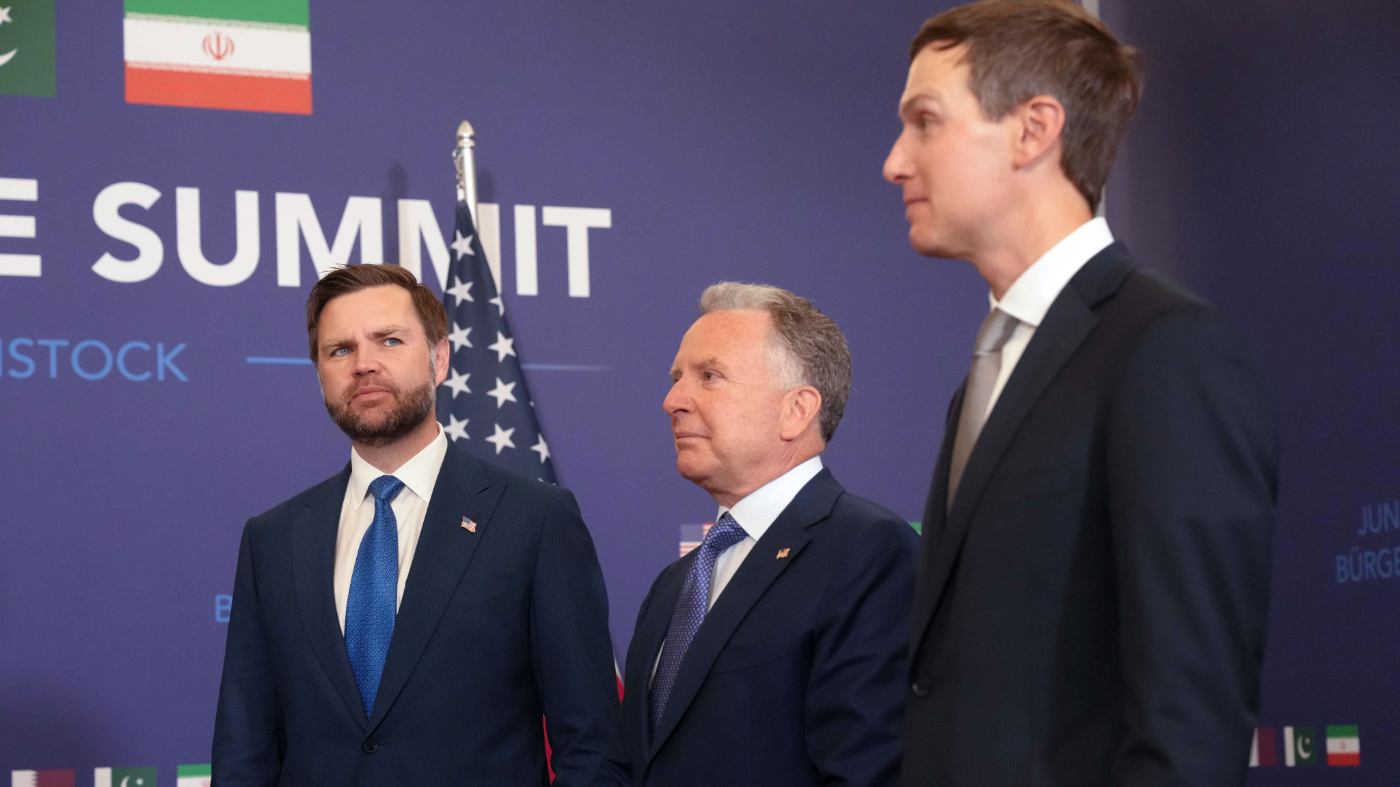
Vice President JD Vance and envoys Steve Witkoff and Jared Kushner recently met with Pakistan’s Prime Minister Shehbaz Sharif at the Bürgenstock Resort in Switzerland. This high-level meeting aimed to advance efforts in resolving the ongoing Middle East conflict.
Earlier this month, President Donald Trump canceled a military strike against Iran after a claimed diplomatic breakthrough. Despite this, he criticized Iran’s leadership on Truth Social, labeling them as “unbelievably duplicitous.” The diplomatic relations between Washington and Tehran remain tense, with both sides showing little willingness to compromise.
A recent CNN report highlighted a request from a U.S. Central Command officer for “creative and unconventional ways to pressure and punish Iran.” This request indicates a strategic problem rather than simply seeking new forms of pressure. Although the U.S. wields significant military, economic, and diplomatic power, these advantages influence Tehran’s decision-making only if they alter Iran’s perception of its options.
For years, Iran has employed a strategy of patience, believing it improves their negotiating leverage as American administrations and their priorities change. The U.S. political calendar, including elections and economic trends, affects Washington’s diplomatic flexibility, a factor Iran carefully considers. Iranian confidence that delaying negotiations serves its interests challenges successive U.S. administrations trying to leverage military superiority into political success.
The involvement of America’s regional partners adds complexity. Saudi Arabia has advocated for restraint, while other Gulf states balance weakening Iran with avoiding prolonged conflict that could harm their economies. Tehran expects this coalition to ultimately favor stability over sustained pressure.
Coercion succeeds not by imposing costs, but by changing an adversary’s calculations,” noted Thomas Schelling in his work, ‘Arms and Influence.’
This perspective suggests American strategy should not focus solely on the damage inflicted on Iran but on whether Iran believes delaying negotiations remains advantageous. Military actions, diplomatic efforts, sanctions, and regional agreements should be evaluated based on their effect on Tehran’s confidence in its strategy.
The 1973 oil embargo serves as a historical example, as it prompted the U.S. to adapt and become strategically stronger. Democracies often seem vulnerable due to public debate, yet they have demonstrated resilience and adaptability. Mistaking this openness for weakness may lead Iran to misjudge U.S. capabilities, as other adversaries have done.
Ultimately, the effectiveness of U.S. strategy lies not in the number of targets destroyed or the severity of sanctions. It depends on whether Iran perceives that waiting no longer benefits its strategy. Until that perception changes, the U.S. risks tactical victories without achieving strategic goals.
Bradley Martin is the executive director of the Near East Center for Strategic Studies. Dr. Liram Koblentz-Stenzler heads the Global Extremism and Antisemitism Desk at the International Institute for Counter-Terrorism at Reichman University and is a visiting scholar at Brandeis University.
Copyright 2026 Nexstar Media Inc. All rights reserved. This material may not be published, broadcast, rewritten, or redistributed.