
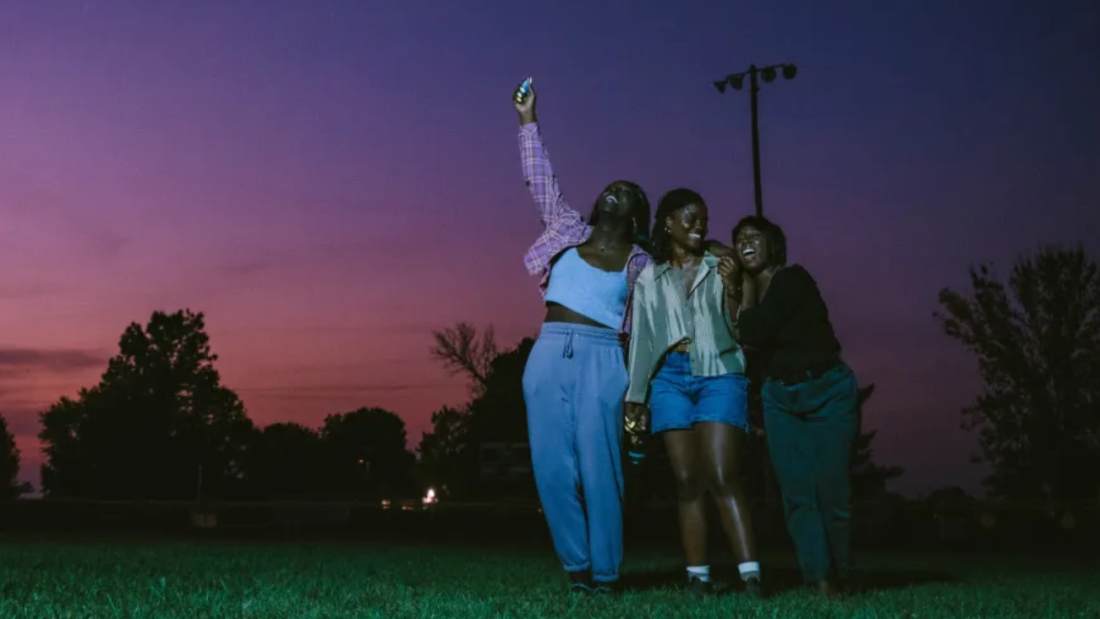
Lauren, played by Dezi Bing, Z, portrayed by Denée Benton, and Tasha, played by Sasha Compère, embark on a cross-country journey in Dreams in Nightmares. This film marks the second feature by writer and director Shatara Michelle Ford. Unlike their previous work, Test Pattern, which dealt with serious themes about systemic failures, this movie offers a lighter, more comedic look at friendship among four queer Black friends in their mid-30s.
A Journey of Friendship
The story centers on Z, an LA-based writer recently laid off from her job as a professor. Played by Denée Benton, Z teams up with her Brooklyn friend Tasha, who has also lost her consulting job. Z takes an impulsive trip to New York to join Tasha and another friend, Lauren. Together, they decide to visit a friend, Kel, in Iowa City, who has been out of touch.
The road trip is not just spontaneous; it holds a purpose. They are aware of potential challenges and decide to support Black-owned businesses along the way. The three friends bond over questions from a cup, initiating discussions about personal attributes and art. Z aspires to write a book, while Lauren, performed by Dezi Bing, is a poet who participates in a queer poetry event.
Contrasting Personalities
The characters have distinct personalities. Tasha stands as the pragmatic figure, often clashing with her more artistic companions. Her dream of acting was abandoned for a stable business career. Yet, despite potential stereotypes, the actors bring depth and understanding to their roles, creating more harmony than conflict within the group.
Unforeseen Twists
The trip brings various challenges. Discovering Kel left Iowa City leads them to spend a night with Kel’s ex, played humorously by Jasmin Savoy Brown. The journey continues to Kel’s parents in Kansas City, who are conservative and struggle with Kel’s identity. The narrative eventually introduces Kel, played by Mars Storm Rucker, highlighting the friends’ bond and the theme of freedom.
The Theme of Freedom
The film thrives on the concept of freedom, aspiration, and living authentically. This is evident in scenes like Tasha’s night out in Brooklyn and Z’s reflections on her relationship. Z’s visions of a desert landscape encapsulate the essence of the film—navigating toward uncharted, yet hopeful futures.
Through Dreams in Nightmares, Ford offers the characters a tapestry where they can envision and claim a future defined by their dreams. This intimately shot film invites viewers to witness and contemplate the diverse expressions of freedom.