
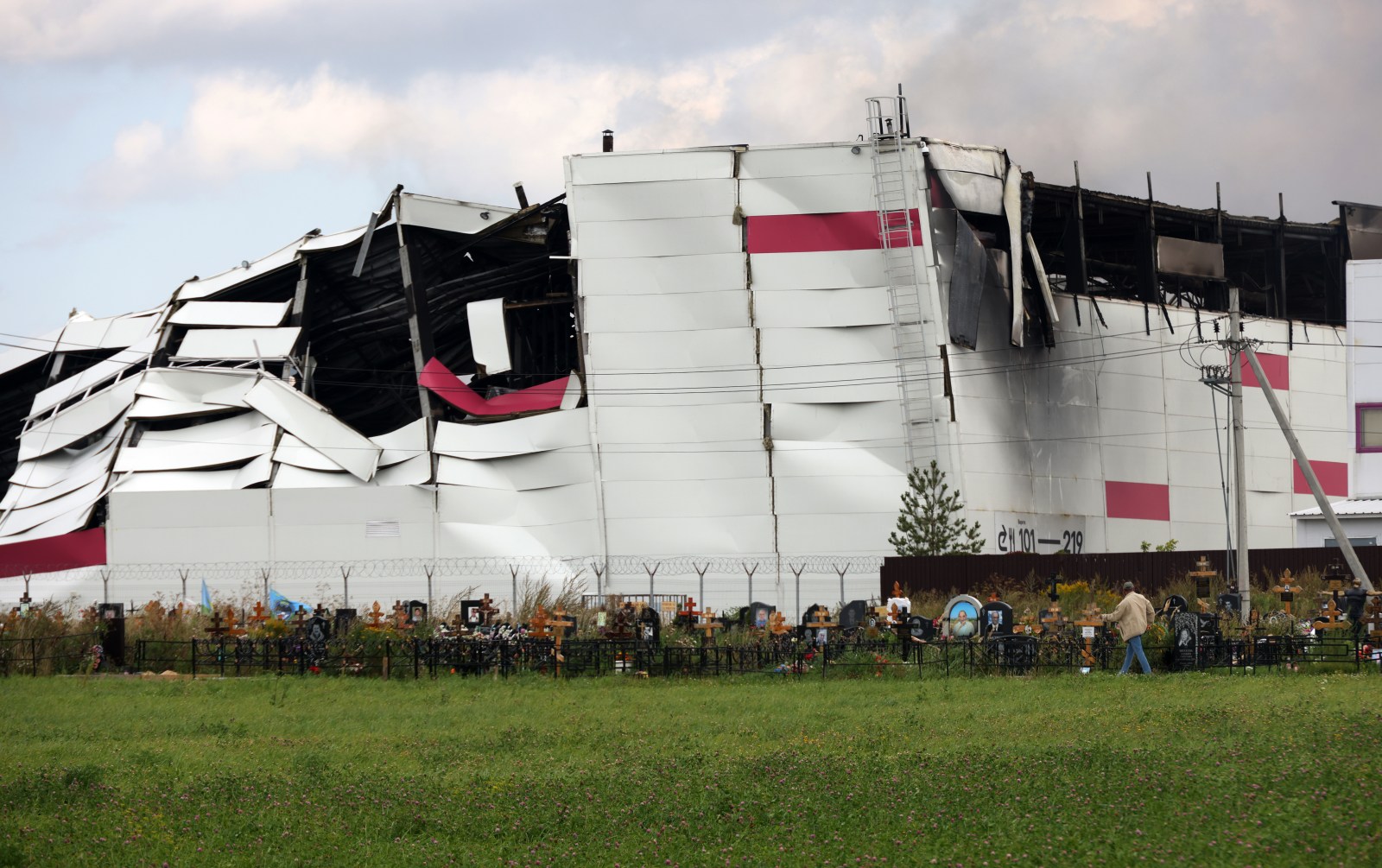
The branding from trucks transporting goods for Russia’s major e-commerce platform, Wildberries, is reportedly being removed. This change comes as Ukrainian drones continue to damage facilities belonging to what is often likened to Russia’s version of Amazon. Wildberries delivers a range of products including clothing, electronics, groceries, and household items. However, Ukraine accuses these warehouses of aiding the Russian military with drone components and navigation equipment, a claim that Moscow has denied.
Attempts to mitigate the economic impact of repeated drone strikes have led to visible changes. Videos on social media show what is claimed to be Wildberries’ branding being erased from their trucks. An Eastern European news outlet, NEXTA, commented through their X channel that these unmarked trucks might serve to obscure which warehouses are being serviced. They remarked, “the empire is falling apart before our eyes.” To further reduce its visibility as a target, Wildberries has ceased displaying military-related goods on its website and has removed online tags associated with the “special military operation,” the term Russia uses for its full-scale invasion.
Aurélien Colson, a political science professor at ESSEC Business School, explained to Newsweek that Ukraine’s consistent strikes on Wildberries carry dual messages. He stated: “First, the war will no longer remain something Russians watch from a distance. Second, the boundary between civilian commerce and military logistics has collapsed in Russia’s war economy.” Both Wildberries and the Kremlin were approached by Newsweek for comments.
Wildberries and similar companies make up approximately 8.5 percent of Russia’s GDP. They employ over 5 percent of the nation’s workforce and play a crucial role in supplying goods amidst a sanctions-hit economy. The firm now faces ongoing attacks on its facilities, amounting to 25 strikes as reported by Radio Free Europe/Radio Liberty. These attacks span regions from St. Petersburg in the north to Krasnodar in the south and Yekaterinburg in the Urals.
The first known attack happened on July 18 at a logistics center in Kotovsk, Tambov region. On August 16, Ukraine’s Ministry of Defense claimed a major strike on Wildberries’ largest warehouse, a 250,000-square-meter complex at the Koledino industrial park in Podolsk, Moscow region. By early August, strikes had destroyed at least 1.18 million square meters of warehouse space, which is about one-fifth of their total capacity at the time as per Reuters.
A map from the Institute for the Study of War (ISW) highlights the seven largest strikes adding strain to Russia’s economy. The think tank indicates these actions reveal the weaknesses in Russia’s air defenses and its difficulties in safeguarding vital rear infrastructure. Colson from ESSEC noted, “By hitting highly visible commercial infrastructure, Ukraine is bringing some of the war’s consequences back to the society from which the war was launched.” This puts pressure not only on logistics but also on the Russian social contract, seen where President Putin suggests a war without domestic cost. Ukraine is challenging this narrative, making it harder to maintain.
Colson added that these attacks might affect the battlefield since Russia’s military heavily depends on informal supply chains offering items such as drone parts, night-vision gear, and dual-use materials available from Wildberries. “Striking e-commerce warehouses therefore does not only disrupt consumer deliveries. It also interferes with a parallel military procurement ecosystem,” he said.
Vuk Vuksanović, an associate at the London School of Economics think tank LSE IDEAS, described these strikes on Wildberries’ warehouses and Russian energy infrastructure as part of Kyiv’s 40-day campaign to pressure Moscow into peace discussions. They aim to secure Western support and increase internal political pressure in Russia. “However, it cannot be said that it produced the desired results,” Vuksanović told Newsweek. He explained that Russia maintains the ability to escalate with even greater force, as shown by Russian counterstrikes against Ukrainian infrastructure, including energy sites, logistics hubs, and ports like Odesa.