
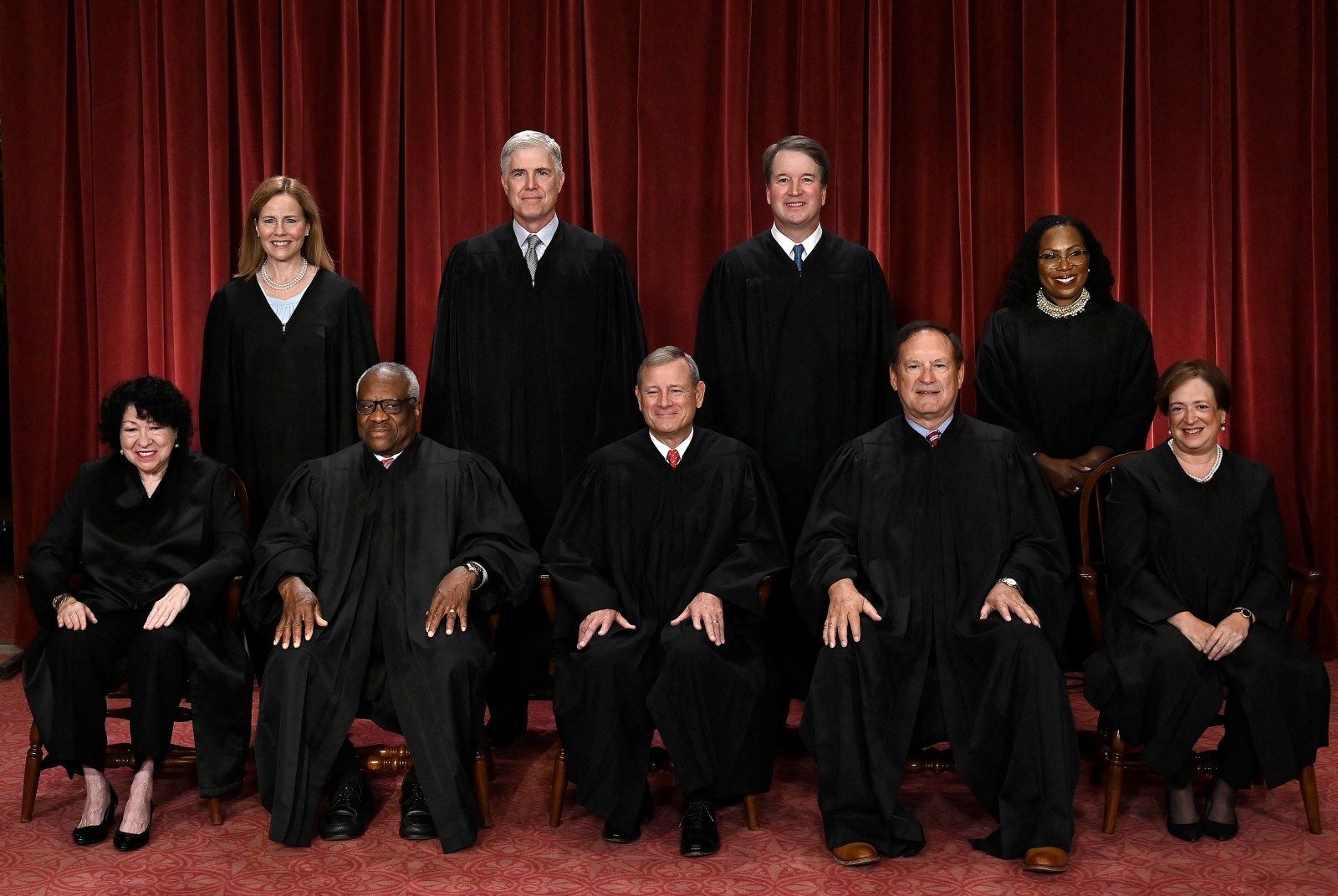
America’s Catholic bishops have urged the Supreme Court to mandate changes to Florida’s method of forming criminal juries. They argue that the current system violates the U.S. Constitution. Under Florida law, only capital cases require a 12-member jury, whereas other criminal cases have six-member juries. The Supreme Court has agreed to hear a case from Hamed Kian, convicted by a six-member jury, who claims that this method violates his Sixth Amendment rights. Several briefs support Kian, including those from prosecutors, the American Civil Liberties Union, and the Catholic bishops.
Kian v. Florida Case Overview
This case examines the required jury size for serious criminal trials. Kian, a Florida chiropractor, appealed his convictions by a six-member jury. He argues that the Sixth and 14th Amendments guarantee a 12-person jury for serious crimes. The Supreme Court will reconsider the 1970 decision in Williams v. Florida, which allowed six-member juries.
Kian faced five counts of practicing chiropractic medicine on a suspended license, a third-degree felony in Florida. Prosecutors alleged he treated patients post-suspension. Evidence included patient testimonies and office records. A six-member jury convicted him on all counts, resulting in a sentence of one year and one day in prison and five years of probation.
Historically, criminal juries both in England and the United States had 12 members. The 1970 Supreme Court ruling allowed states like Florida to use smaller juries in certain criminal cases. Florida’s system of six-member juries for noncapital cases stems back to the 19th century.
Catholic Bishops’ Argument
The Catholic bishops argue that historically, juries consisted of 12 members, a principle reflected in the Constitution. They claim that Williams deviated from traditional history by focusing on the functionality of smaller juries. In their brief, the bishops reference medieval England and founding-era American sources to support their stance. They assert this is a matter of constitutional fidelity and are represented by former U.S. Solicitor General Noel Francisco.
Florida’s Defense
Florida defends its jury system, arguing Williams was correctly decided and is a long-standing legal precedent. Florida notes that six states use fewer than 12 members in some criminal cases and warns of broad implications if Williams is overturned. They argue the Constitution doesn’t explicitly require 12-member juries and that smaller juries can be fair and representative, citing studies and conviction statistics.
Conservative Debate
The case occurs amid rising interest among conservative legal scholars and some Supreme Court justices in originalism, interpreting constitutional provisions based on their original meaning. Some conservative justices, including Neil Gorsuch, have expressed skepticism about Williams in the past, suggesting this might be reexamined. Thus, there is a split within conservatives between those maintaining current systems to avoid disruption and those seeking a historical interpretation, even at the cost of practicality.
Implications of the Case
A ruling in favor of Kian could alter criminal procedures in several states, affecting numerous past convictions. It may also indicate a shift towards originalist legal decisions. If upholding Florida’s system, the status quo remains and states continue to have jury structuring flexibility. This legal battle involves unusual alliances, with Catholic bishops and Republican-run states on opposite sides before a conservative-leaning Supreme Court. This case may determine how strictly the court adheres to originalist principles when faced with established practices.